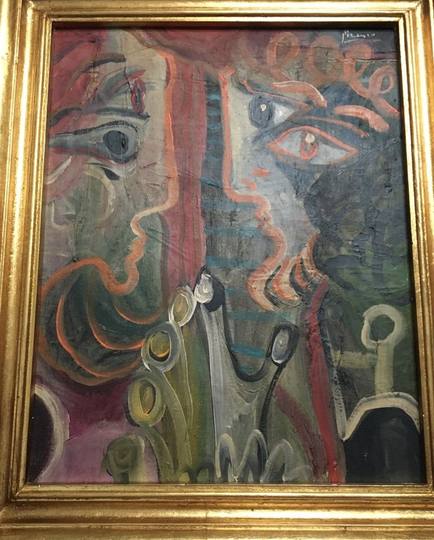
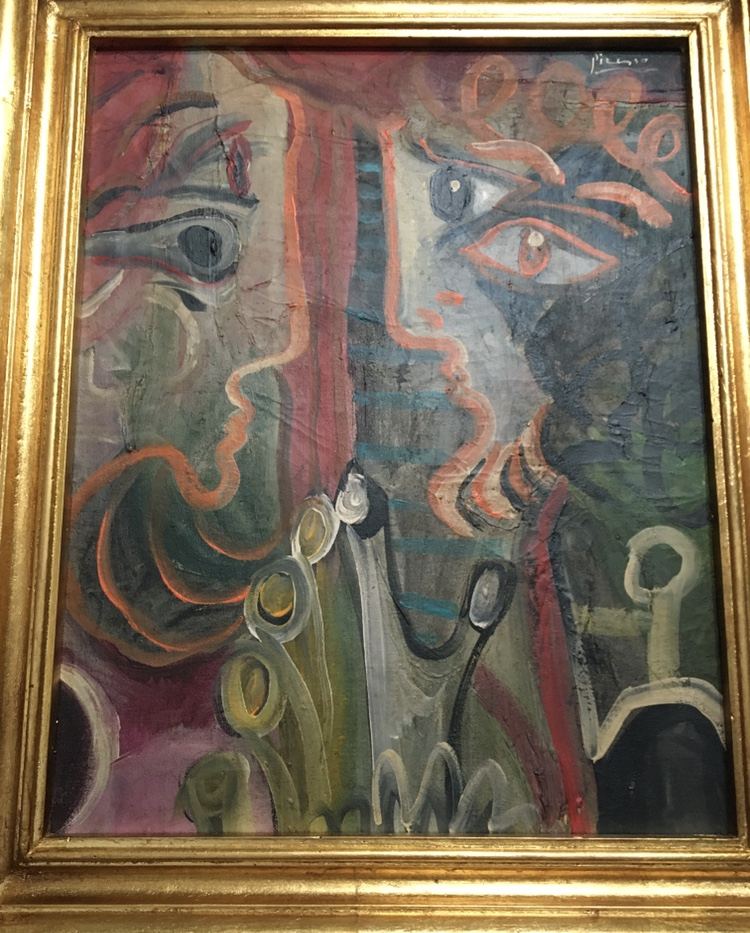
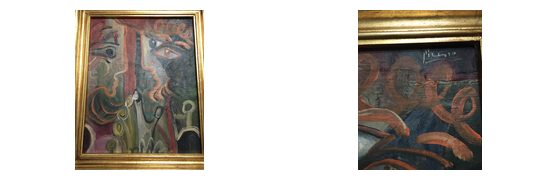
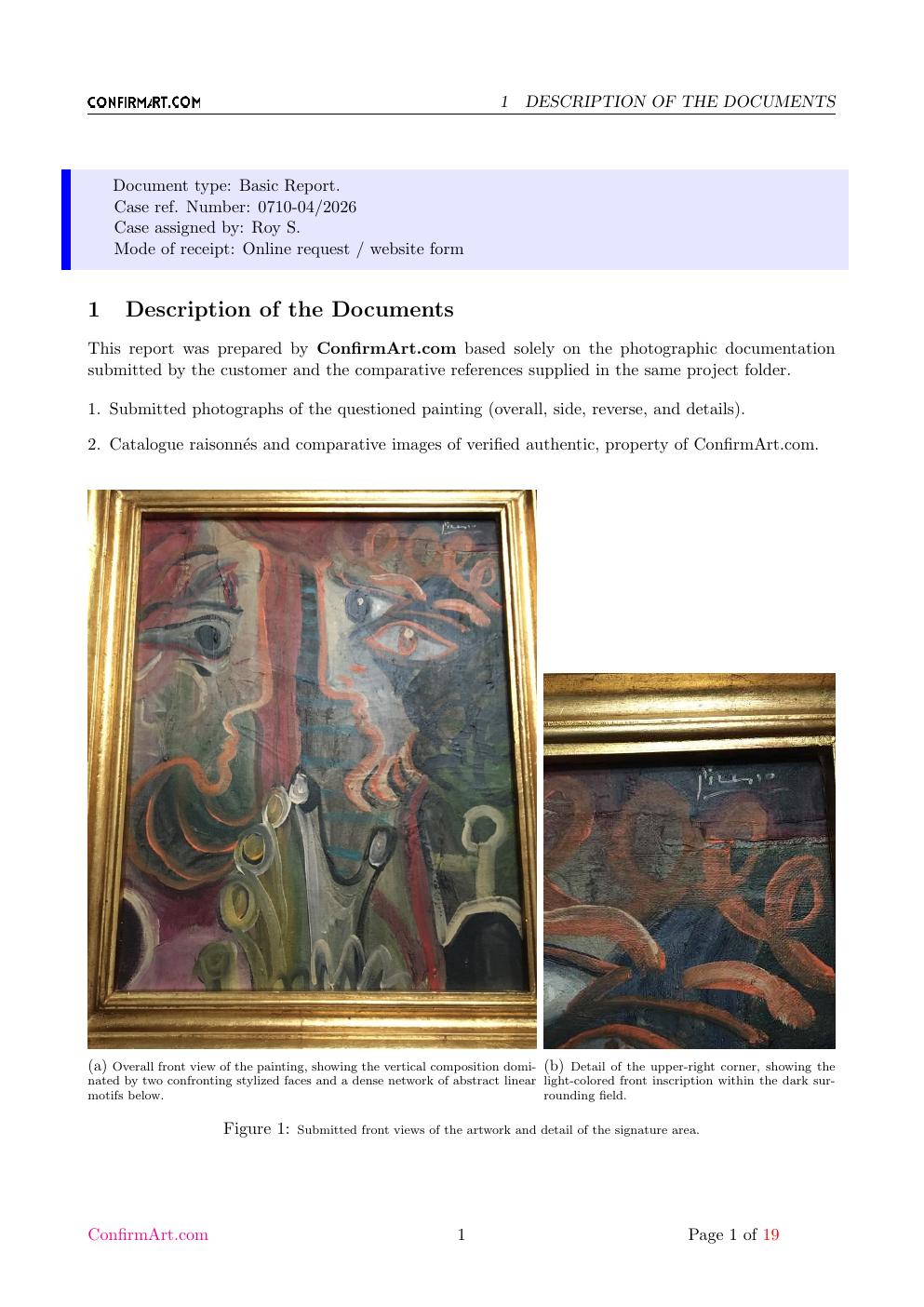
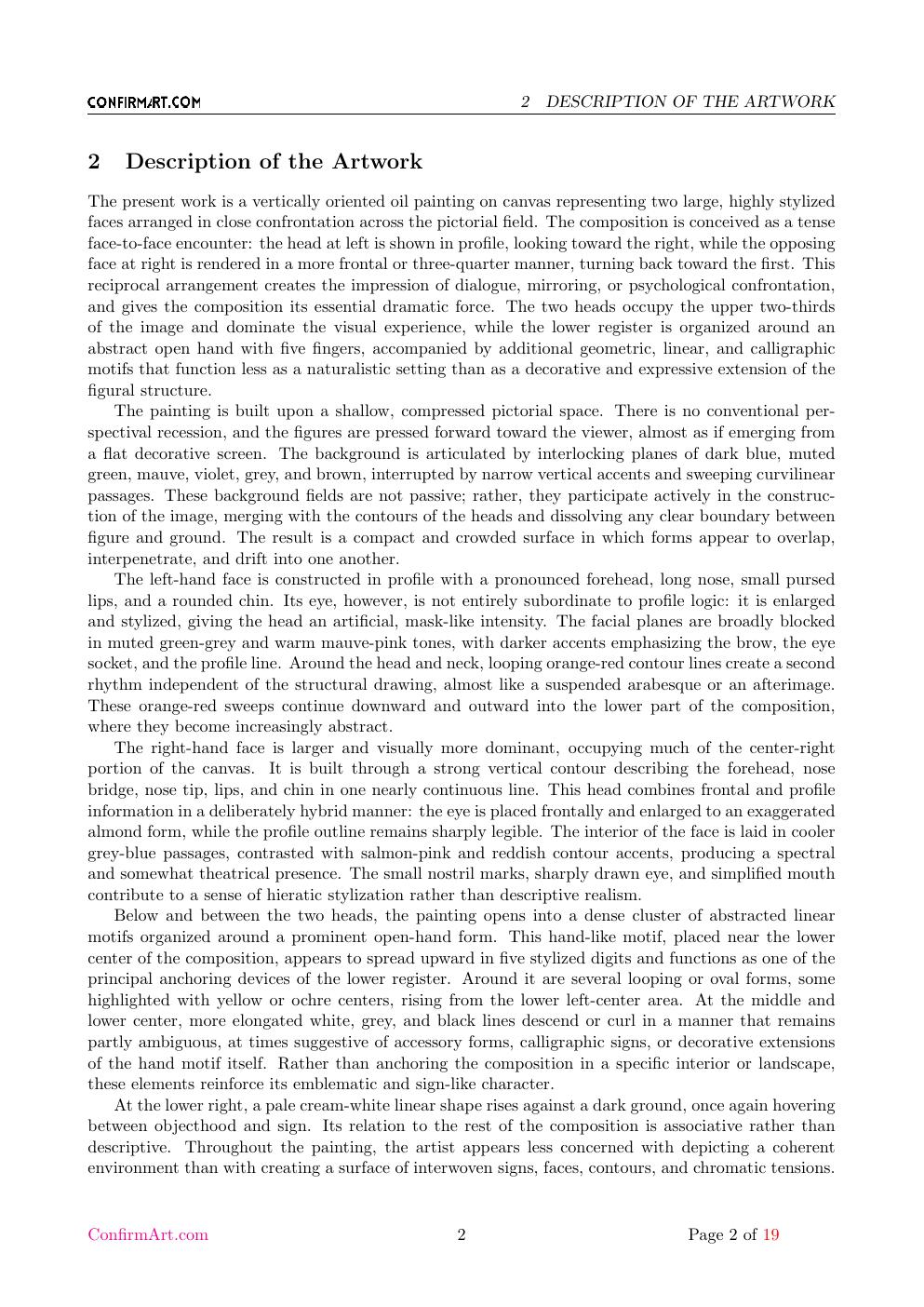
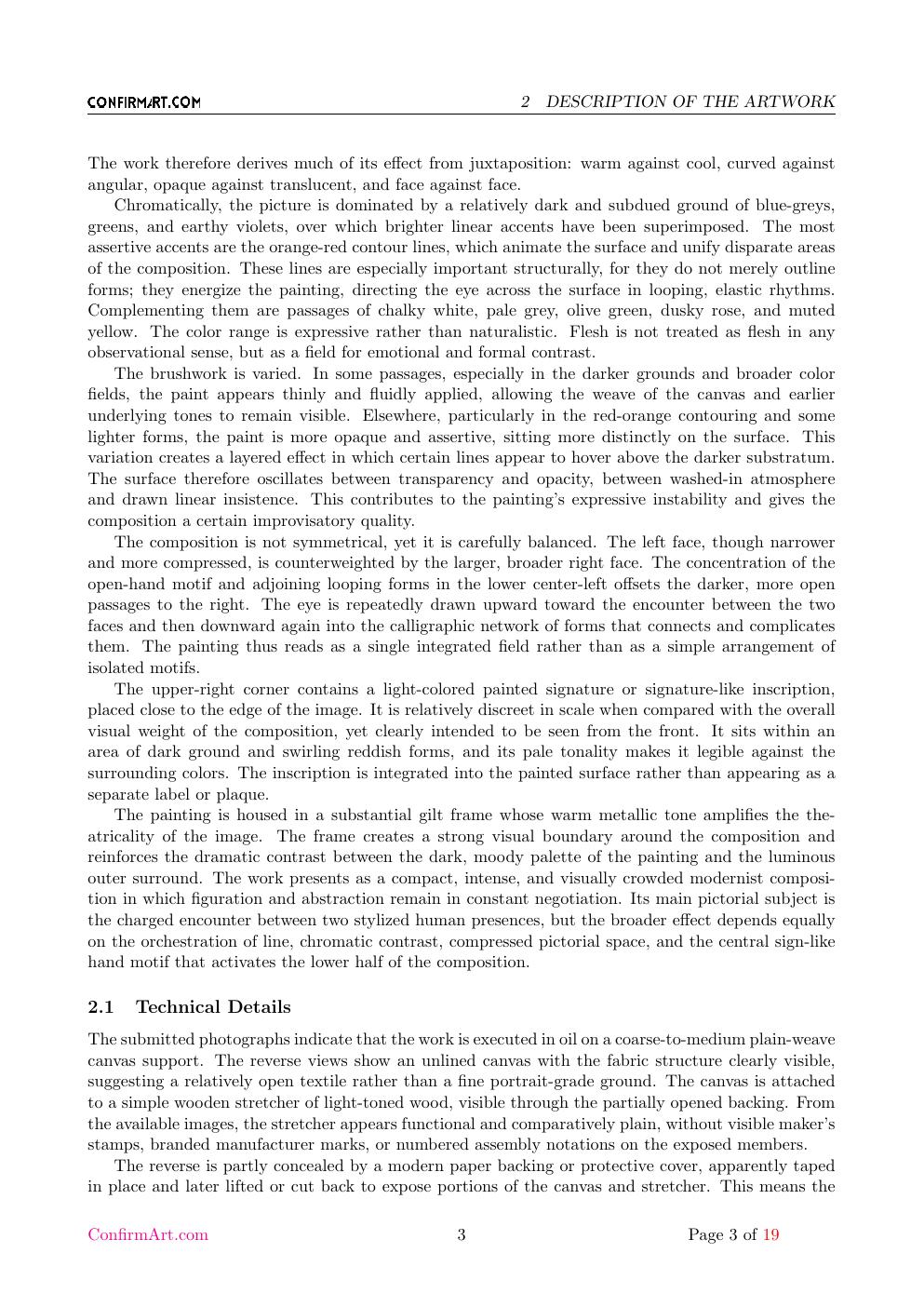
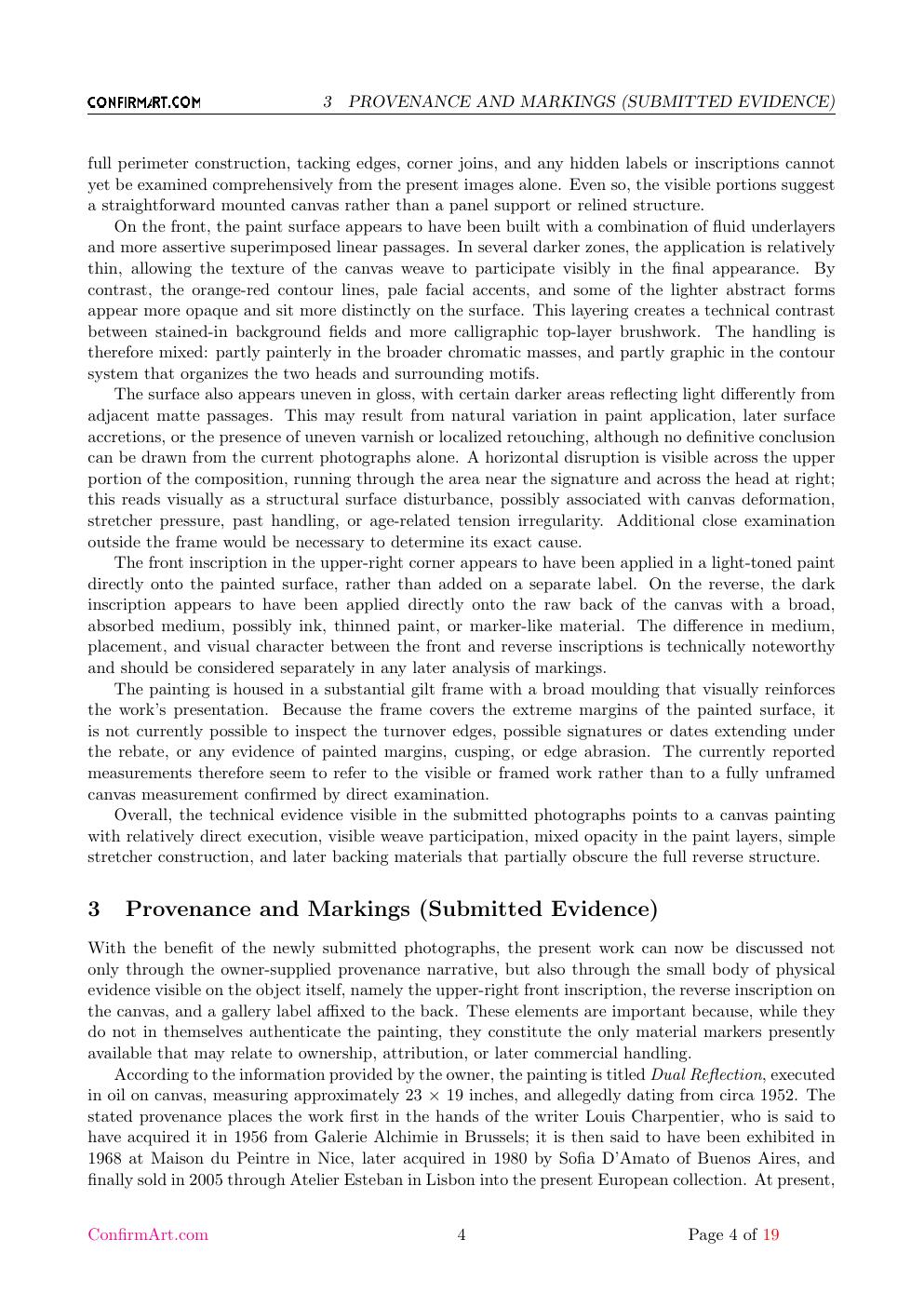
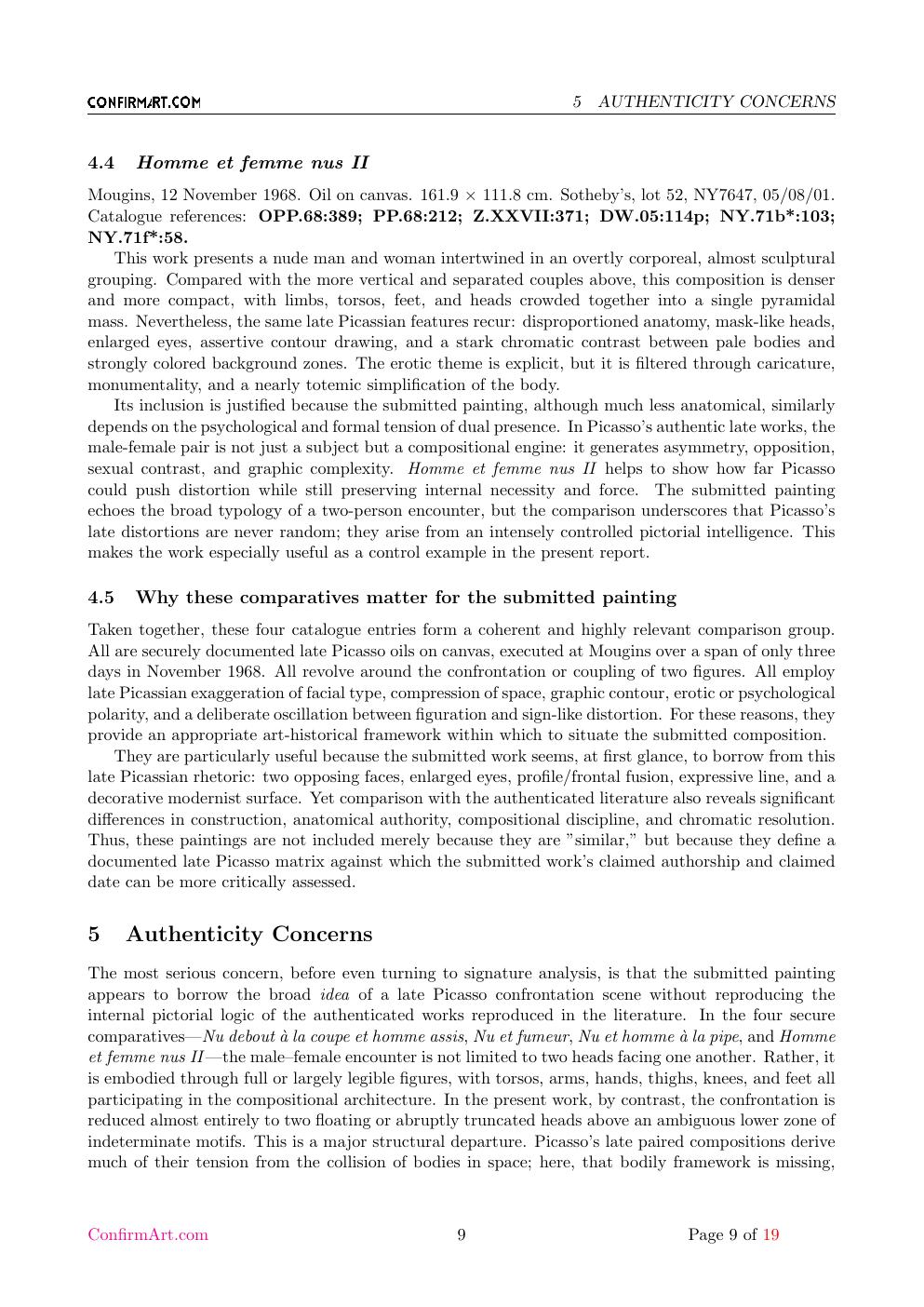
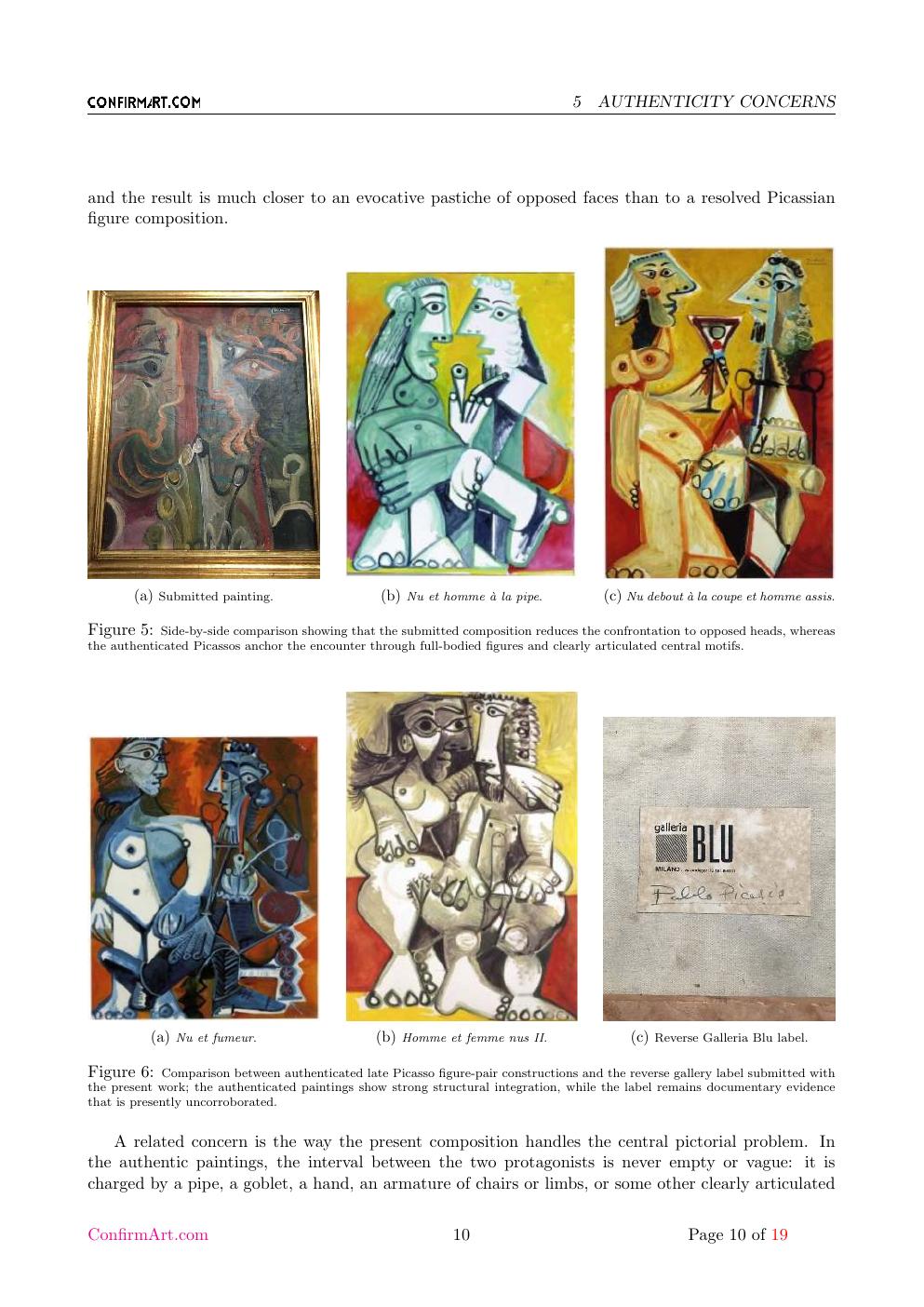
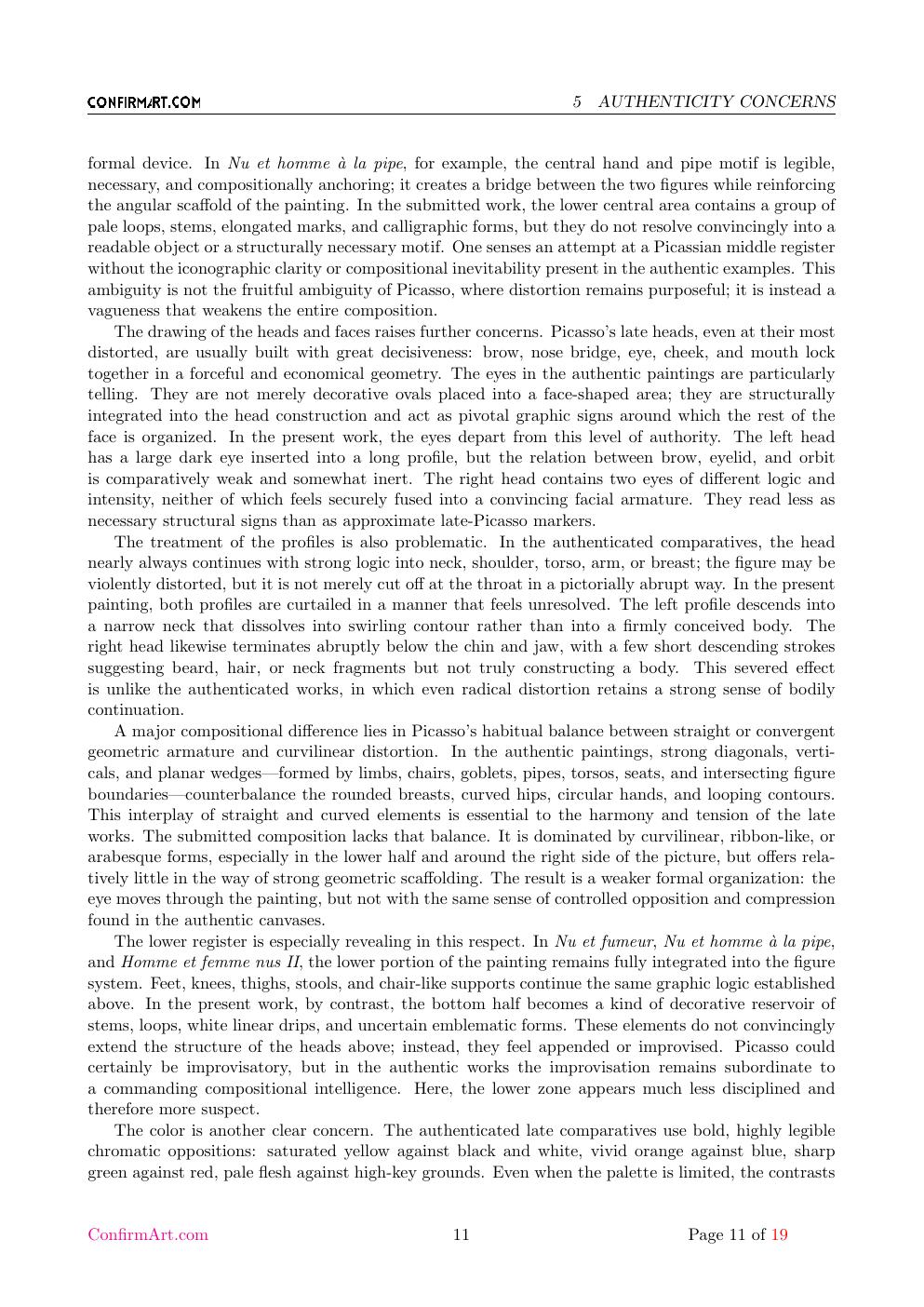
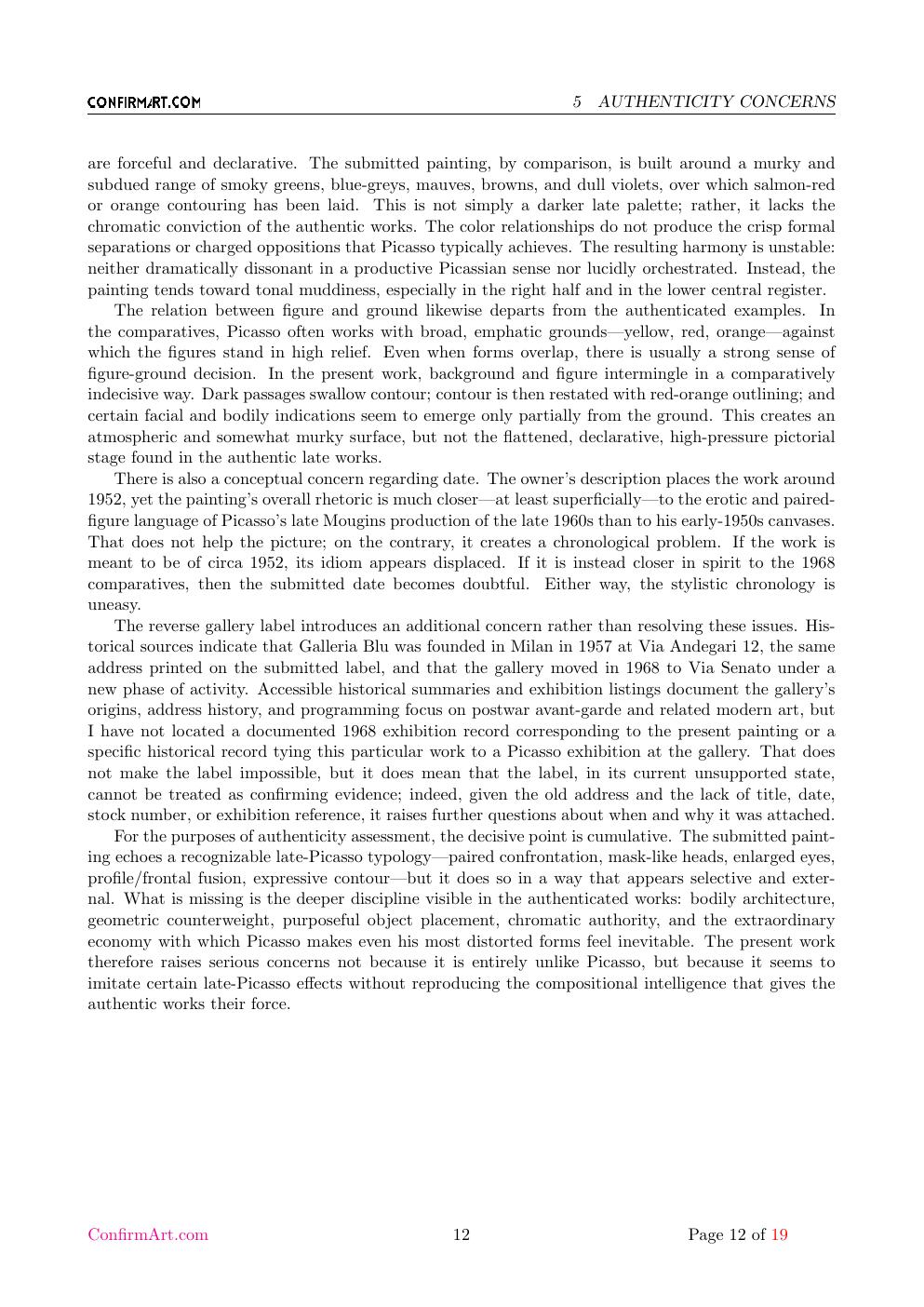
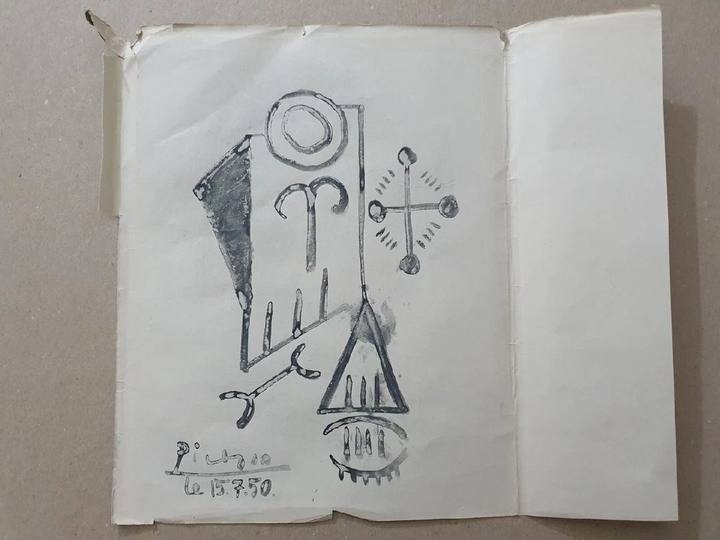
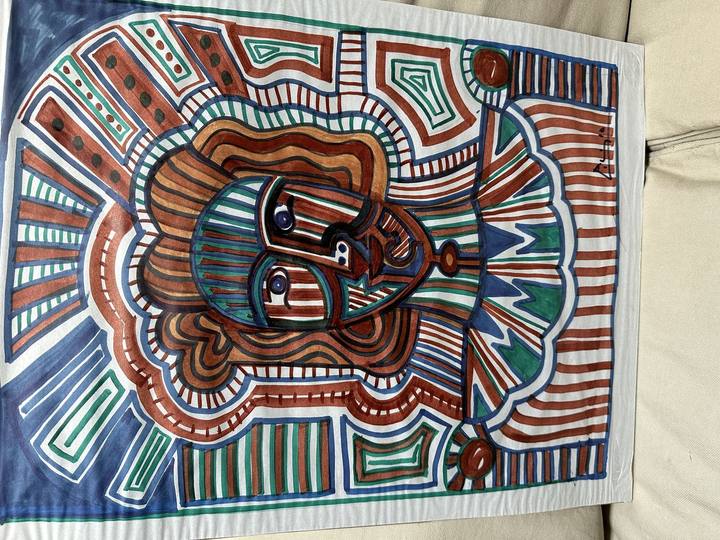
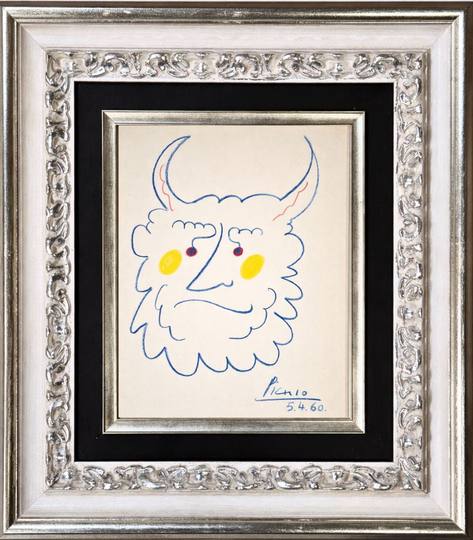
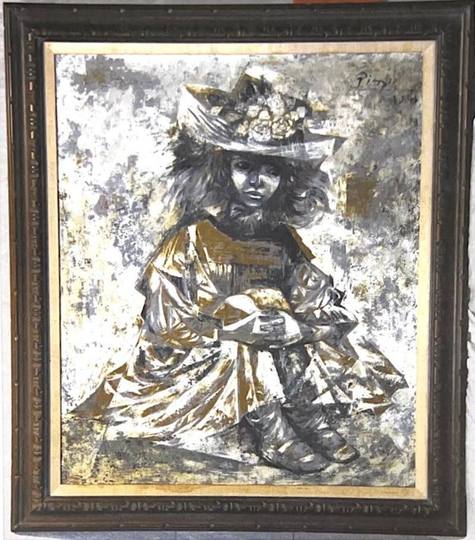
This report was prepared by ConfirmArt.com based solely on the photographic documentation submitted by the customer and the comparative references supplied in the same project folder. Submitted photographs of the questioned painting (overall, side, reverse, and details). Catalogue raisonnés and comparative images of verified authentic, property of ConfirmArt.com
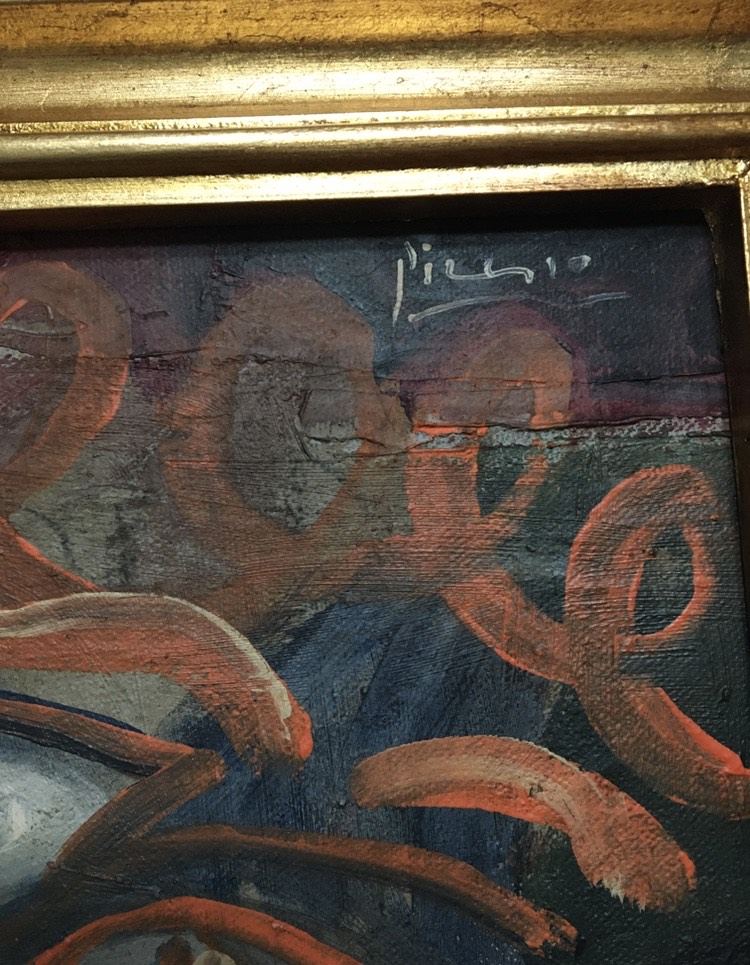
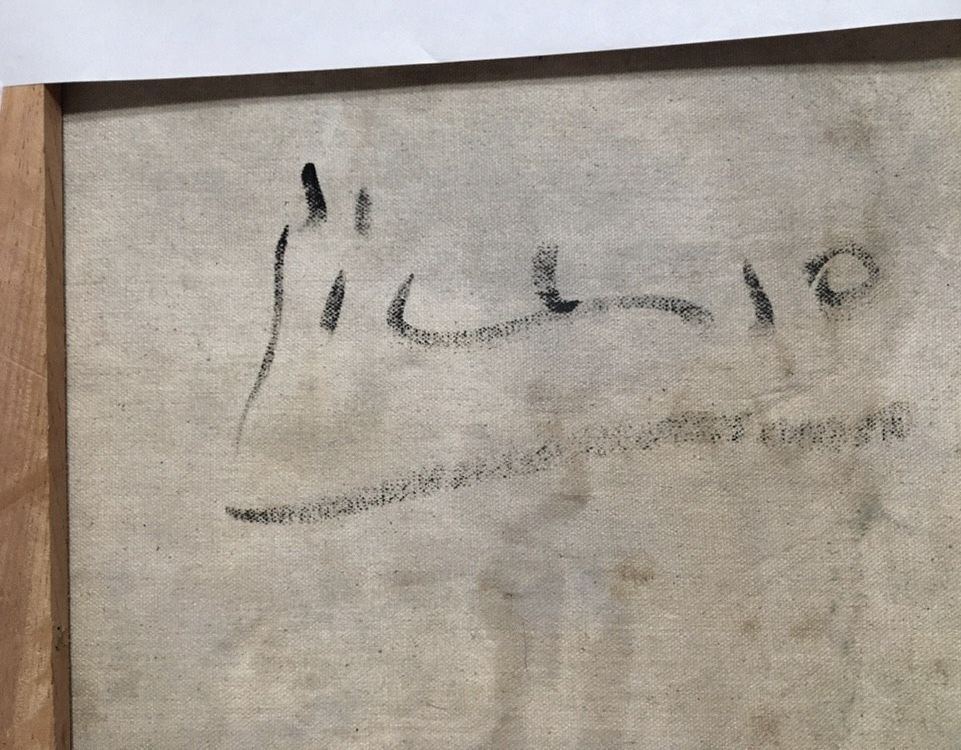
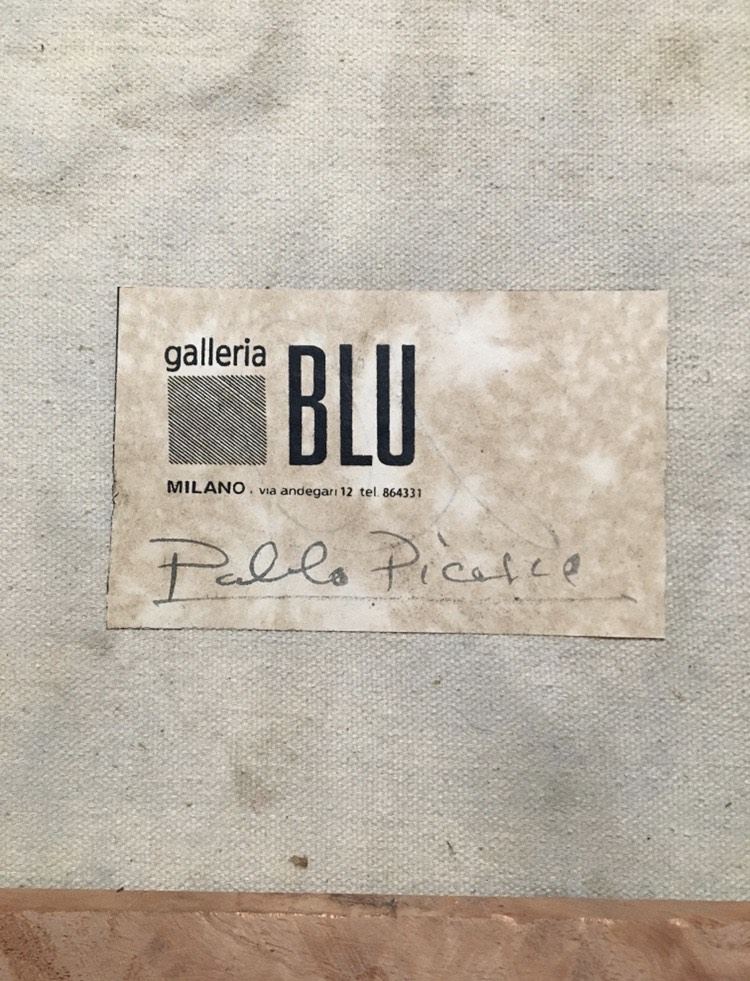
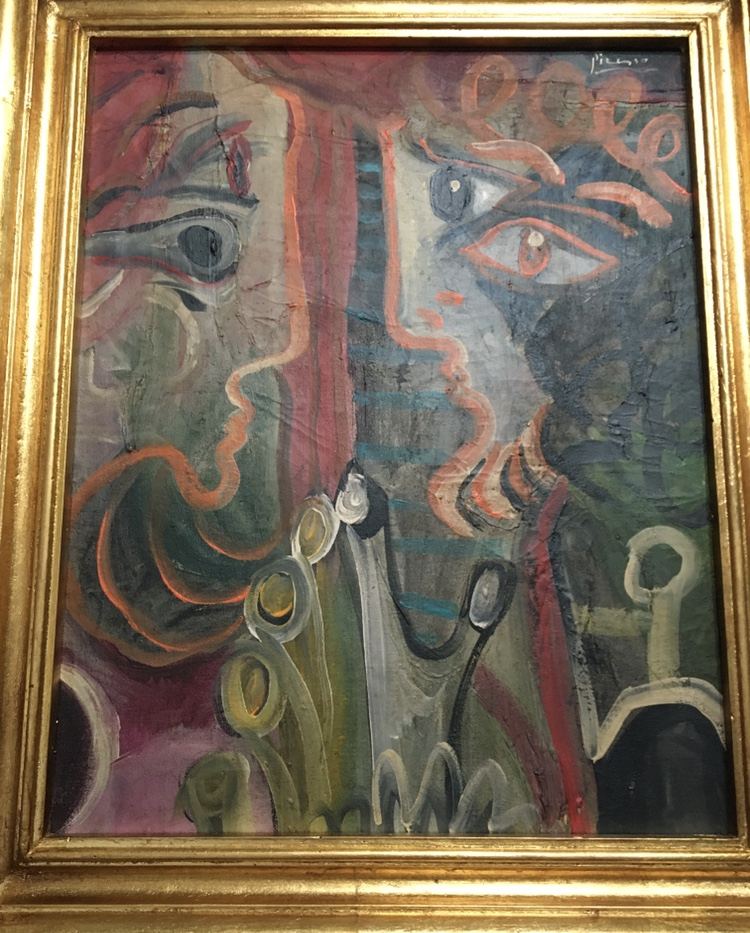
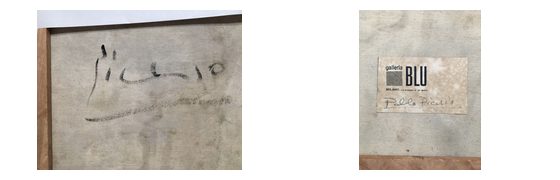
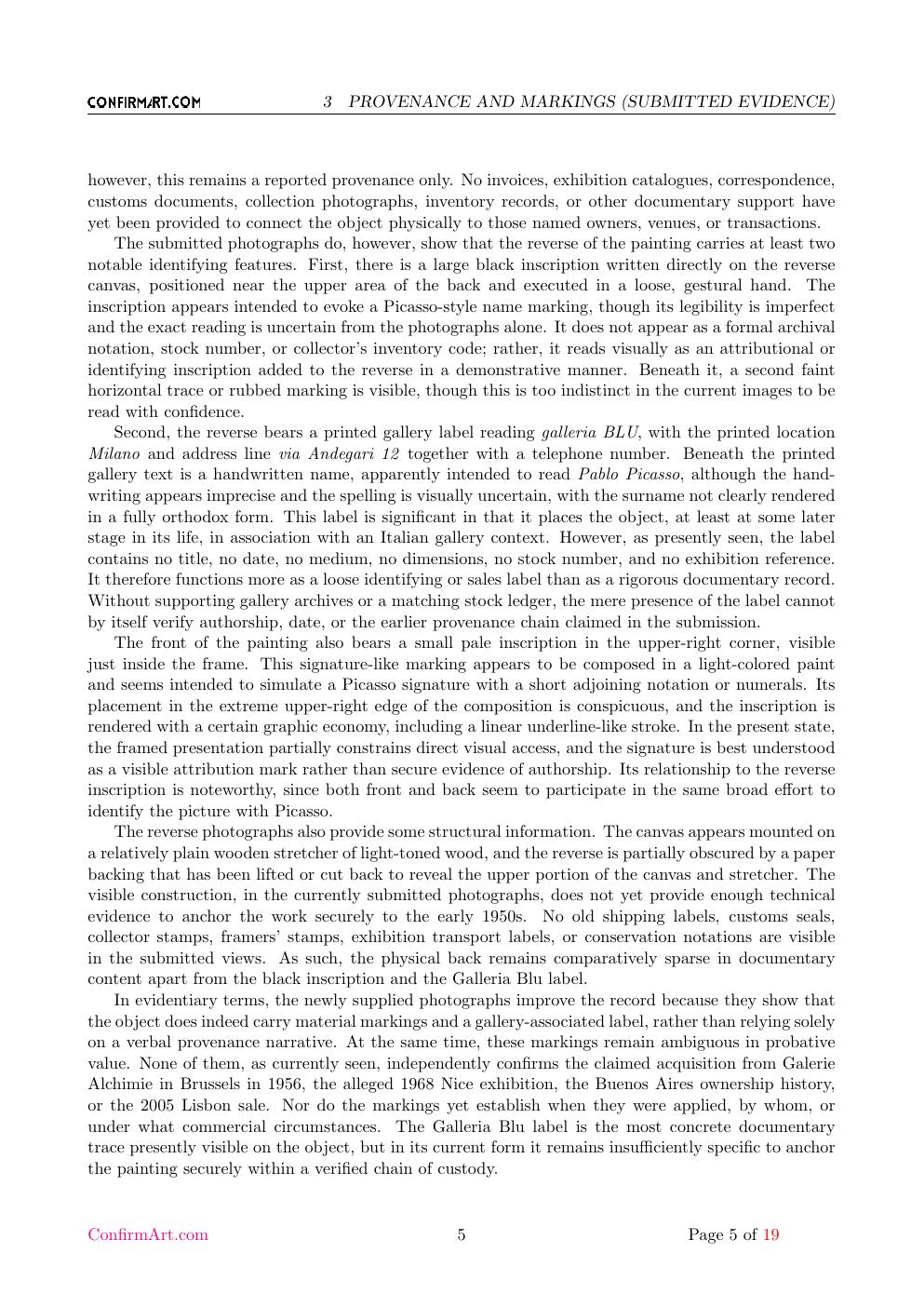
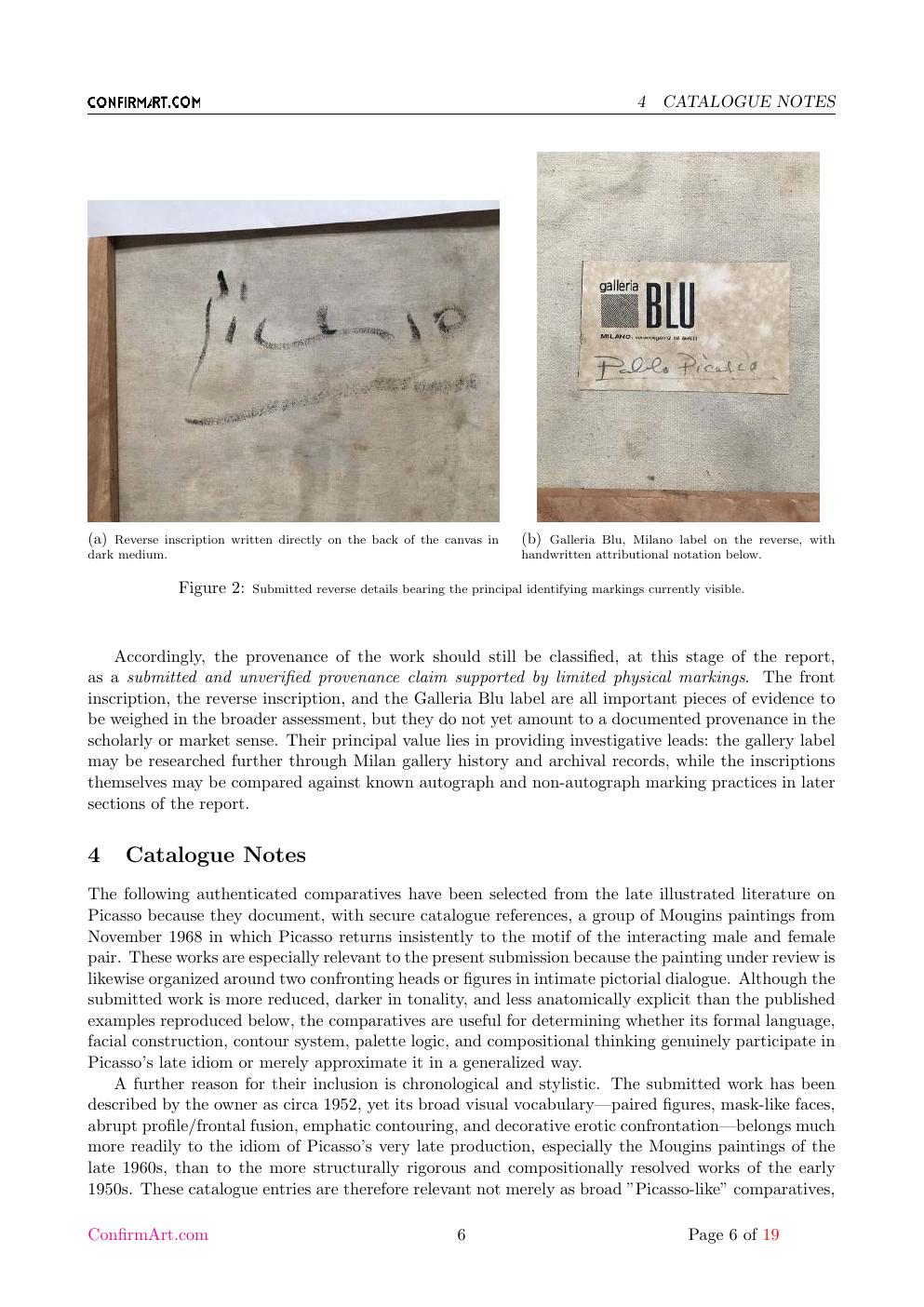
With the benefit of the newly submitted photographs, the present work can now be discussed not only through the owner-supplied provenance narrative, but also through the small body of physical evidence visible on the object itself, namely the upper-right front inscription, the reverse inscription on the canvas, and a gallery label affixed to the back. These elements are important because, while they do not in themselves authenticate the painting, they constitute the only material markers presently available that ma
02
Catalogue Notes
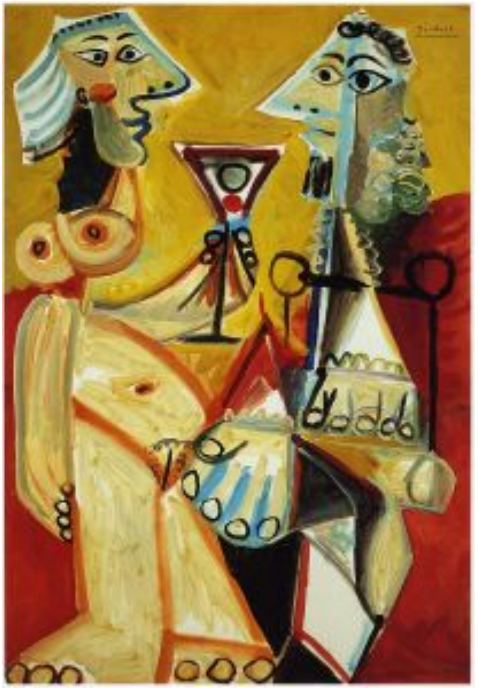
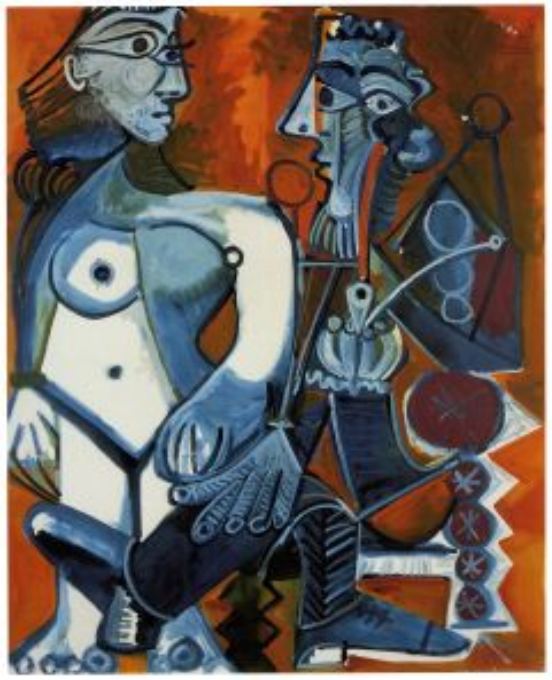
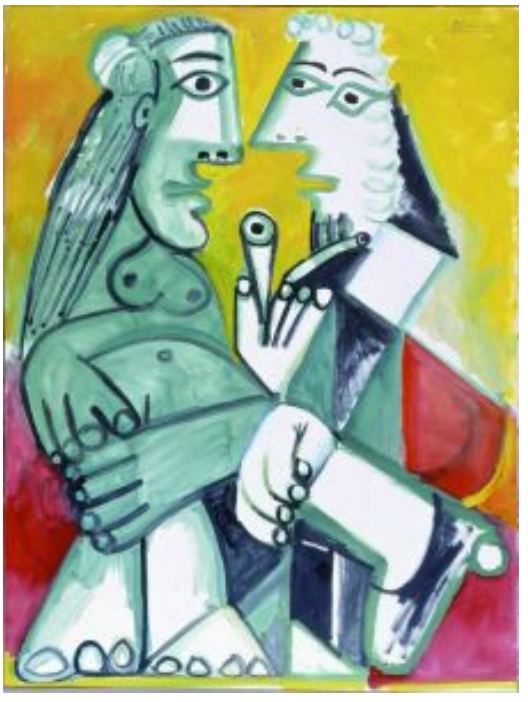
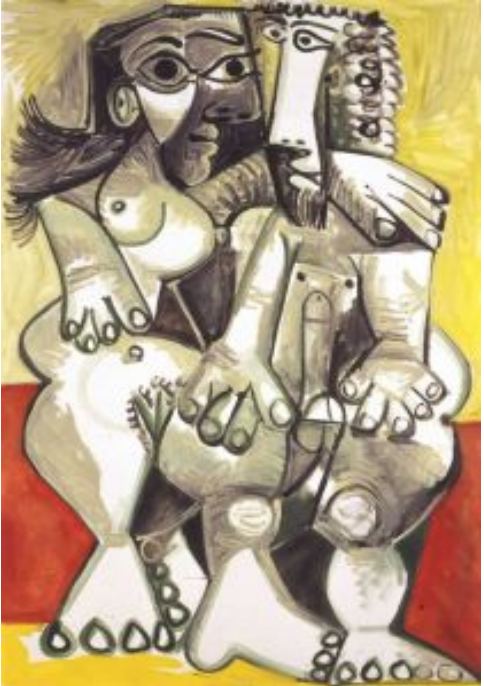
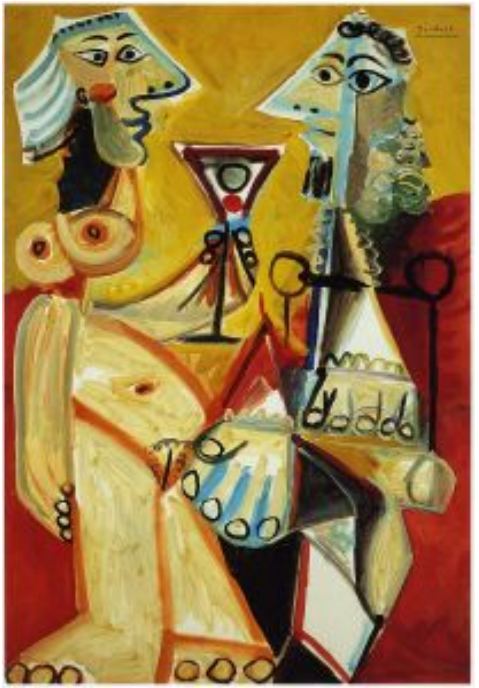
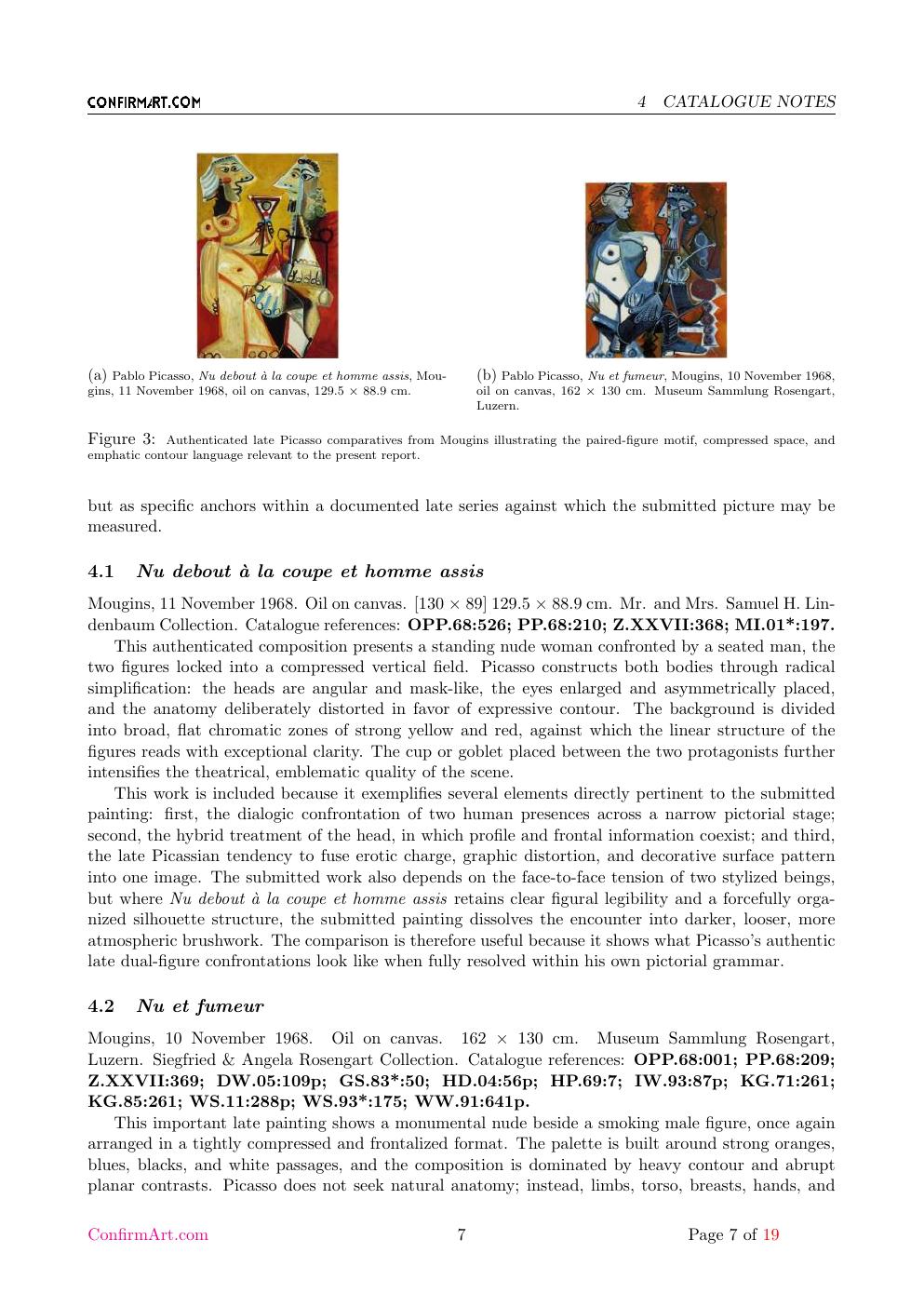
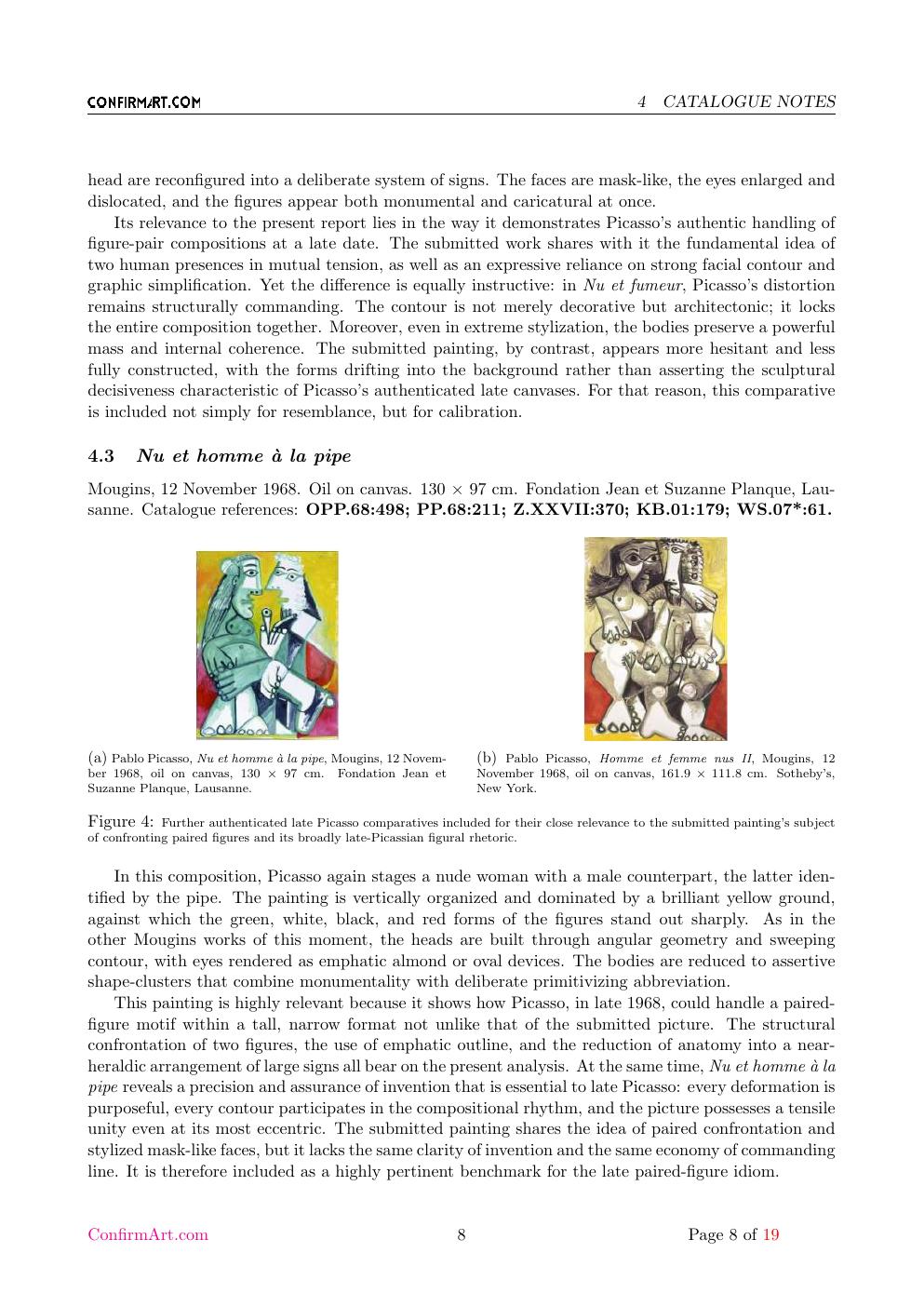
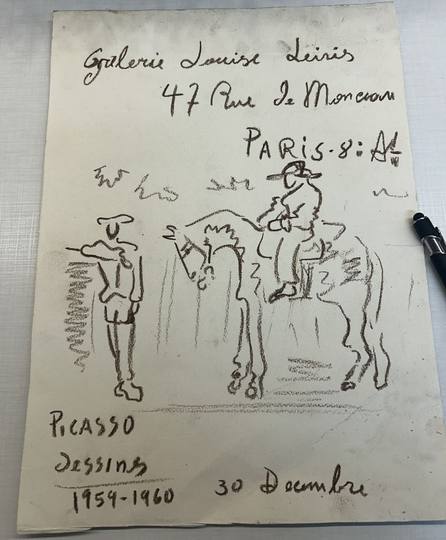
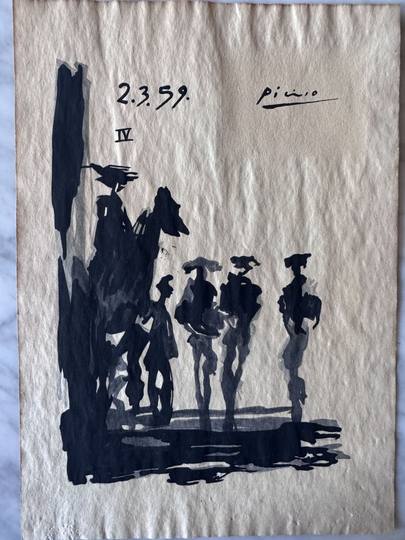
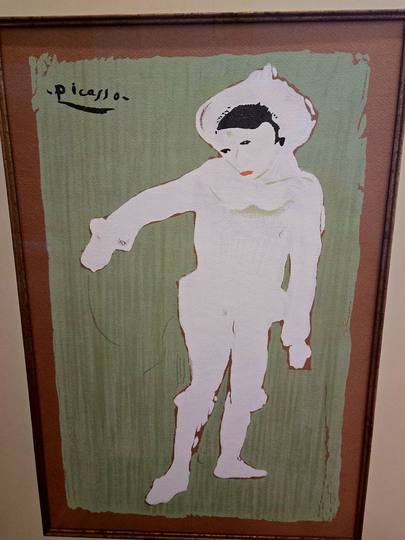
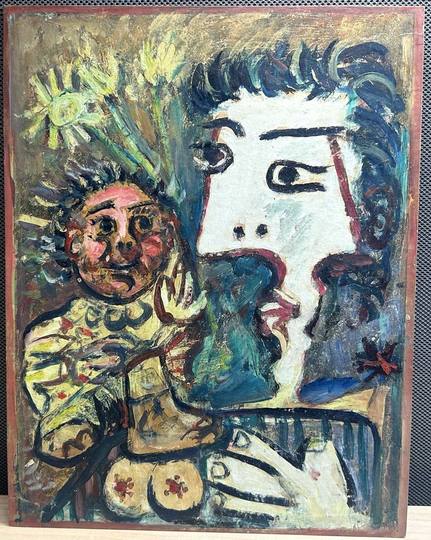
The following authenticated comparatives have been selected from the late illustrated literature on Picasso because they , with secure catalogue references, a group of Mougins paintings from November 1968 in which Picasso returns insistently to the motif of the interacting male and female pair. These works are especially relevant to the present submission because the painting under review is likewise organized around two confronting heads or figures in intimate pictorial dialogue. Although the submitted work is mor
03
Authenticity Concerns
The most serious concern, before even turning to signature analysis, is that the submitted painting appears to borrow the broad idea of a late Picasso confrontation scene without reproducing the internal pictorial logic of the authenticated works reproduced in the literature. In the four secure comparatives--- Nu debout à la coupe et homme assis , Nu et fumeur , Nu et homme à la pipe , and Homme et femme nus II ---the male--female encounter is not limited to two heads facing one another. Rather, it is embodied thro
04
Signature Examination
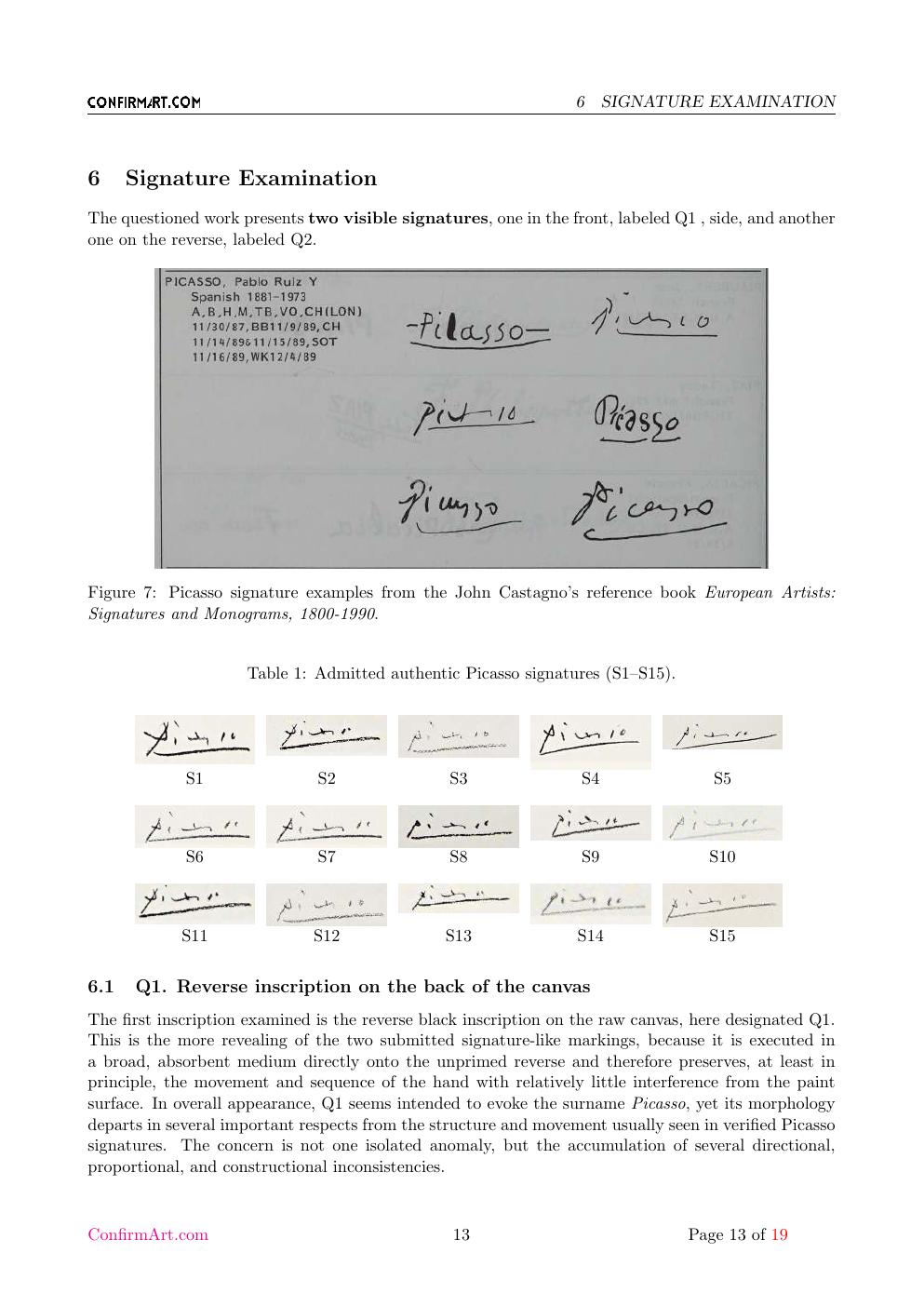
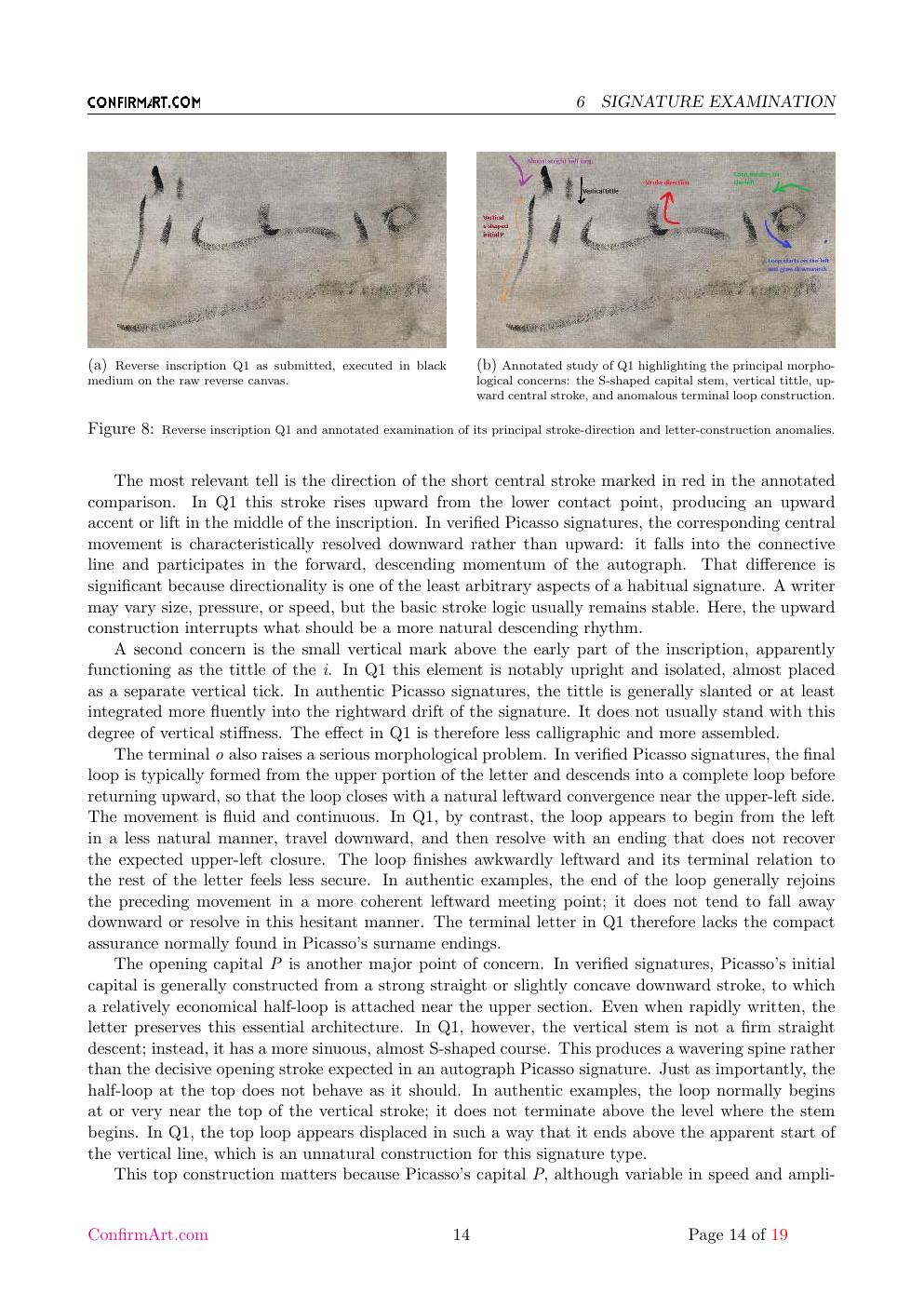
ConfirmArt reviewed the questioned signature against documented references, looking at rhythm, pressure, letter construction and placement rather than isolated visual similarity.
05
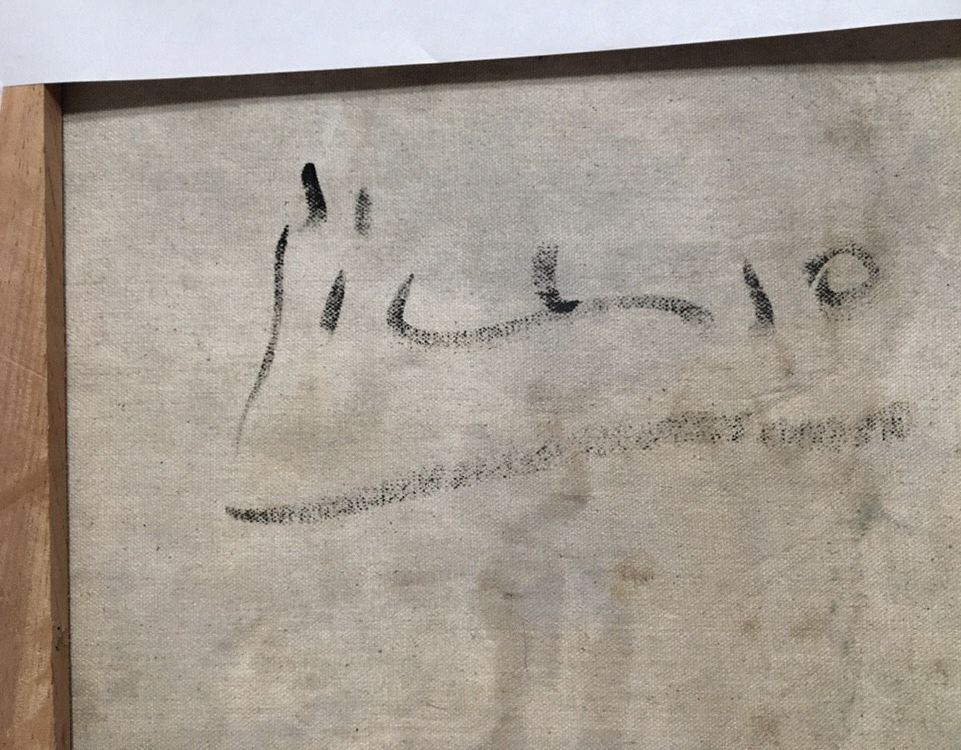
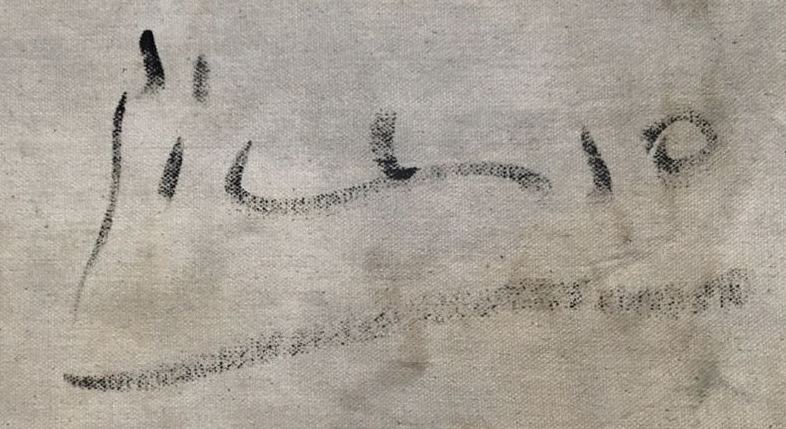
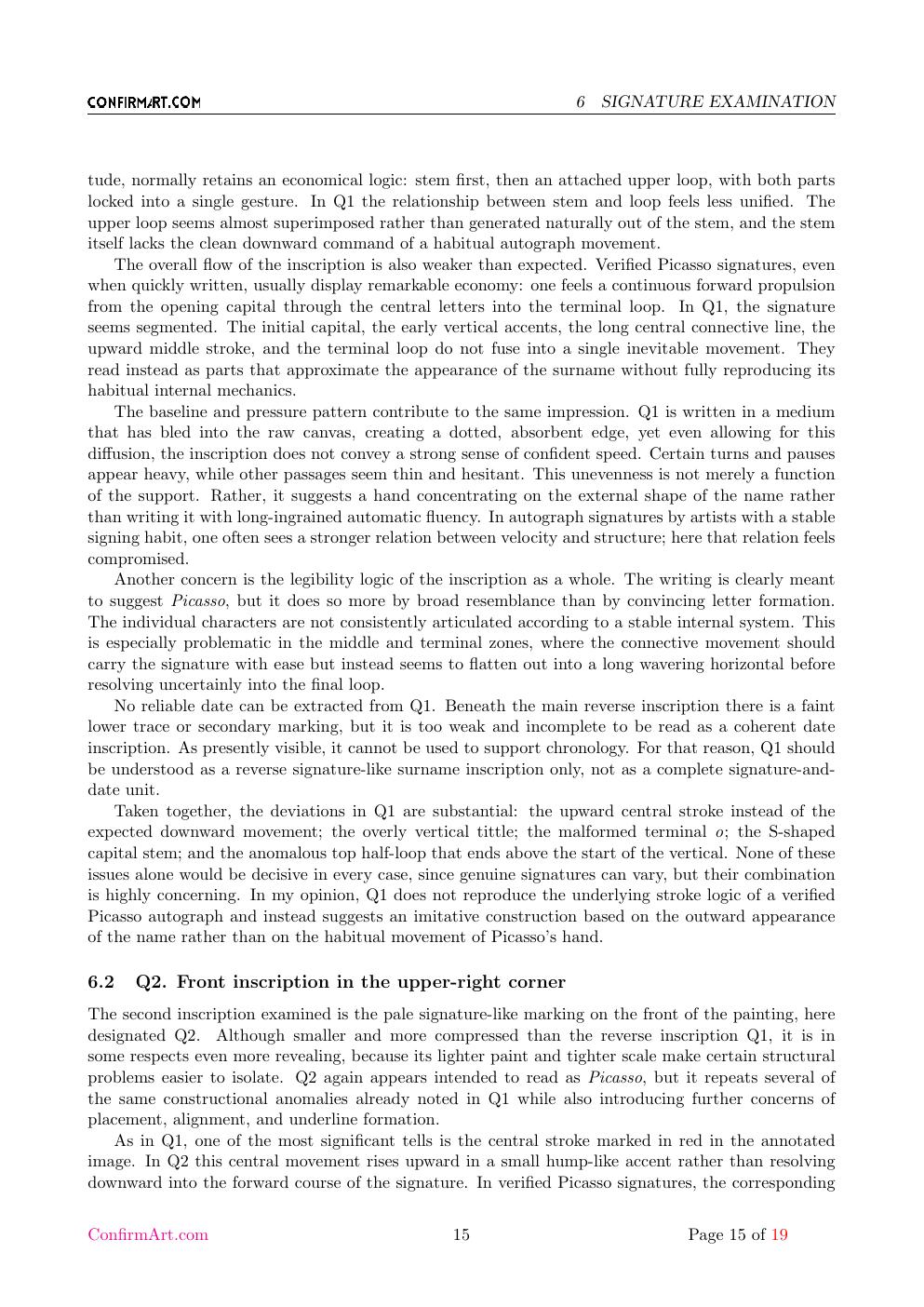
Q1. Reverse inscription on the back of the canvas
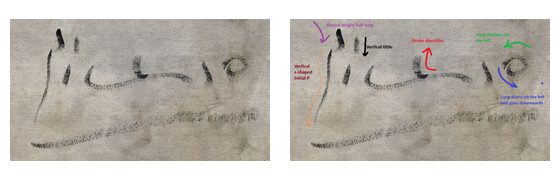
The first inscription examined is the reverse black inscription on the raw canvas, here designated Q1. This is the more revealing of the two submitted signature-like markings, because it is executed in a broad, absorbent medium directly onto the unprimed reverse and therefore preserves, at least in principle, the movement and sequence of the hand with relatively little interference from the paint surface. In overall appearance, Q1 seems intended to evoke the surname Picasso , yet its morphology departs in several i
06
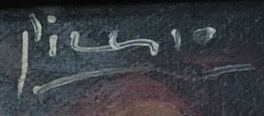
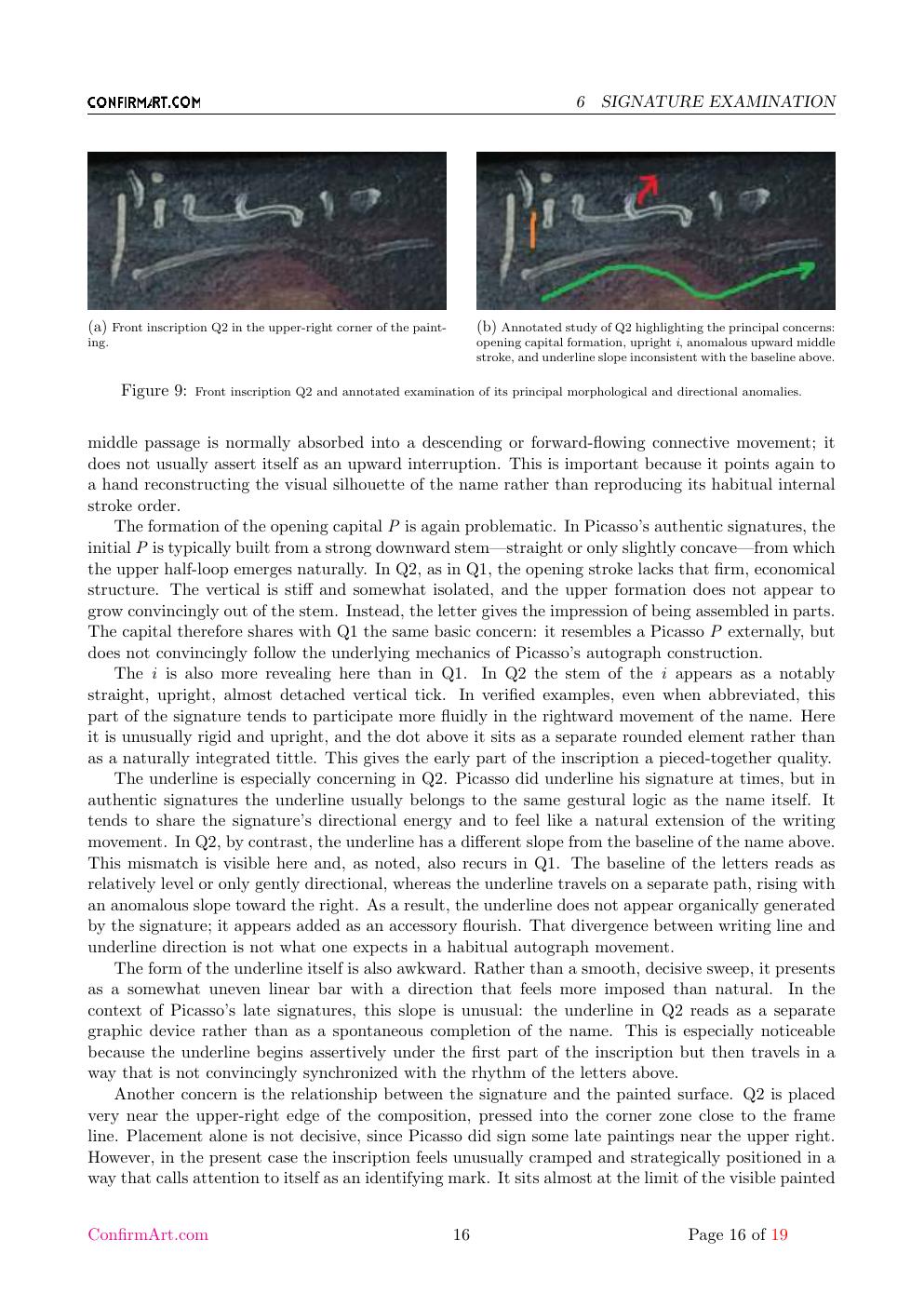
Q2. Front inscription in the upper-right corner
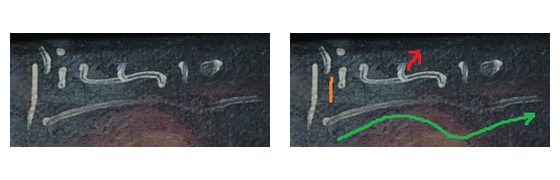
The second inscription examined is the pale signature-like marking on the front of the painting, here designated Q2. Although smaller and more compressed than the reverse inscription Q1, it is in some respects even more revealing, because its lighter paint and tighter scale make certain structural problems easier to isolate. Q2 again appears intended to read as Picasso , but it repeats several of the same constructional anomalies already noted in Q1 while also introducing further concerns of placement, alignment, a
Signature evidence
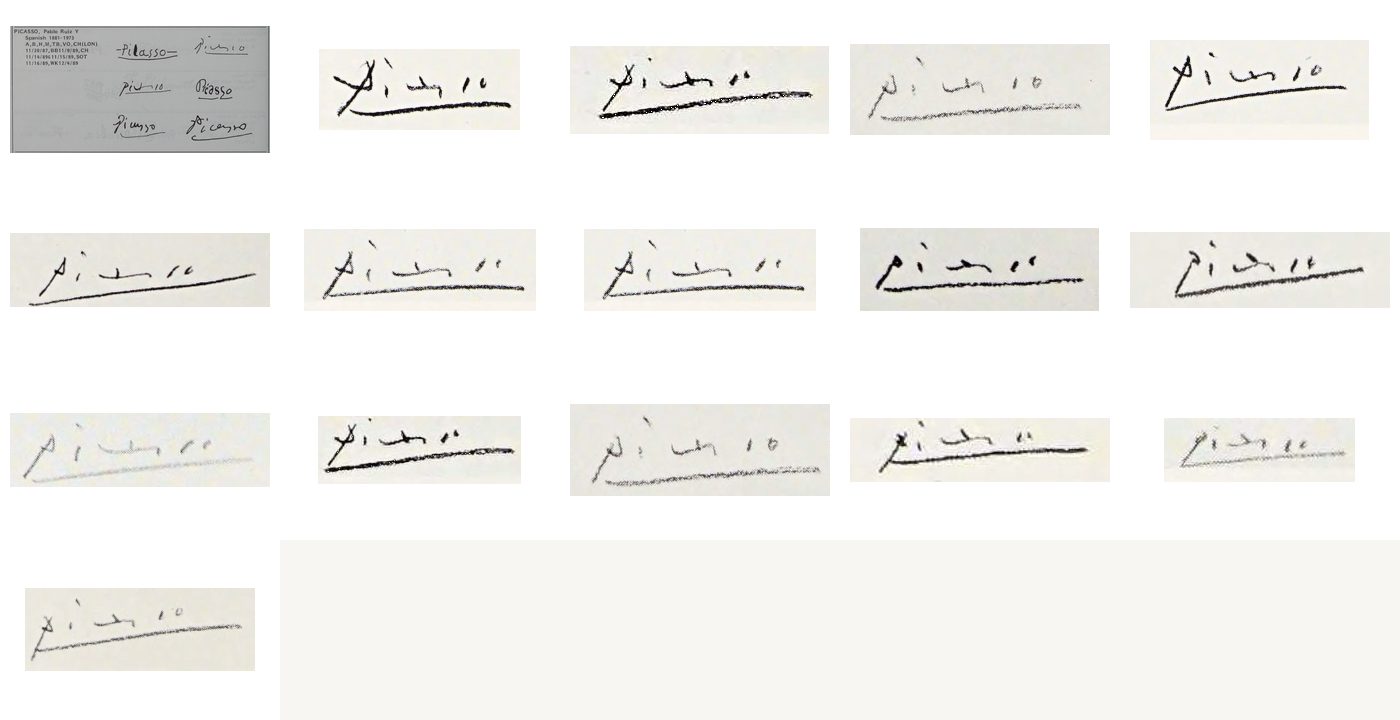
Signature analysis reference tables
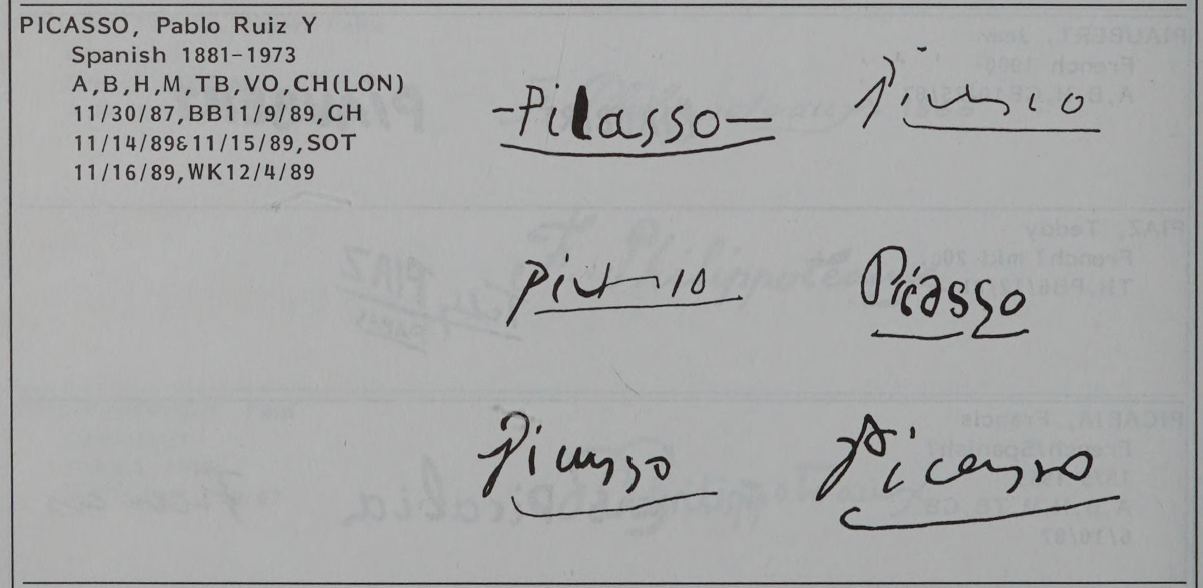
Signature ExaminationThe questioned work presents two visible signatures , one in the front, labeled Q1 , side, and another one on the reverse, labeled Q2. Picasso signature examples from the John Castagno's reference book European Artists: Signatures and Monograms, 1800-1990 .
Authentication evidence
Selected close details from the human review
Description of the DocumentsThis report was prepared by ConfirmArt.com based solely on the photographic documentation submitted by the customer and the comparative references supplied in the same project folder. Submitted photographs of the questioned painting (overall, side, reverse, and details).Provenance and Markings (Submitted Evidence)With the benefit of the newly submitted photographs, the present work can now be discussed not only through the owner-supplied provenance narrative, but also through the small body of physical evidence visible on the object itself, namely the upper-right front inscription, the reverse inscription on the canvas, and a gallery label affixed to the back. These elements are importaCatalogue NotesThe following authenticated comparatives have been selected from the late illustrated literature on Picasso because they , with secure catalogue references, a group of Mougins paintings from November 1968 in which Picasso returns insistently to the motif of the interacting male and female pair. These works are especially relevant to the present submission because the painting uQ1. Reverse inscription on the back of the canvasThe first inscription examined is the reverse black inscription on the raw canvas, here designated Q1. This is the more revealing of the two submitted signature-like markings, because it is executed in a broad, absorbent medium directly onto the unprimed reverse and therefore preserves, at least in principle, the movement and sequence of the hand with relatively little interferQ2. Front inscription in the upper-right cornerThe second inscription examined is the pale signature-like marking on the front of the painting, here designated Q2. Although smaller and more compressed than the reverse inscription Q1, it is in some respects even more revealing, because its lighter paint and tighter scale make certain structural problems easier to isolate.
Private authentication
Submit your artwork for a ConfirmArt review
Use this real case as a reference for the kind of evidence that can be organized in a private authentication report.
The public browser receives rendered pages, not a native PDF viewer or direct PDF URL. Public pixels can still be screen-captured; private commissioned reports remain controlled client deliverables.
QR verification
Traceable real case
This real case has a stable verification URL and source fingerprints. The QR code resolves to the public verification record for this case.
Only your email and service selection are needed to submit the request. Optional images, dimensions and notes can be added now or later.
Payment is requested only for the Authentication report. Catalogue search, advisory, restoration and local inspection requests are reviewed first so the scope can be confirmed.
Authentication is a human expert review. ConfirmArt may use AI for bounded research support such as database, image, book or provenance searches, but not as a classifier verdict.
Complete front image
Reverse, support, frame and condition details
Signature, inscriptions, labels or seals
Invoices, certificates, provenance or catalogues
Comparative images, references or previous opinions, if available