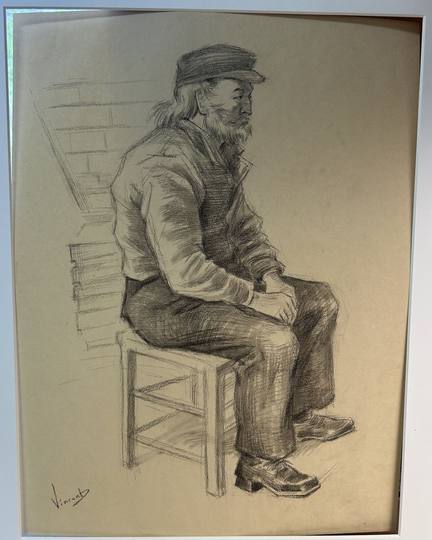
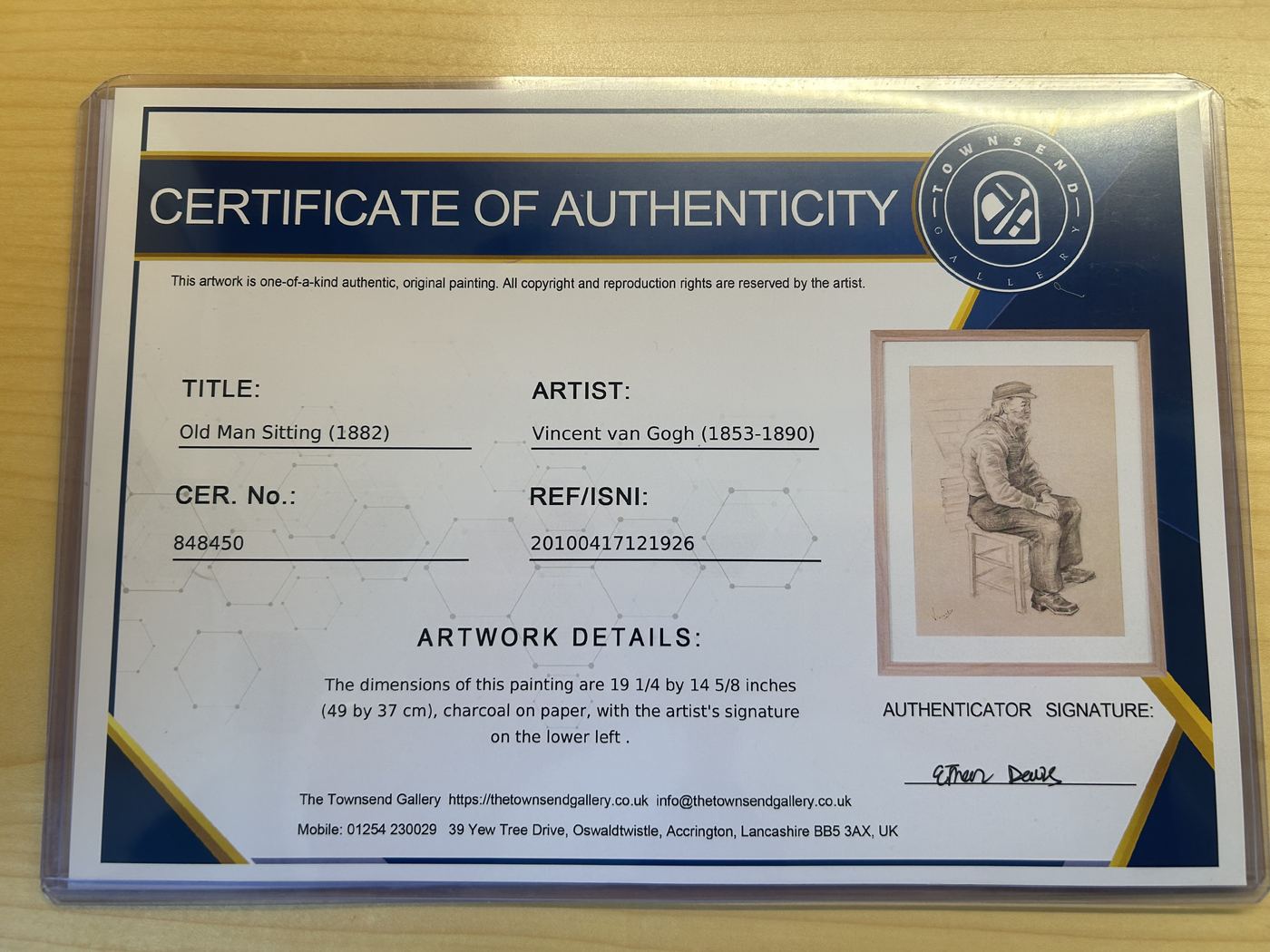
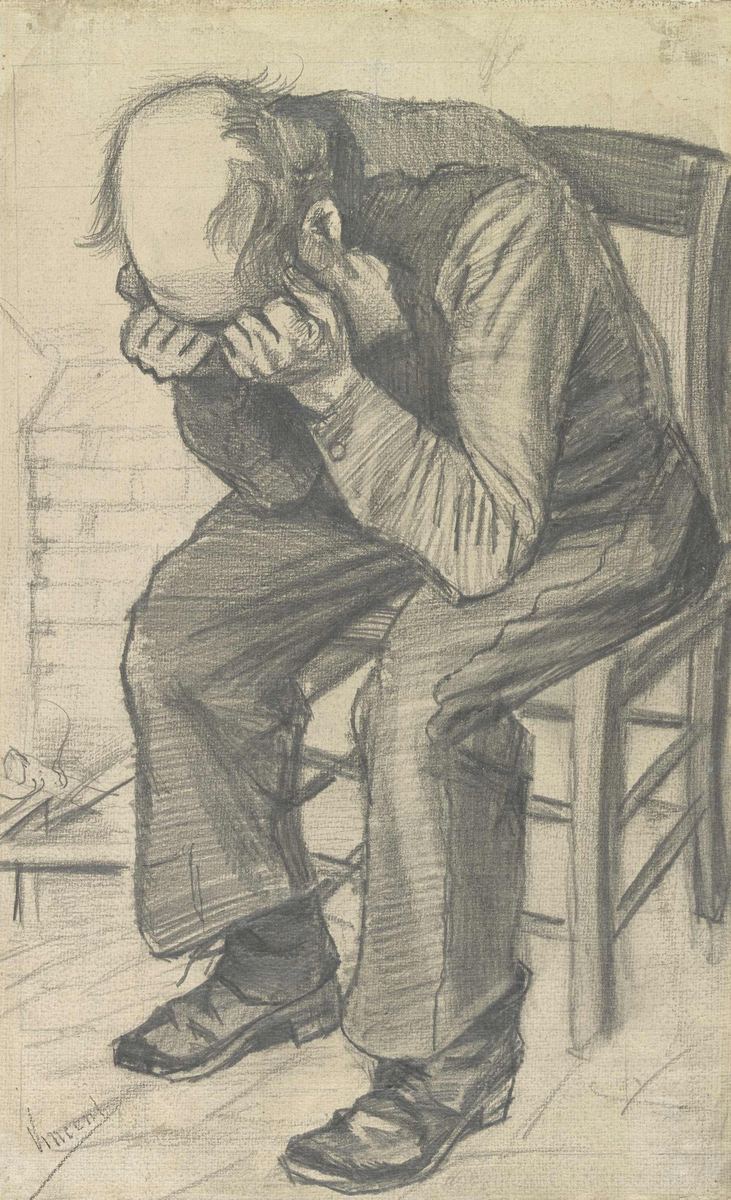
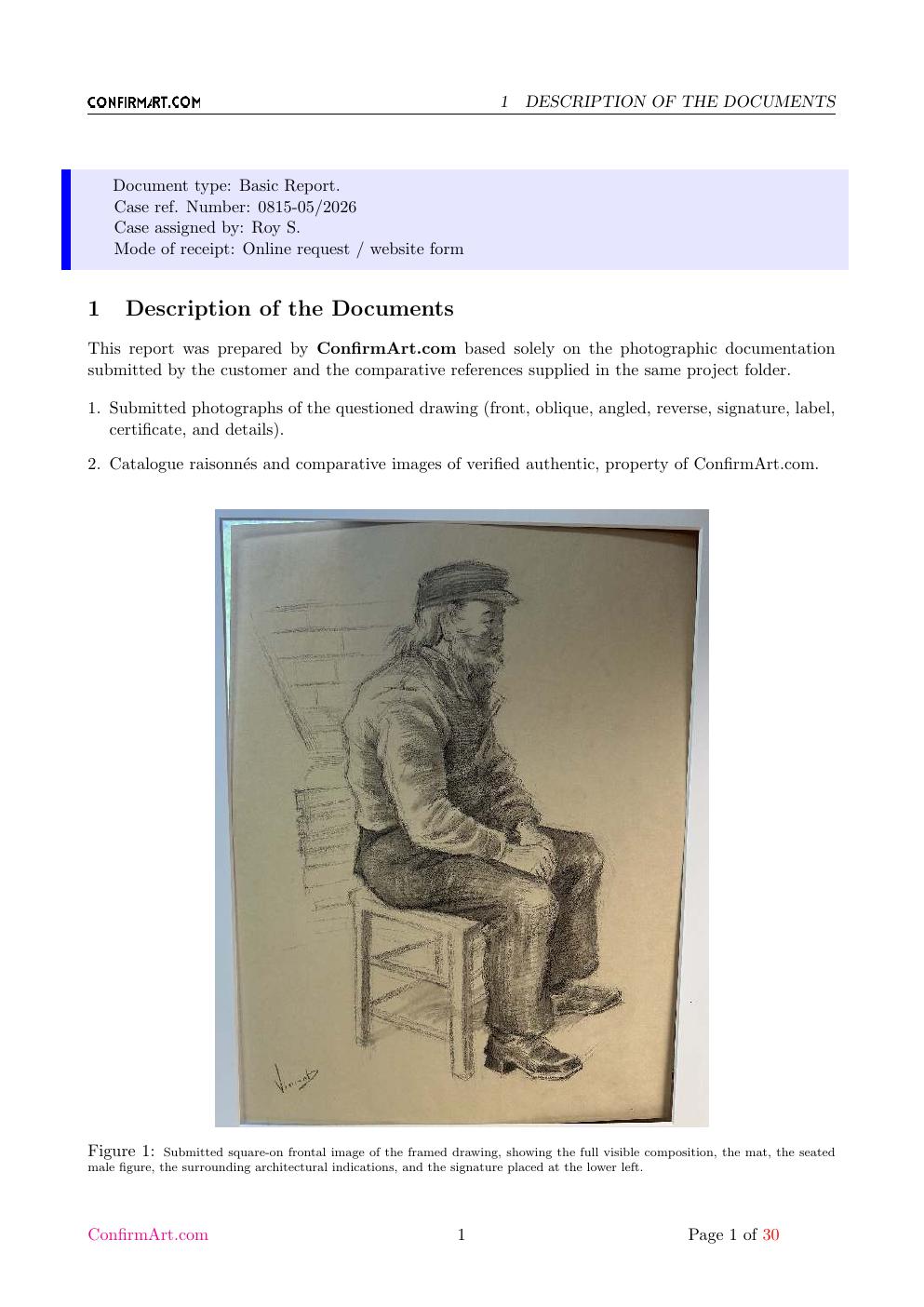
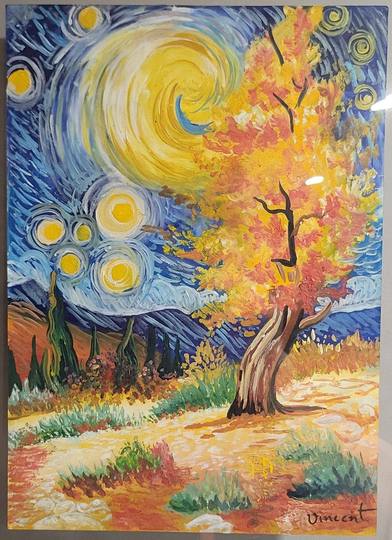
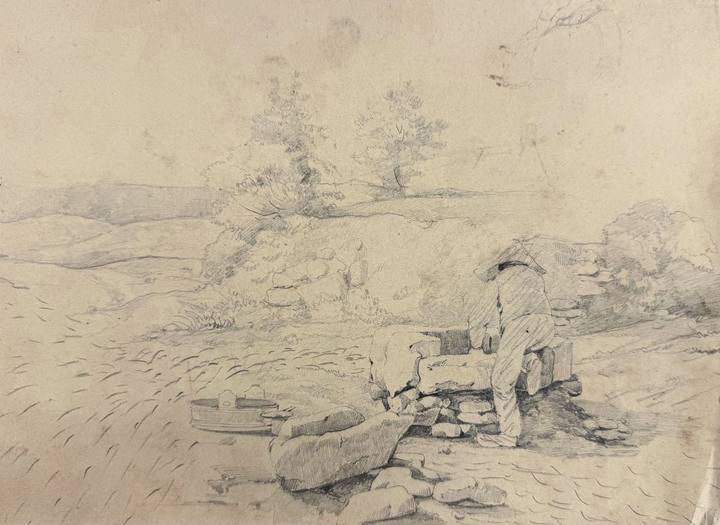
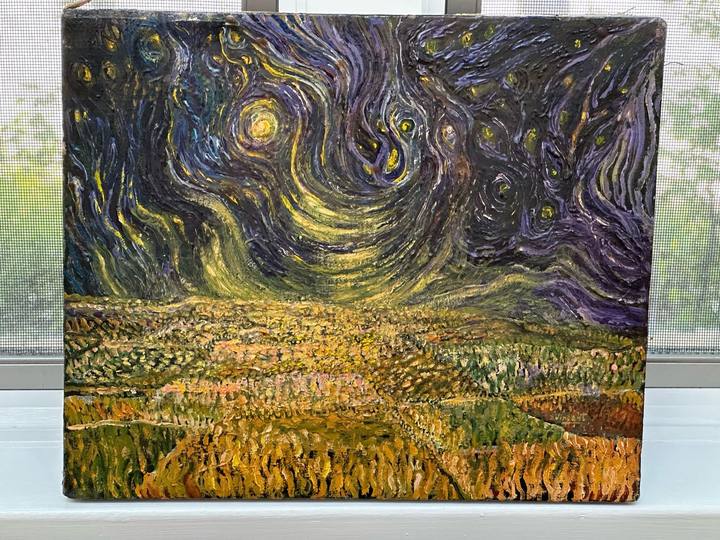
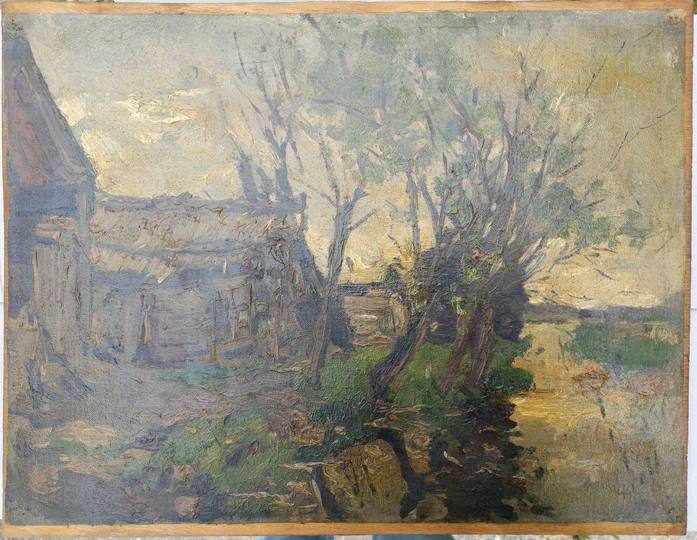
This report was prepared by ConfirmArt.com based solely on the photographic documentation submitted by the customer and the comparative references supplied in the same project folder. Submitted photographs of the questioned drawing (front, oblique, angled, reverse, signature, label, certificate, and details). Catalogue raisonnés and comparative images of verified authentic, property of ConfirmArt.com
Vincent van Gogh authentication evidence image 1: Van Gogh drawing studyVincent van Gogh authentication evidence image 2: Van Gogh drawing studyVincent van Gogh authentication evidence image 3: Van Gogh drawing studyVincent van Gogh authentication evidence image 4: Van Gogh drawing studyVincent van Gogh authentication evidence image 5: Van Gogh drawing studyVincent van Gogh authentication evidence image 6: Van Gogh drawing studyVincent van Gogh authentication evidence image 7: Van Gogh drawing studyVincent van Gogh authentication evidence image 8: Van Gogh drawing study
Report structure
Section summaries
01
Description of the Artwork
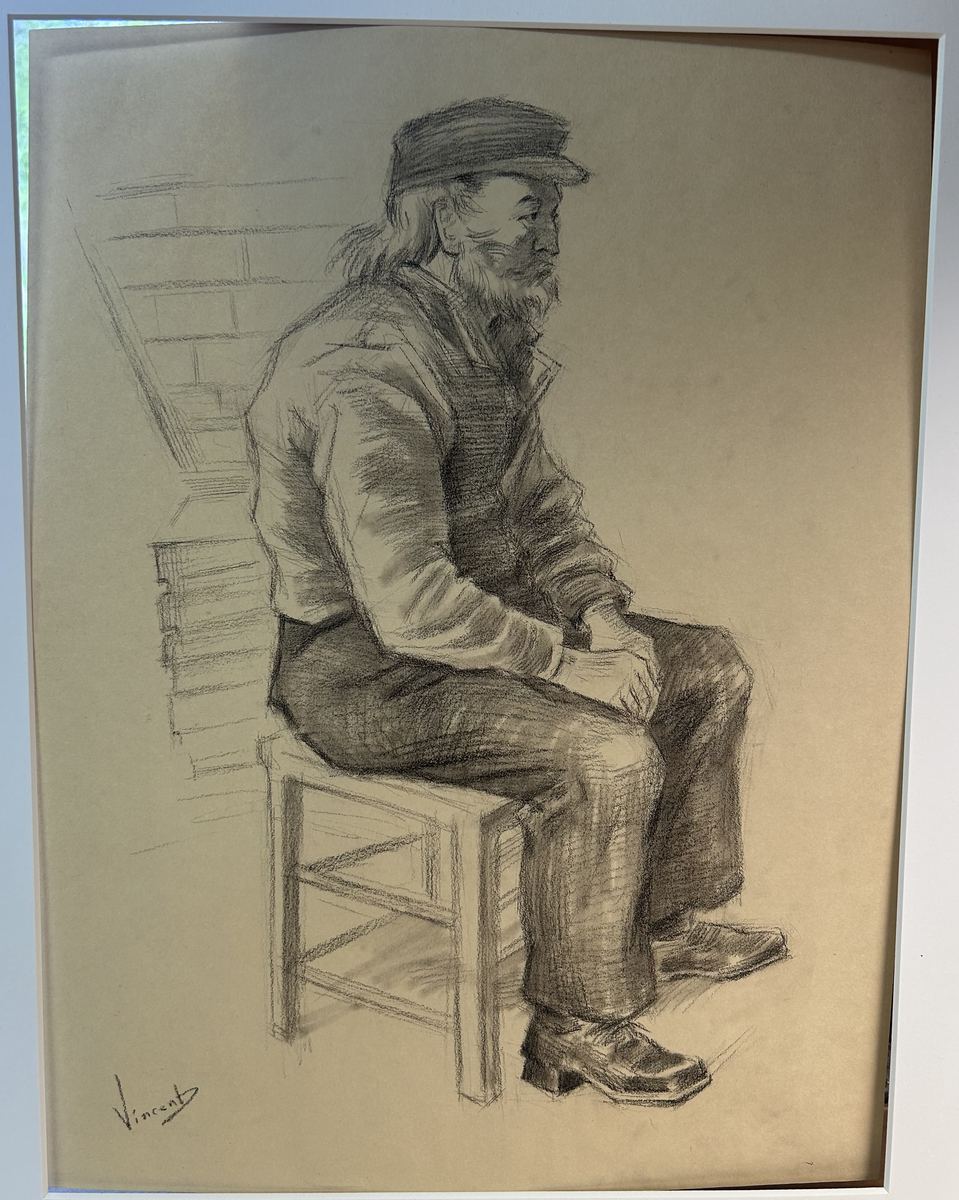
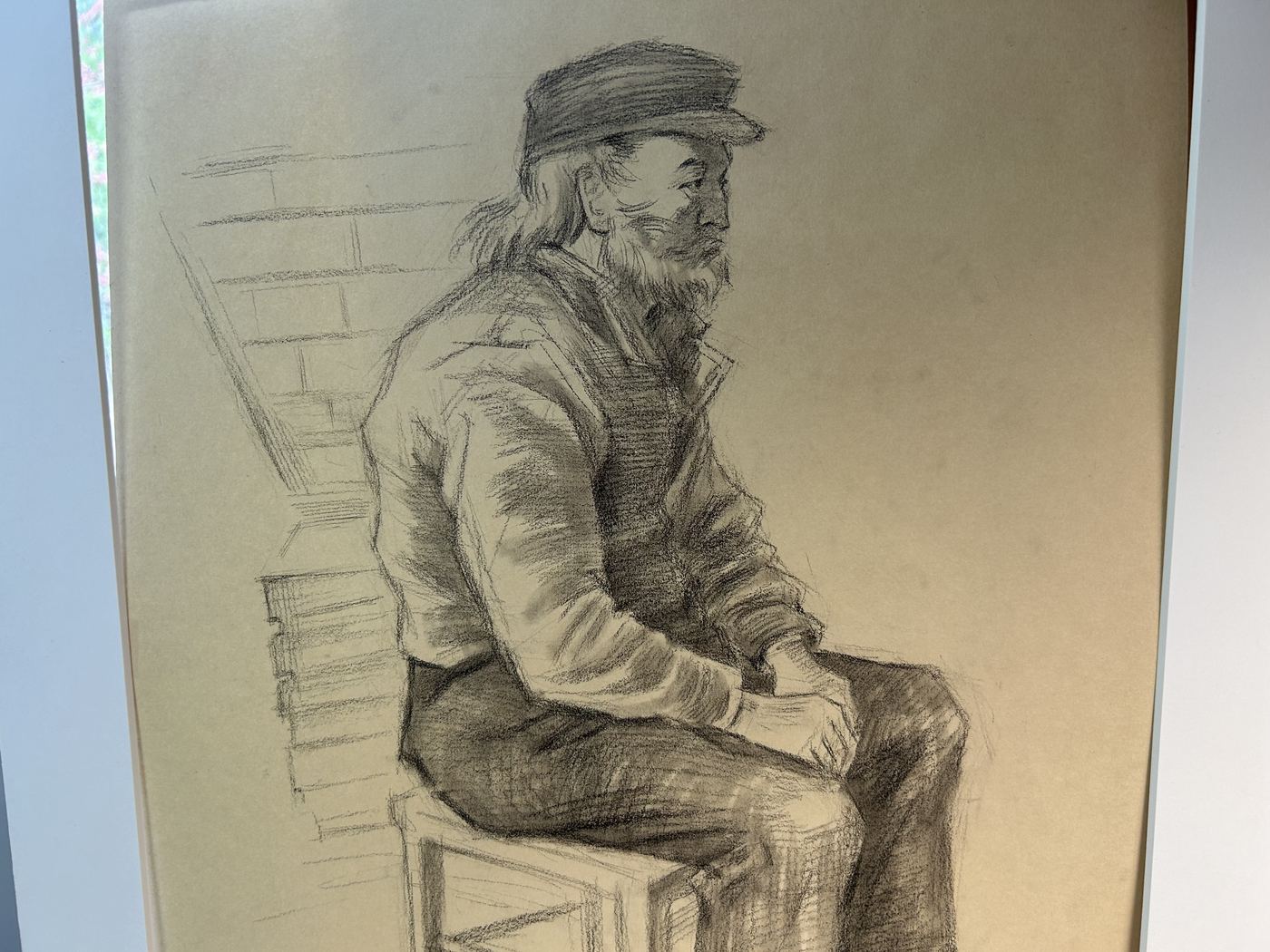
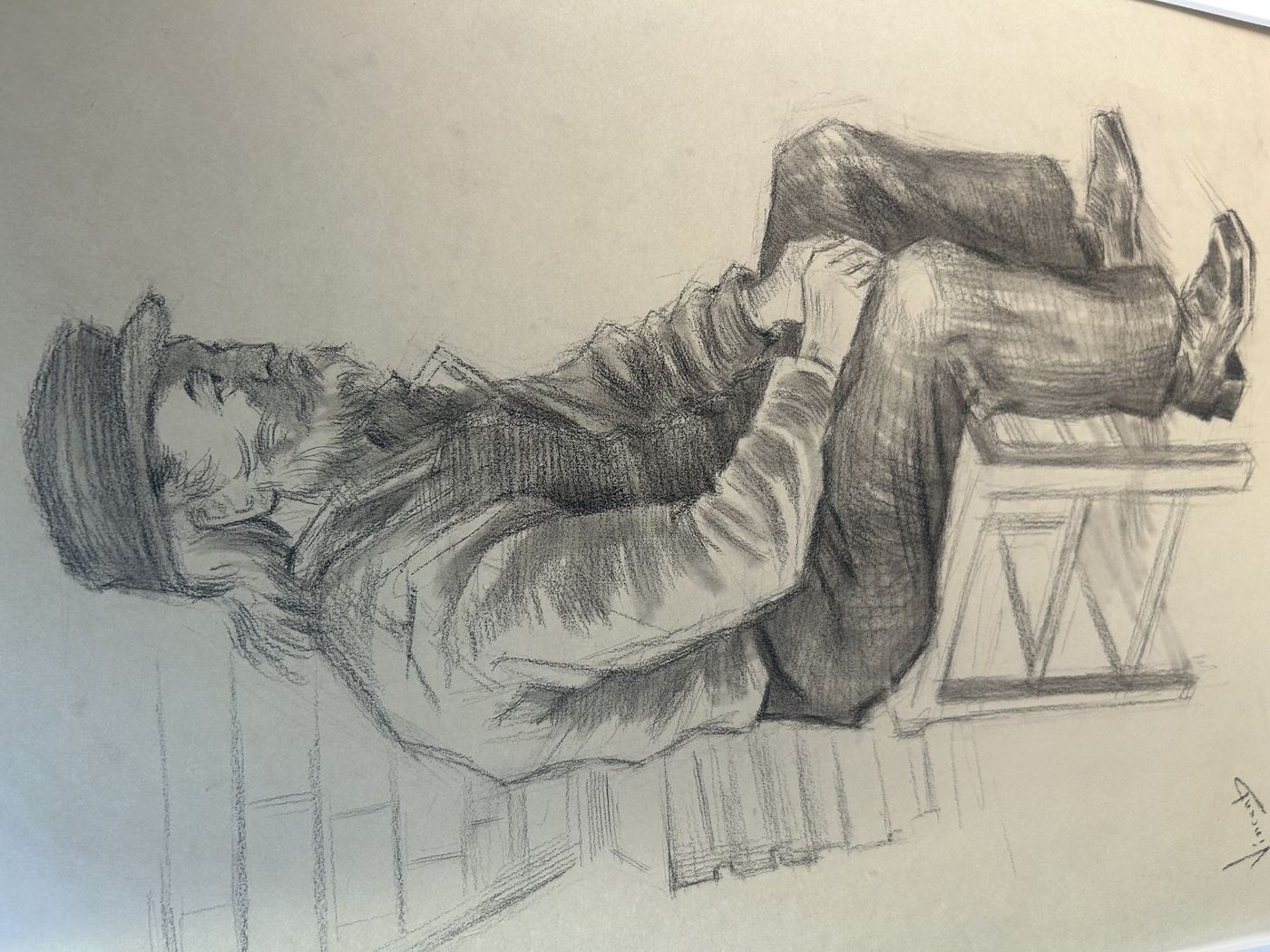
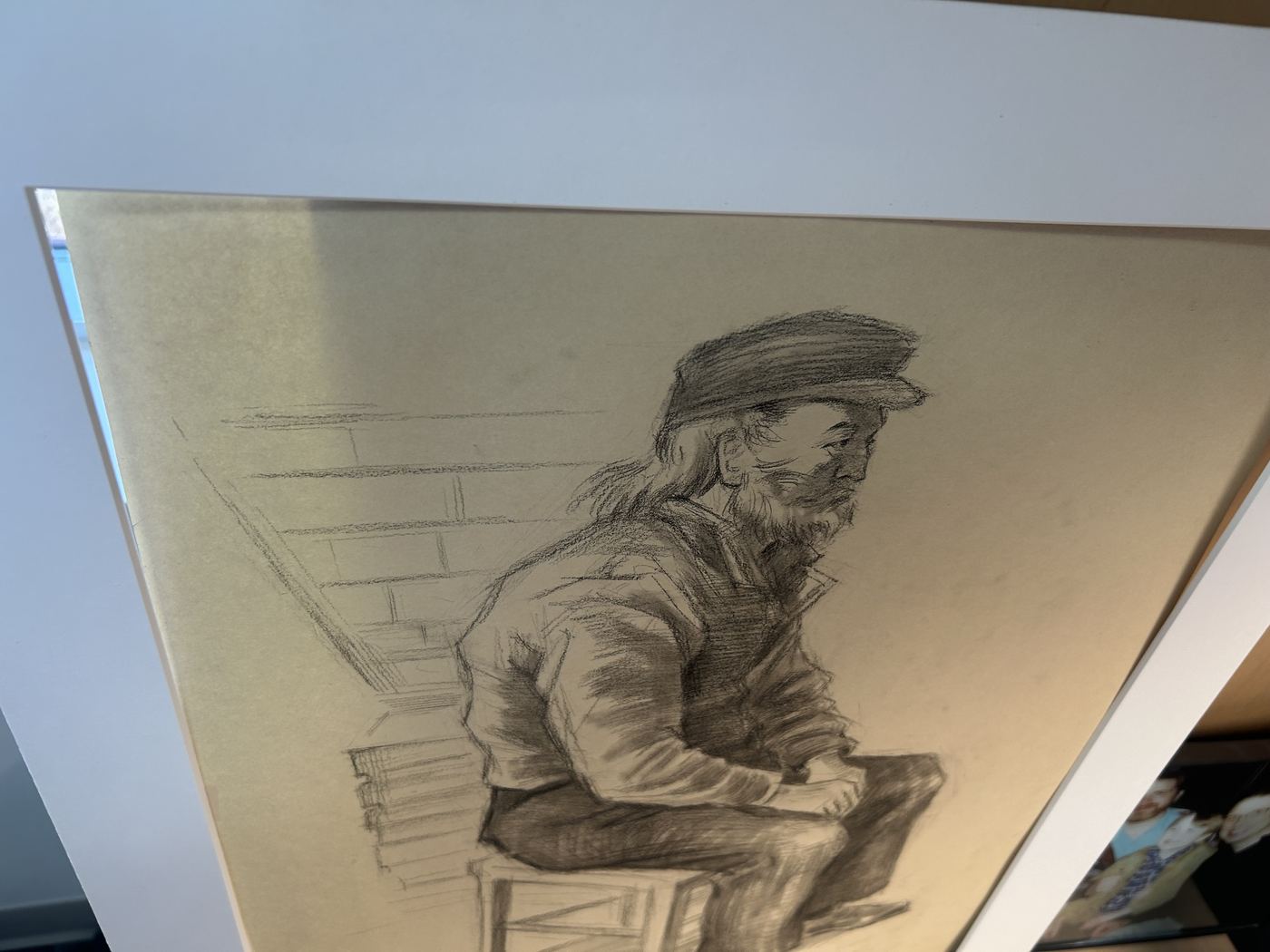
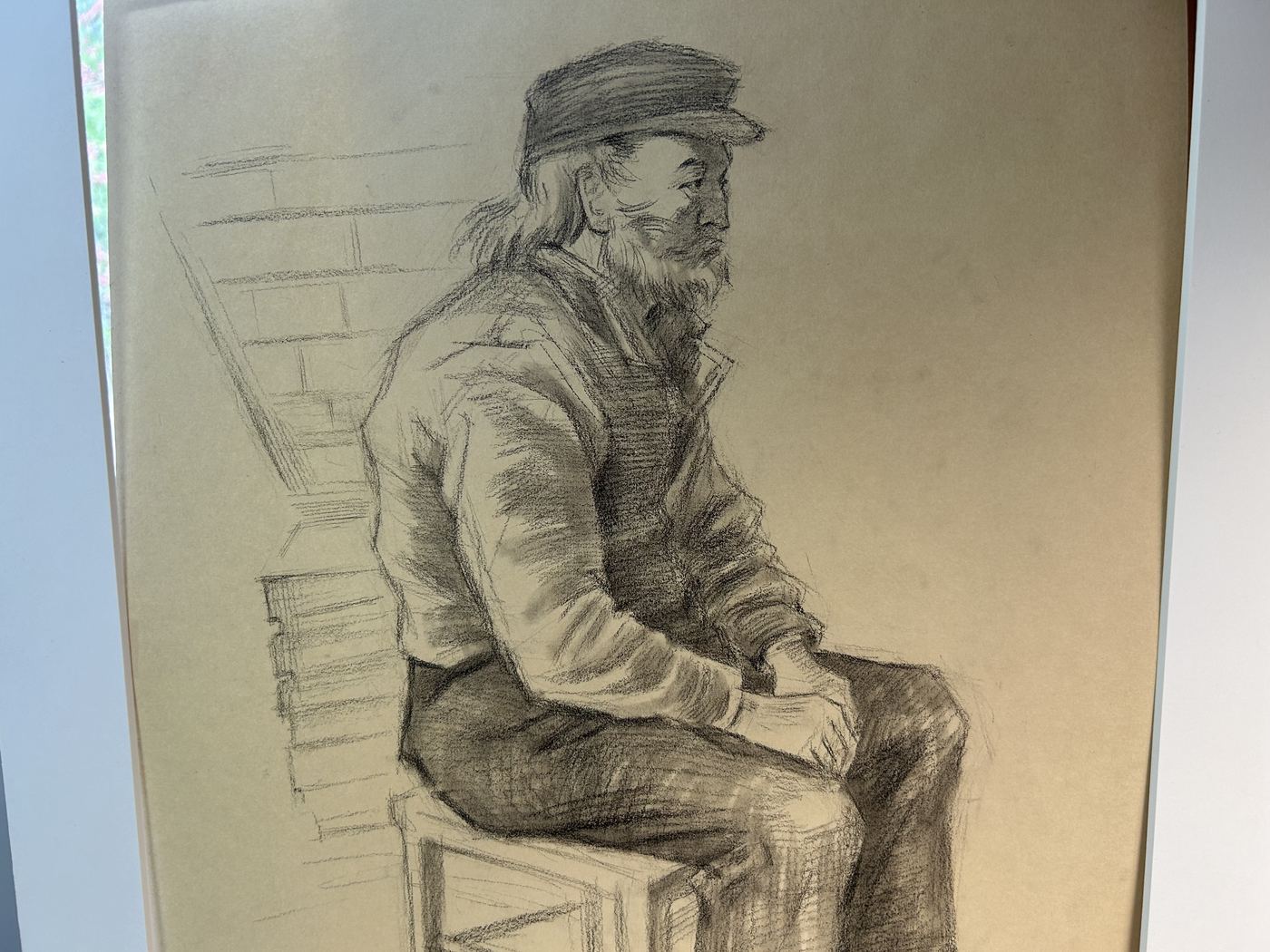
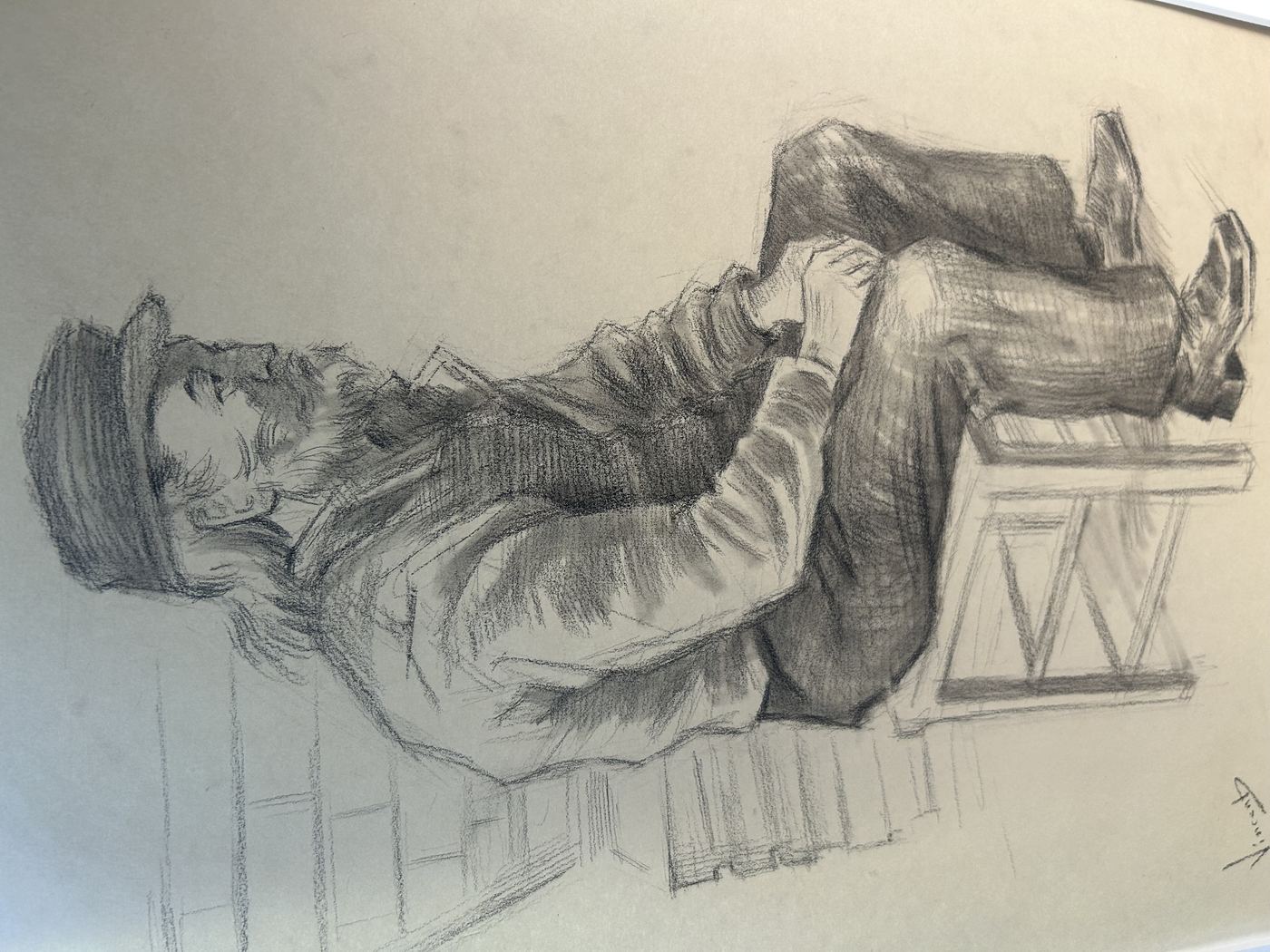
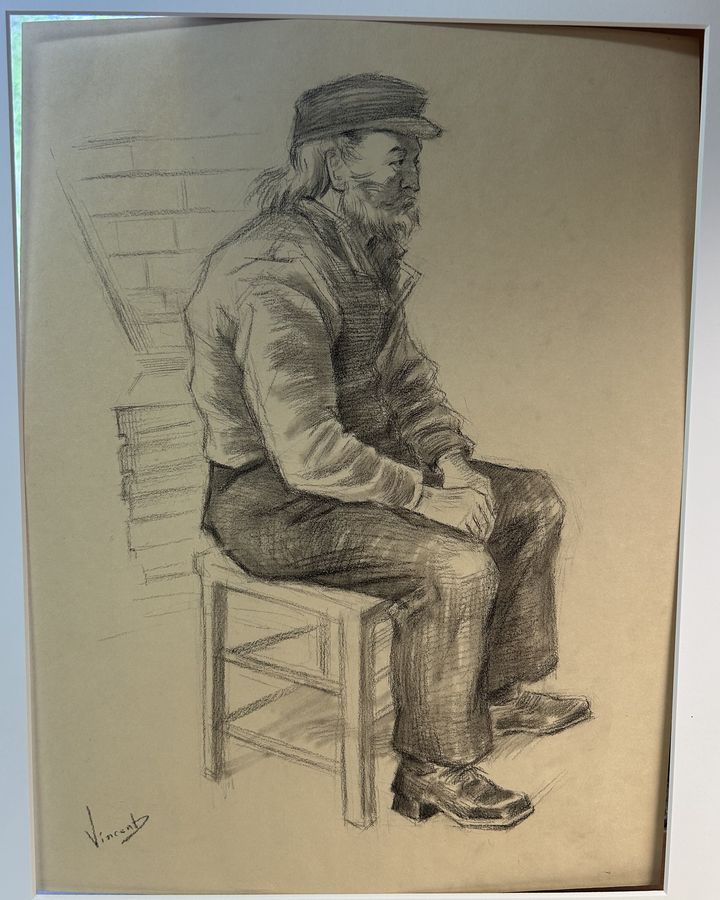
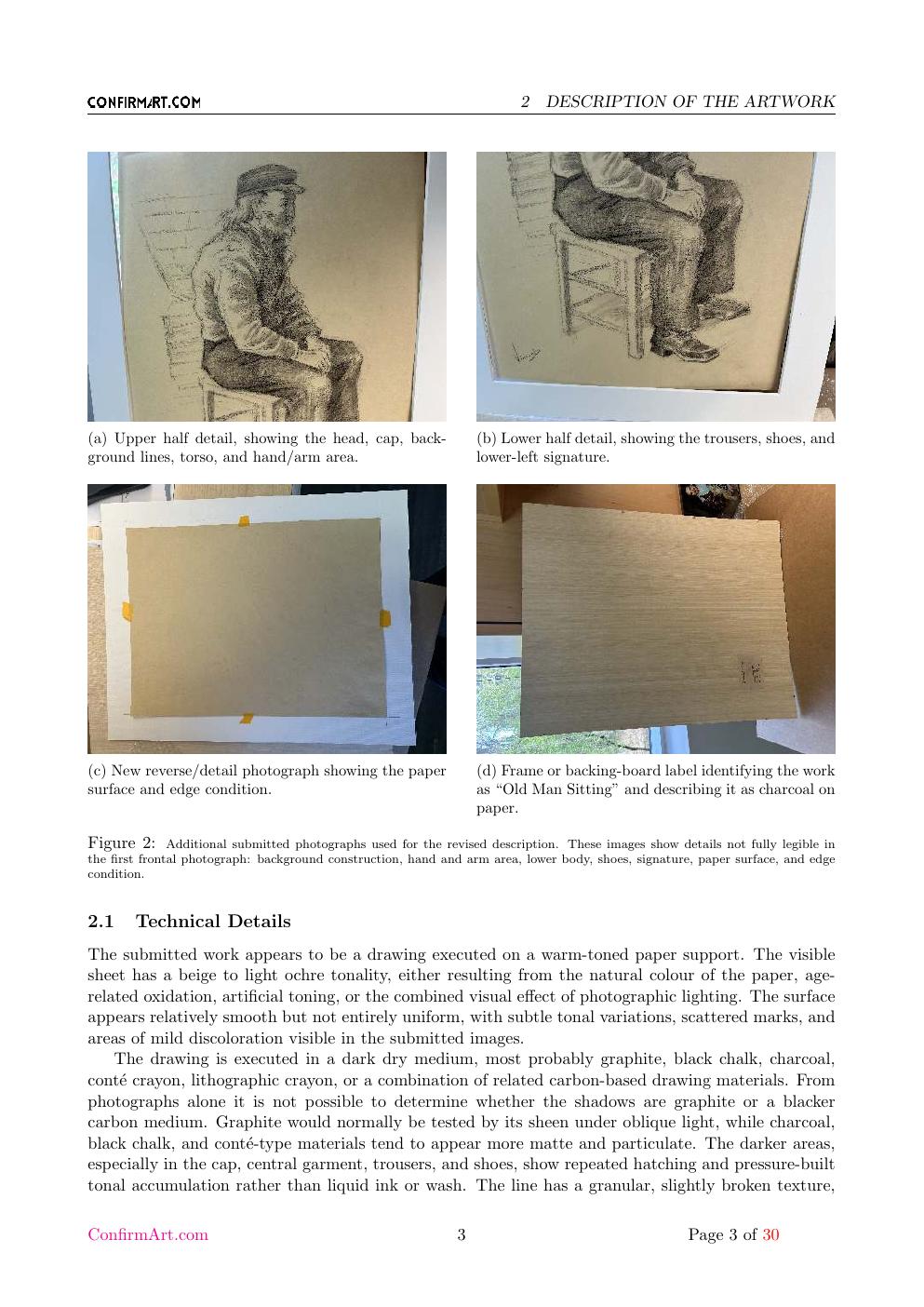
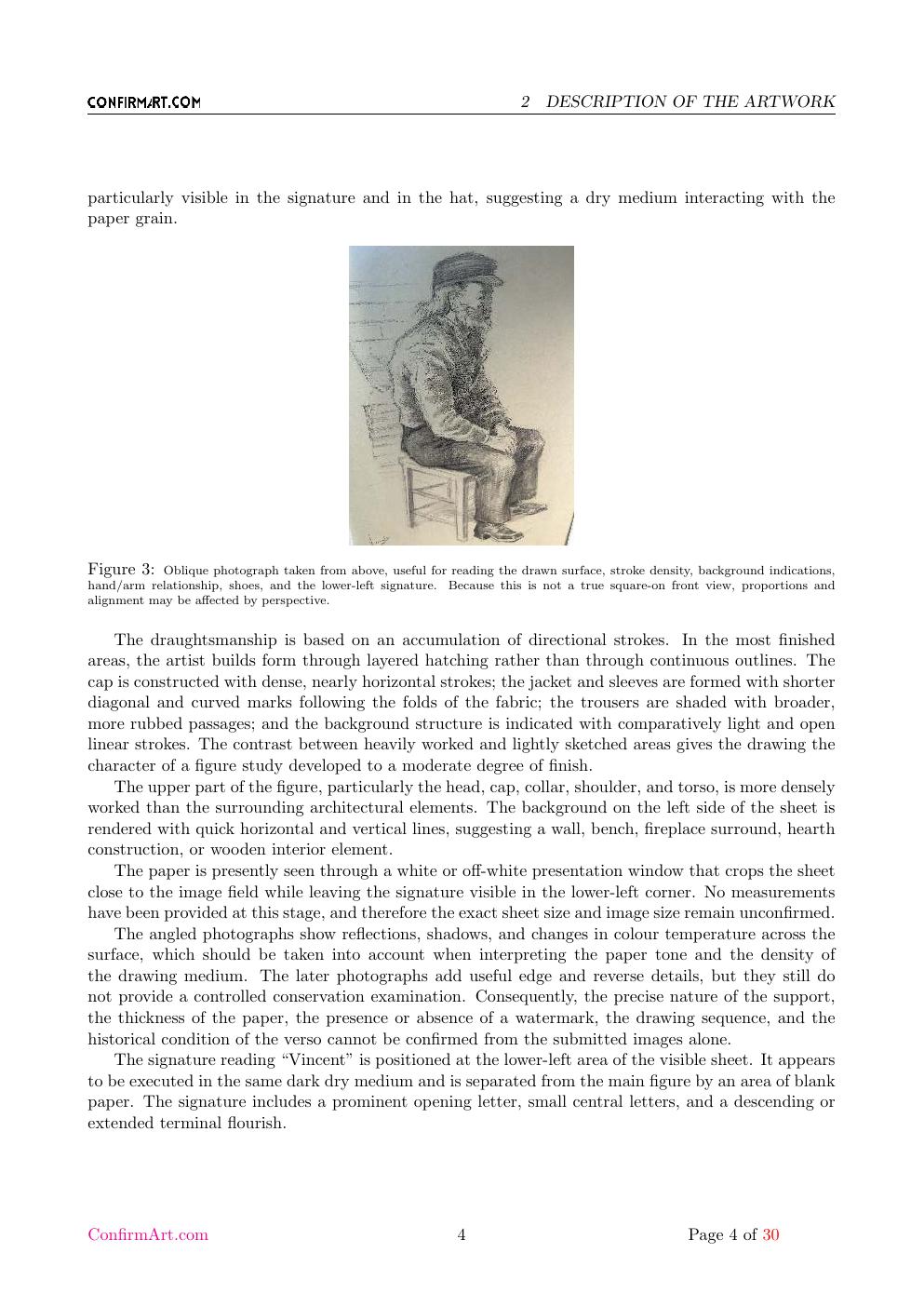
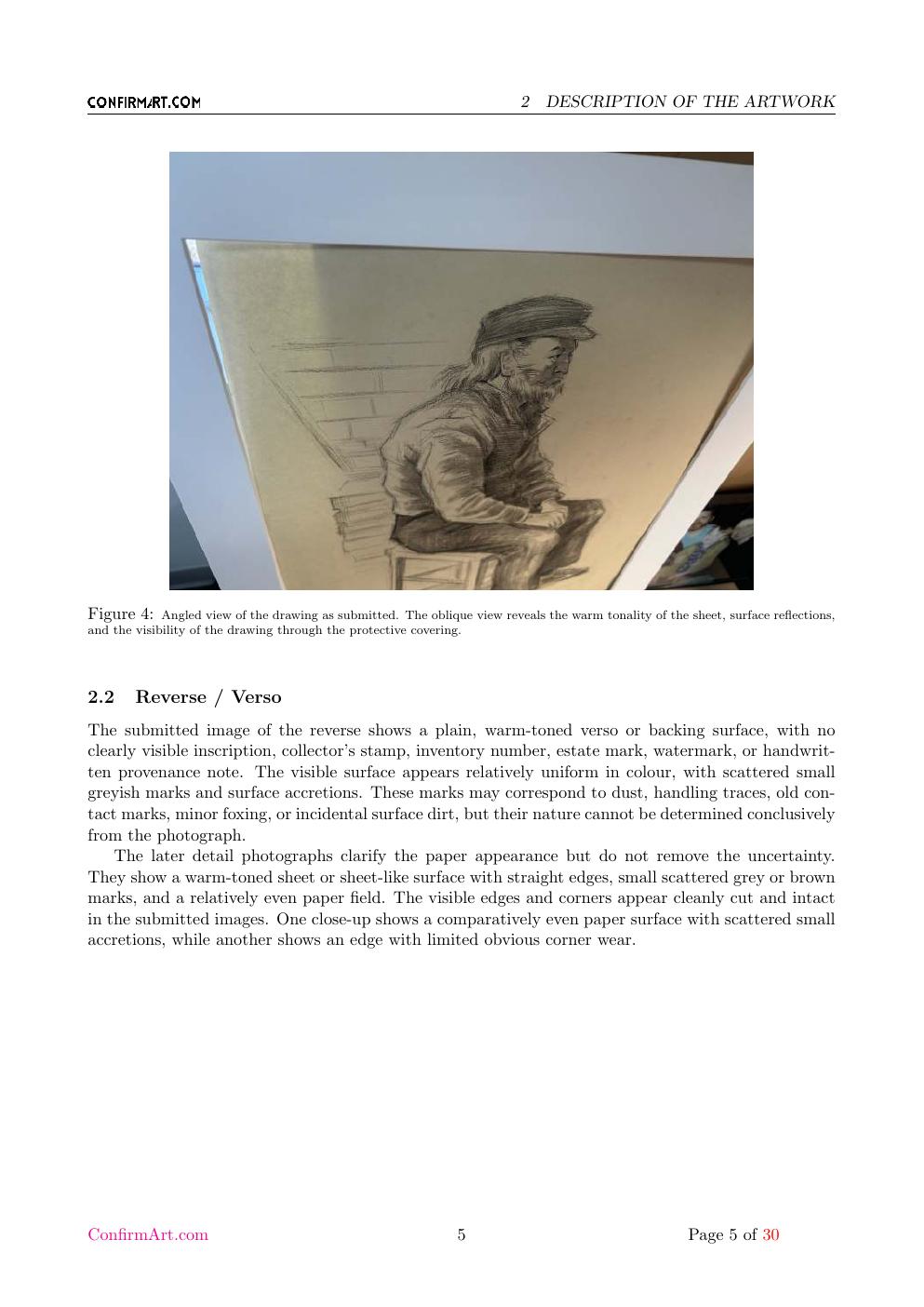
The submitted artwork is a vertically oriented drawing on paper depicting a seated elderly male , rendered in black chalk, charcoal, graphite, conté crayon, lithographic crayon, or a closely related dry drawing medium. The composition presents the sitter in three-quarter profile, facing toward the right side of the sheet, with the body angled slightly away from the viewer and the head seen in profile. The occupies the central and lower portions of the paper, while a large field of comparatively unworked paper remai
02
Technical Details
The submitted work appears to be a drawing executed on a warm-toned paper support. The visible sheet has a beige to light ochre tonality, either resulting from the natural colour of the paper, age-related oxidation, artificial toning, or the combined visual effect of photographic lighting. The surface appears relatively smooth but not entirely uniform, with subtle tonal variations, scattered marks, and areas of mild discoloration visible in the submitted images.
03
Reverse / Verso
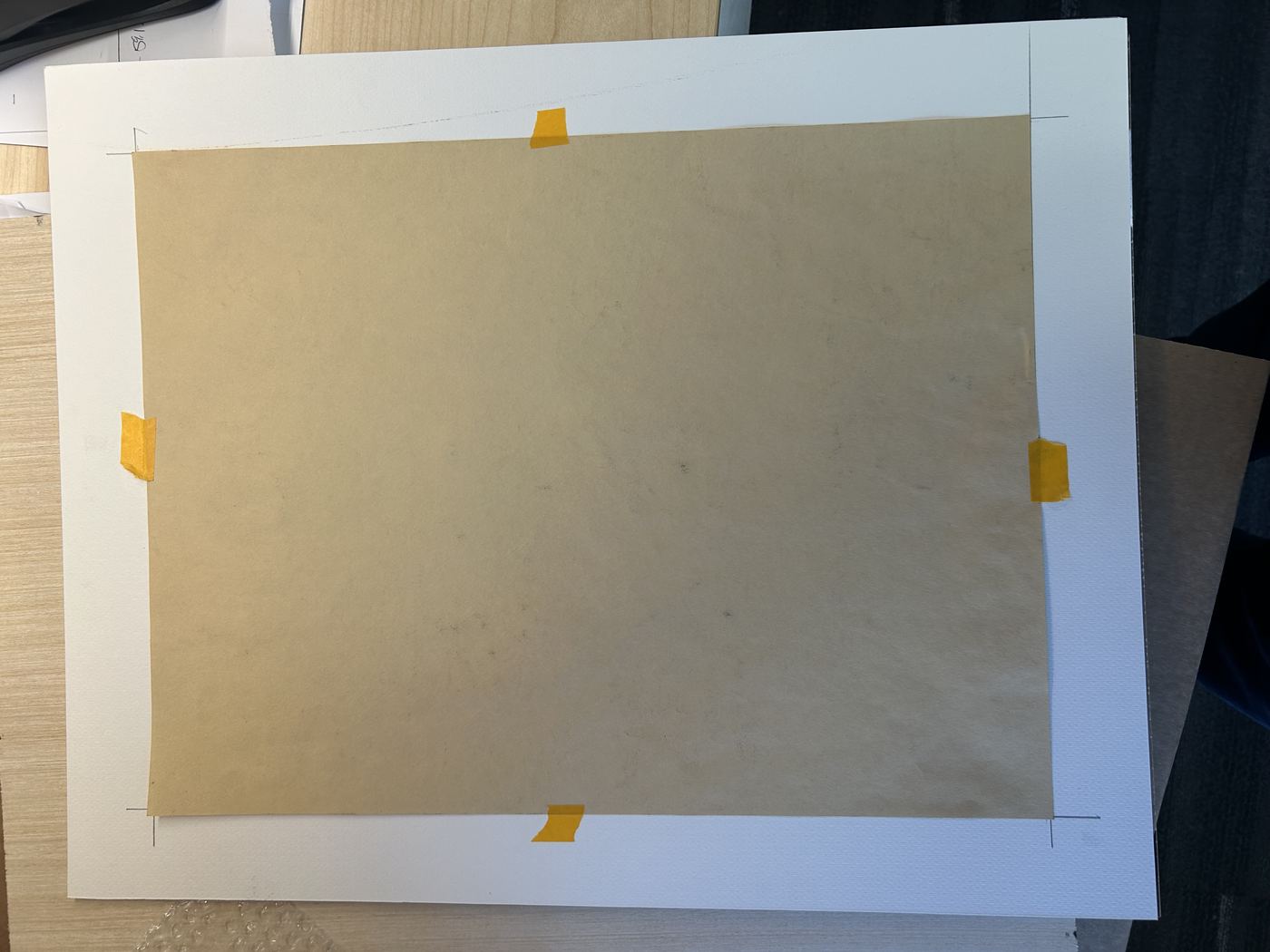
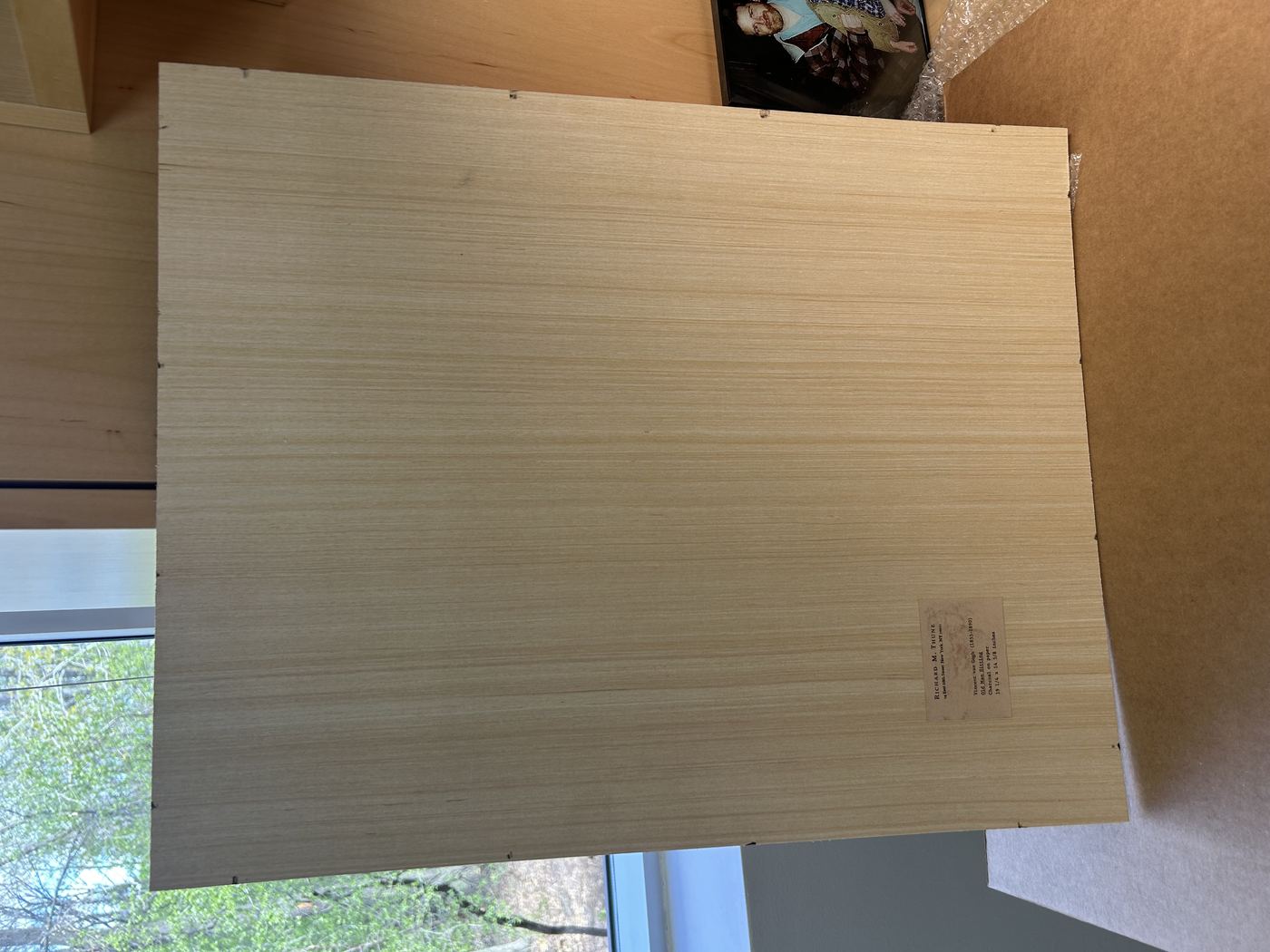
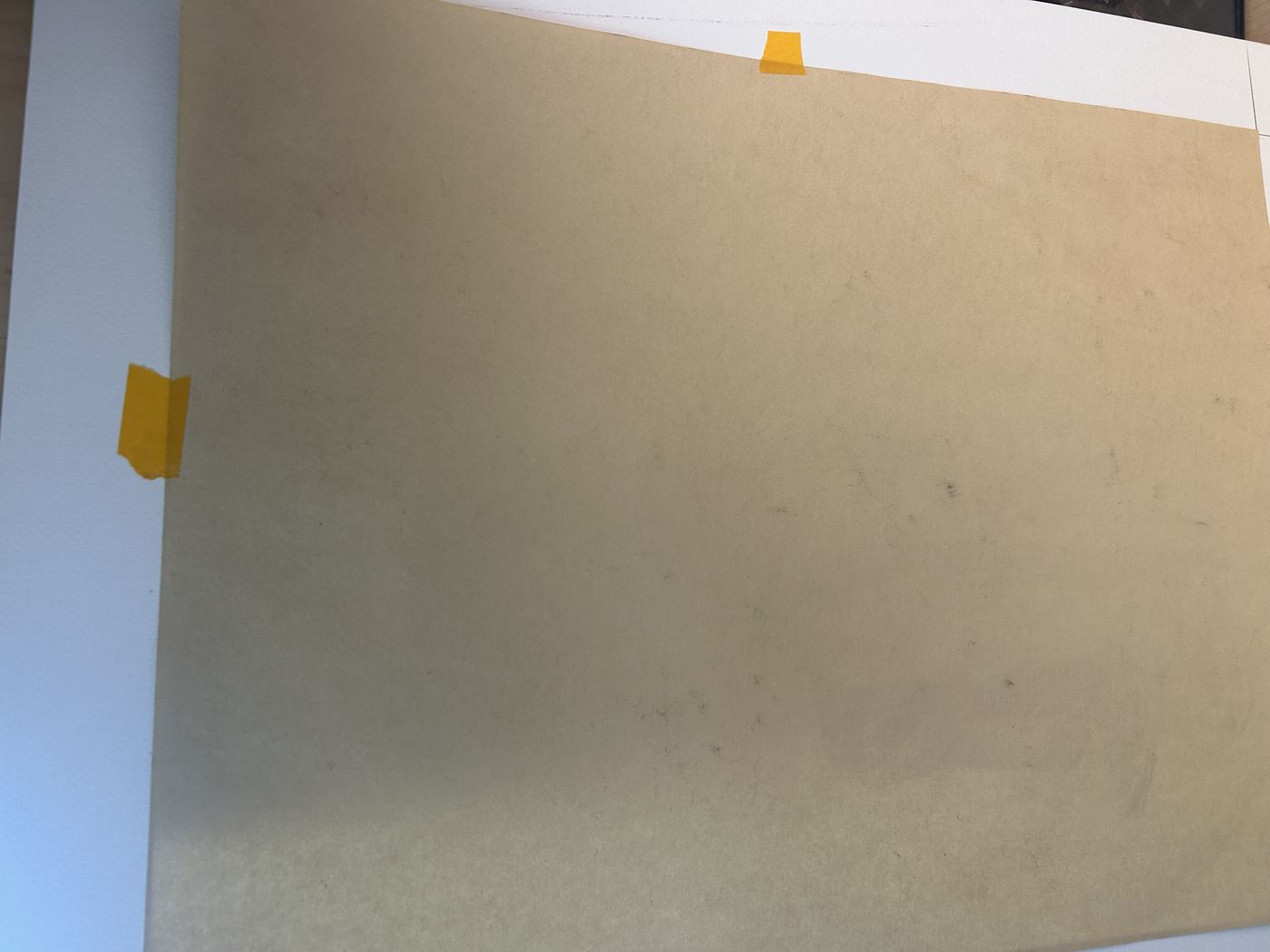
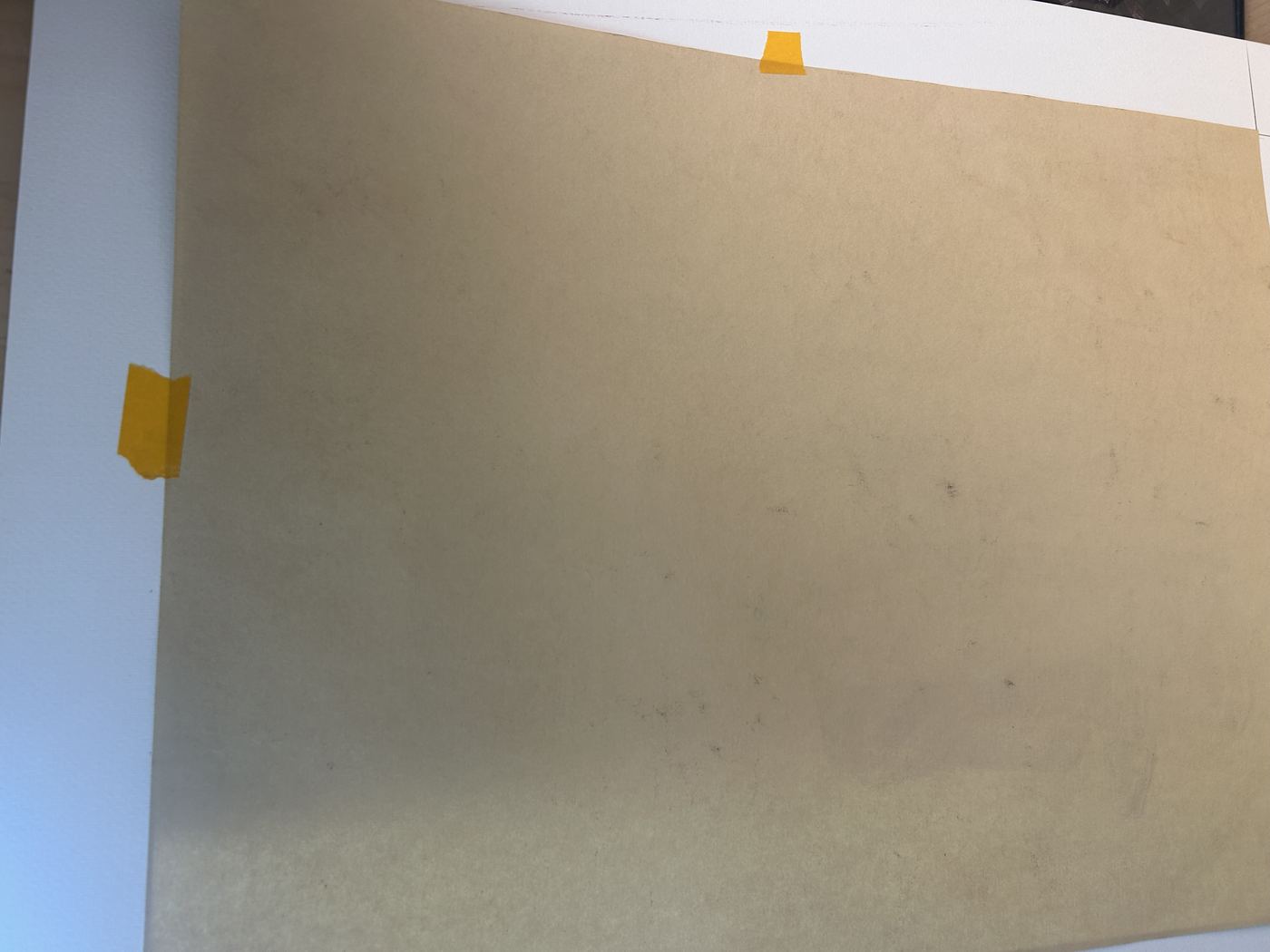
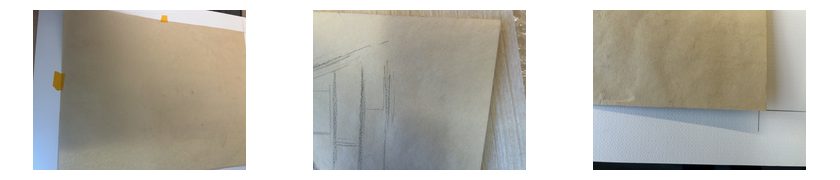
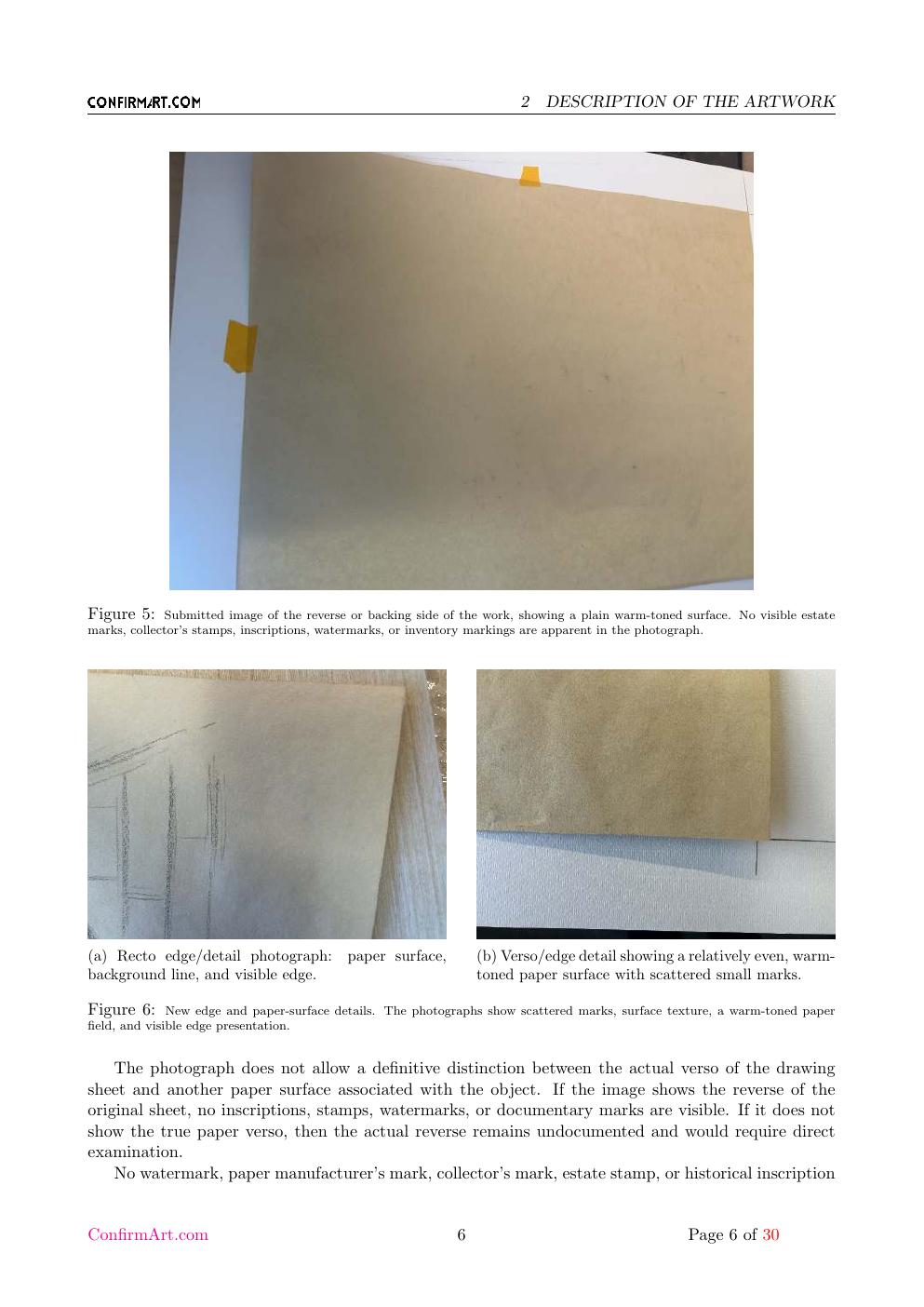
The submitted image of the reverse shows a plain, warm-toned verso or backing surface, with no clearly visible inscription, collector's stamp, inventory number, estate mark, watermark, or handwritten provenance note. The visible surface appears relatively uniform in colour, with scattered small greyish marks and surface accretions. These marks may correspond to dust, handling traces, old contact marks, minor foxing, or incidental surface dirt, but their nature cannot be determined conclusively from the photograph.
04
Provenance
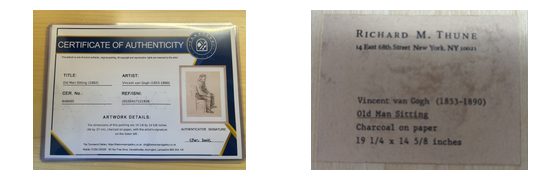
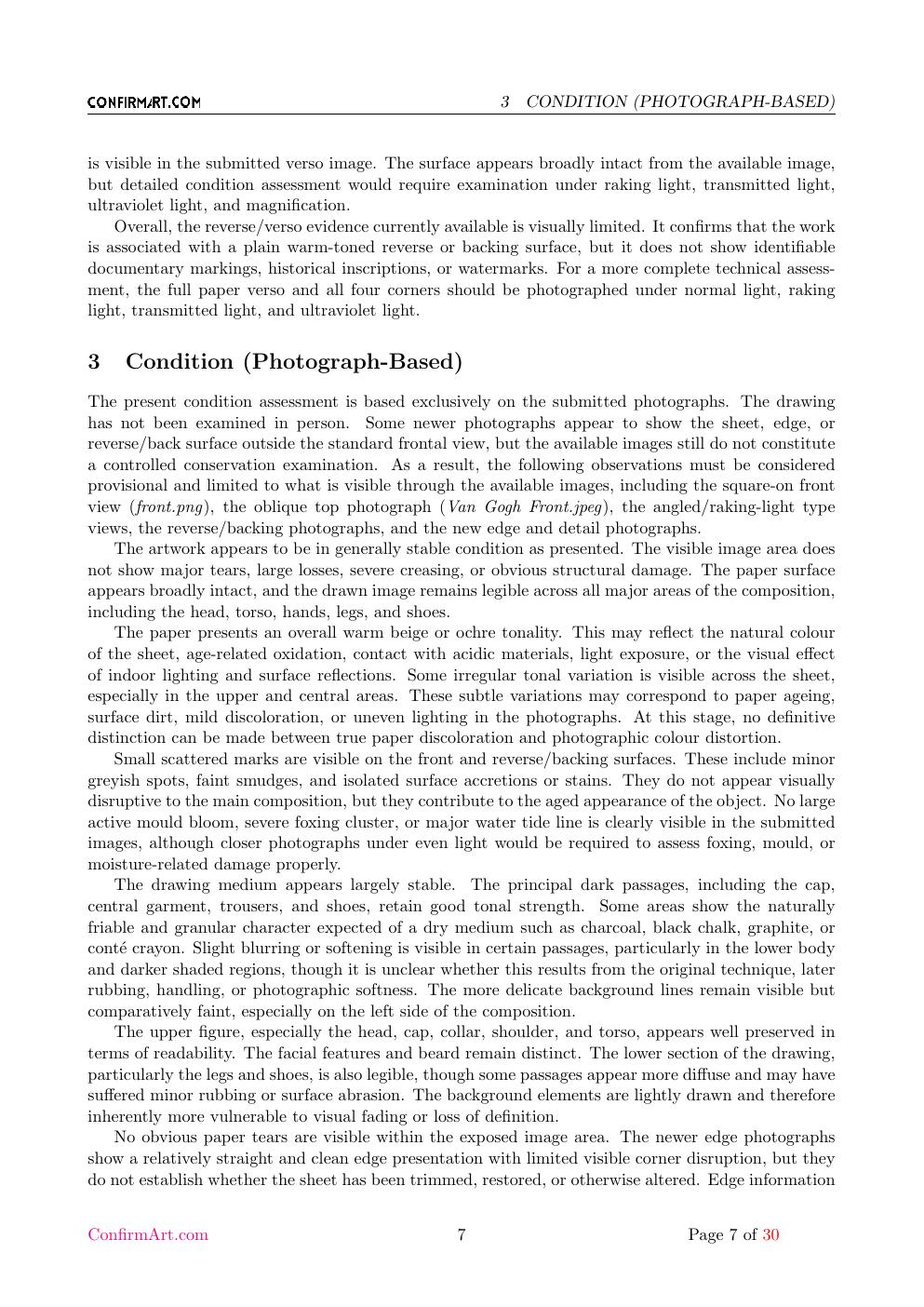
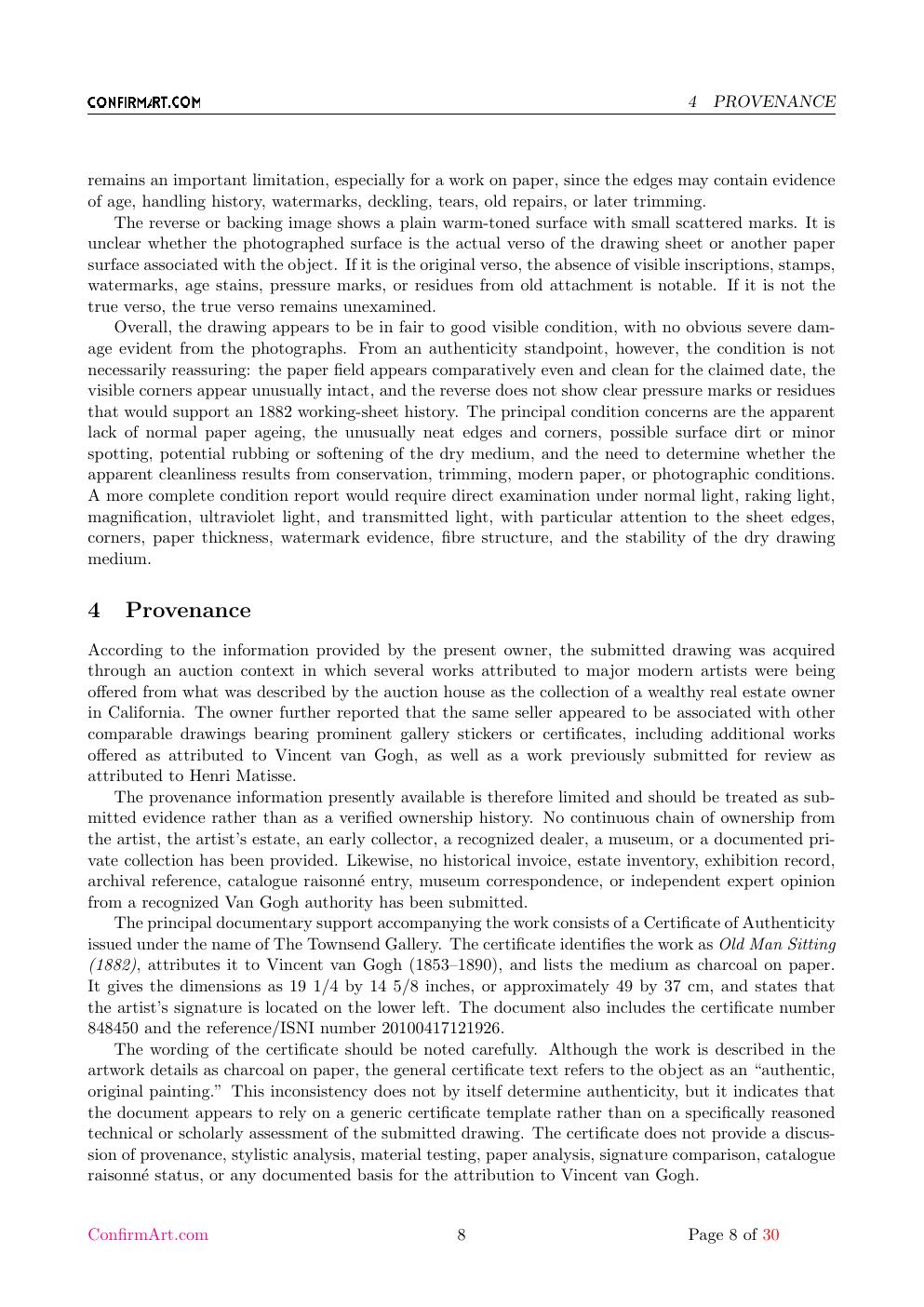
According to the information provided by the present owner, the submitted drawing was acquired through an auction context in which several works attributed to major modern artists were being offered from what was described by the auction house as the collection of a wealthy real estate owner in California. The owner further reported that the same seller appeared to be associated with other comparable drawings bearing prominent gallery stickers or certificates, including additional works offered as attributed to Vin
05
Catalogue Notes
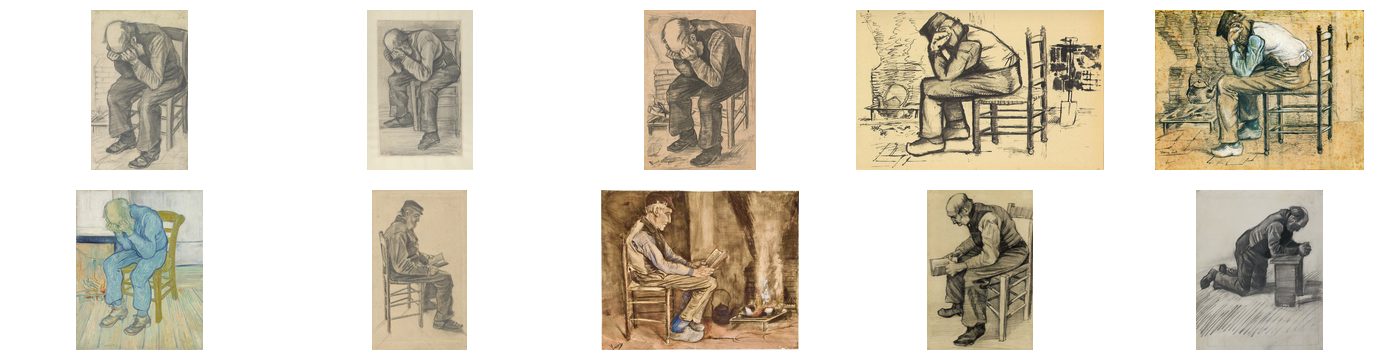
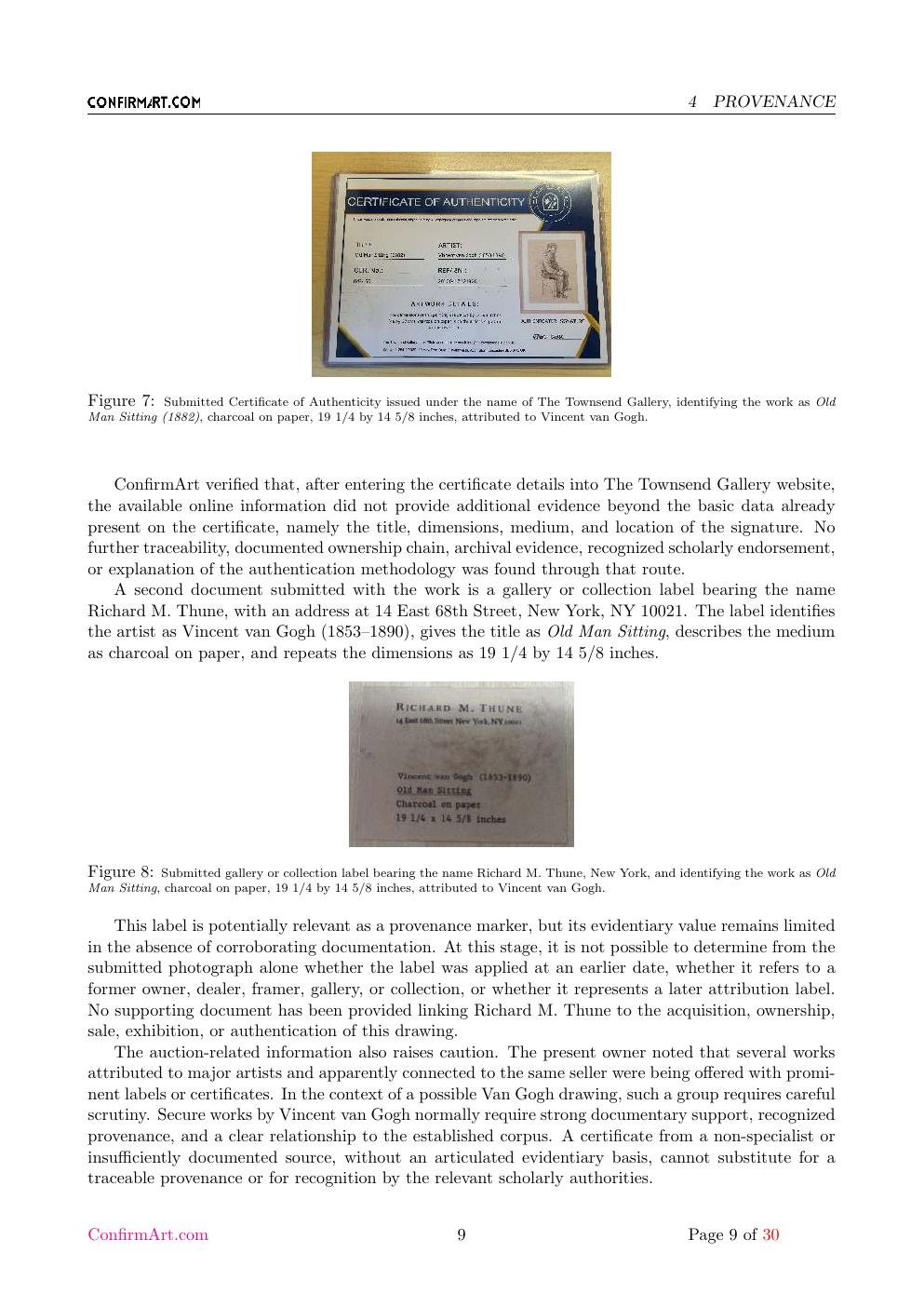
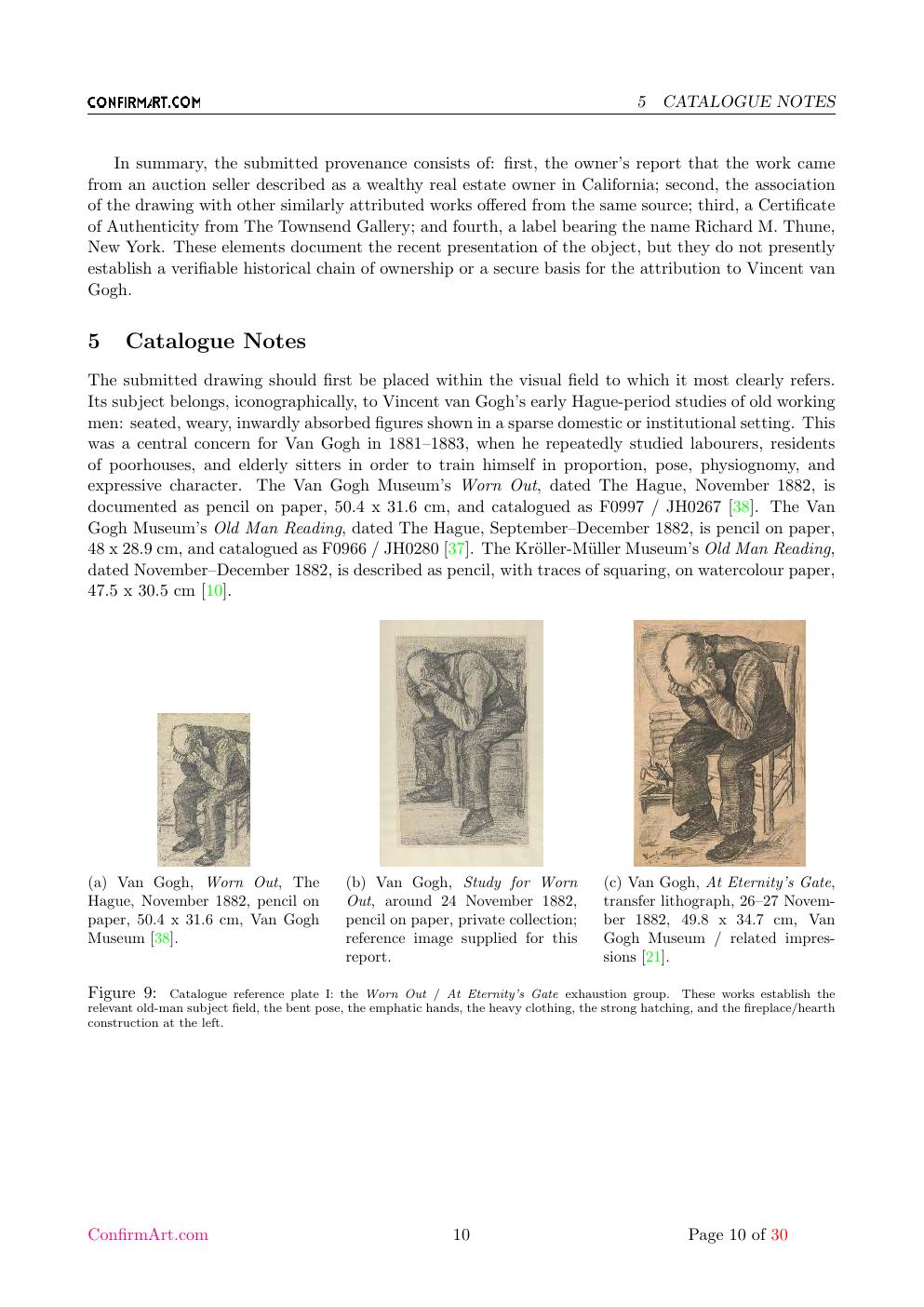
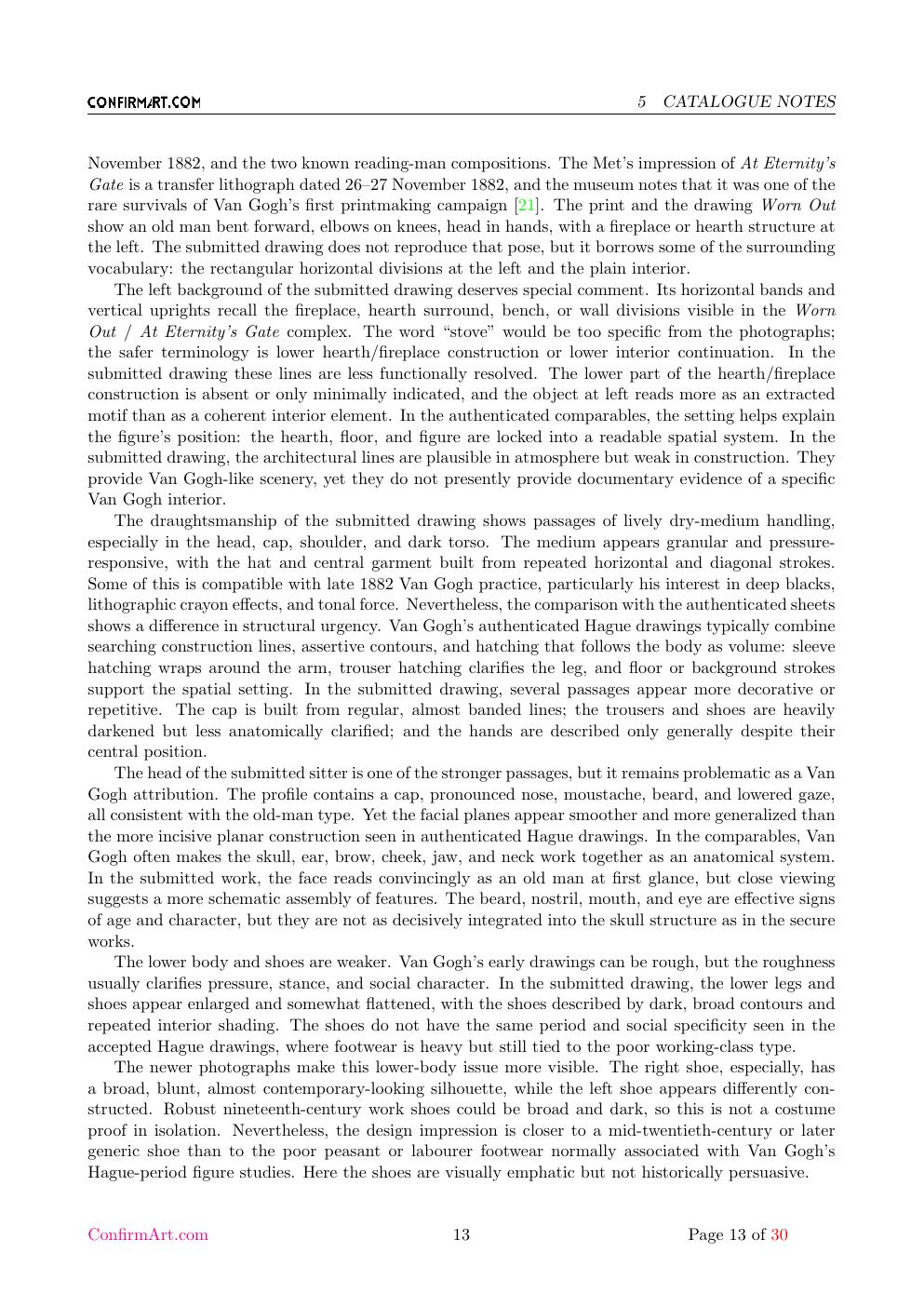
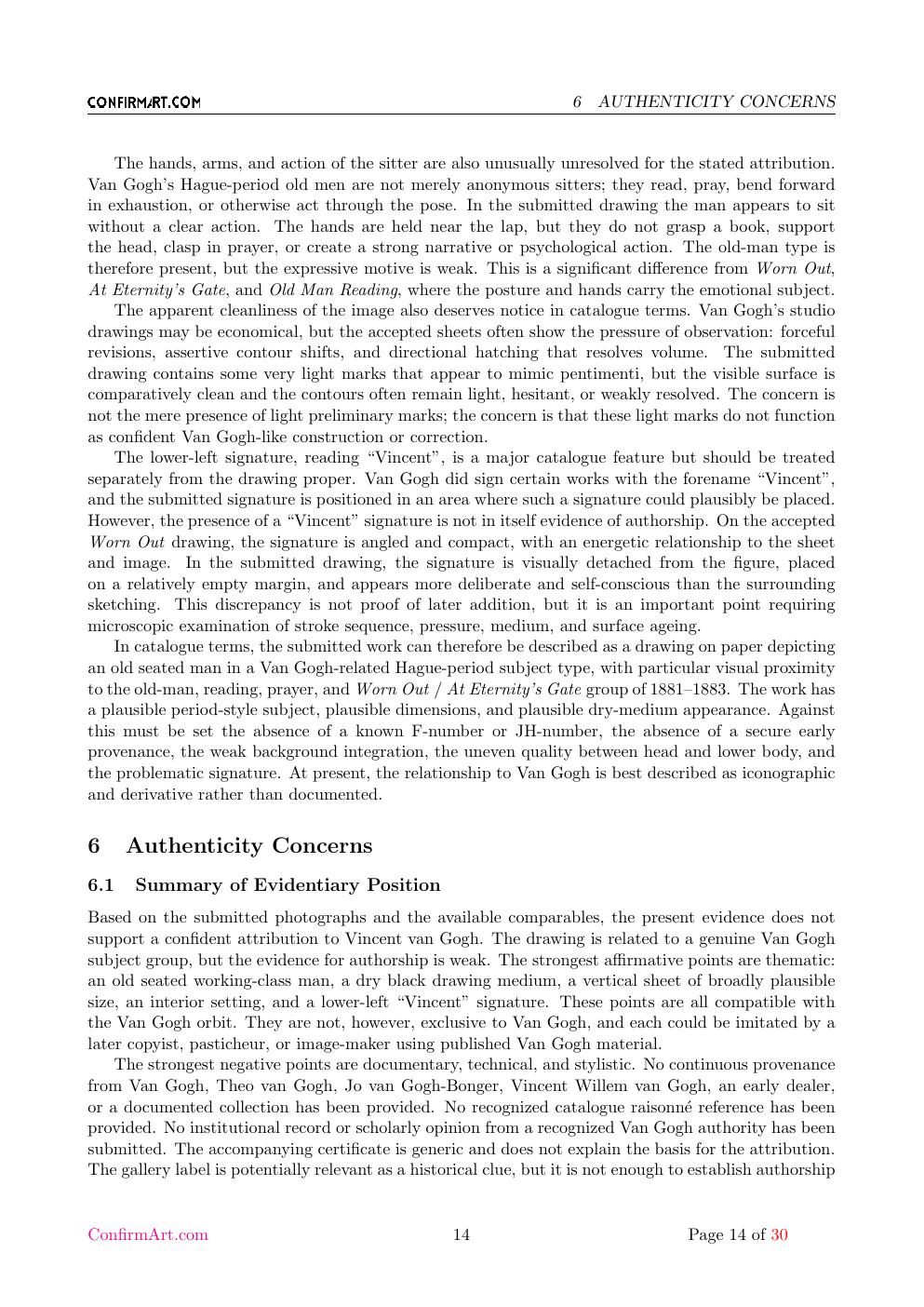
The submitted drawing should first be placed within the visual field to which it most clearly refers. Its subject belongs, iconographically, to Vincent van Gogh's early Hague-period studies of old working men: seated, weary, inwardly absorbed figures shown in a sparse domestic or institutional setting. This was a central concern for Van Gogh in 1881--1883, when he repeatedly studied labourers, residents of poorhouses, and elderly sitters in order to train himself in proportion, pose, physiognomy, and expressive cha
06
Composition and Motif
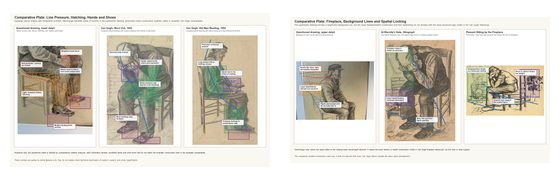
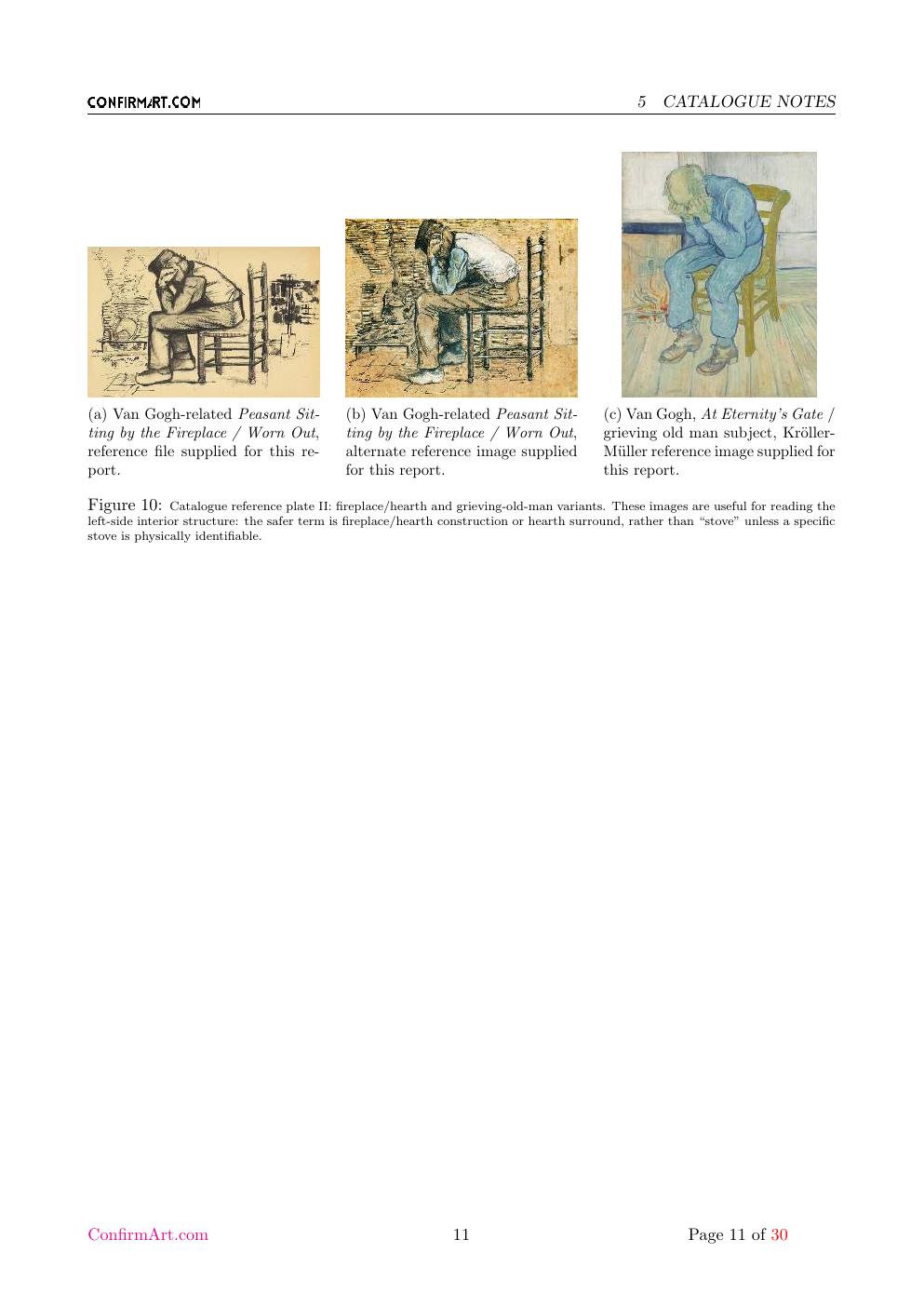
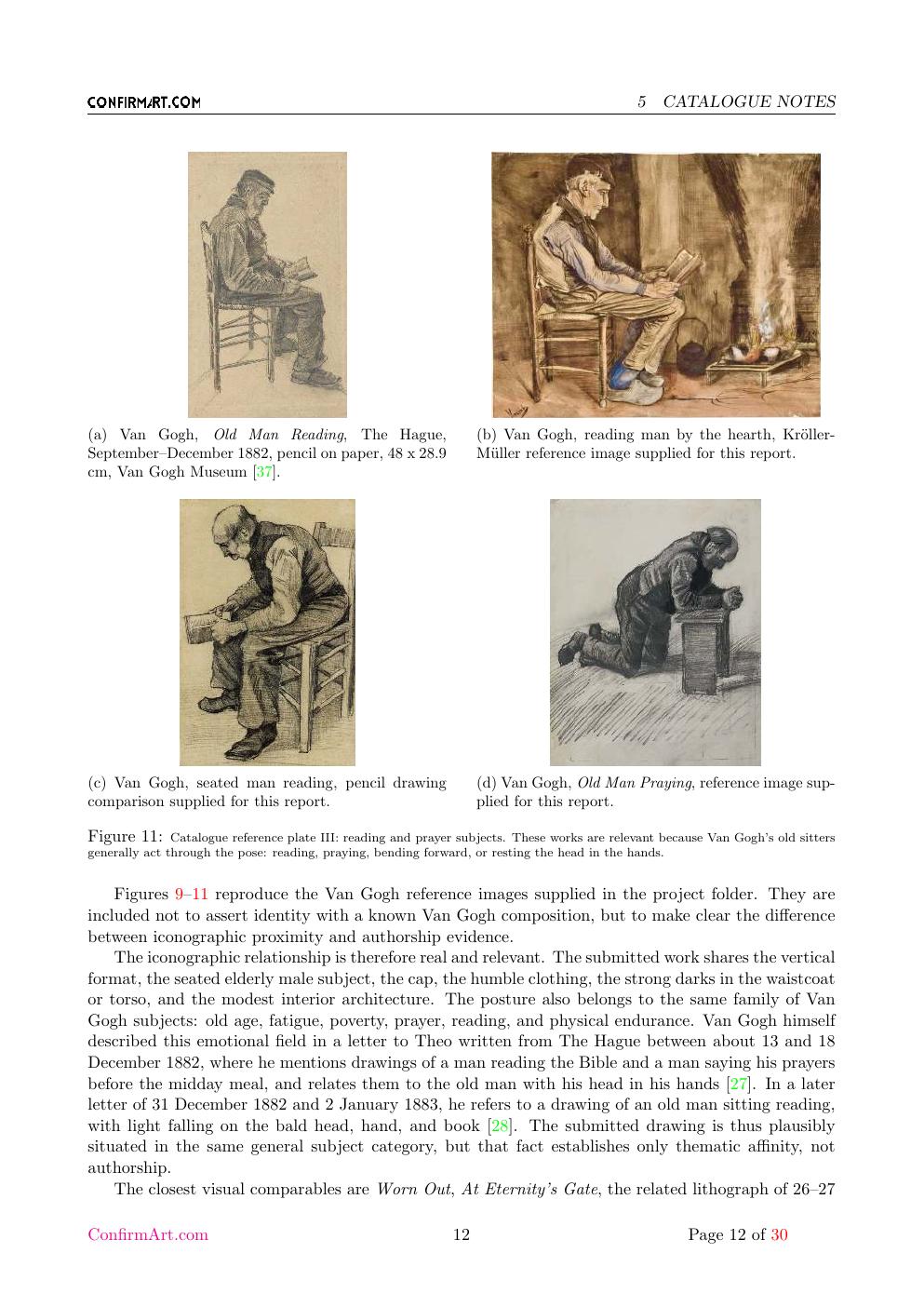
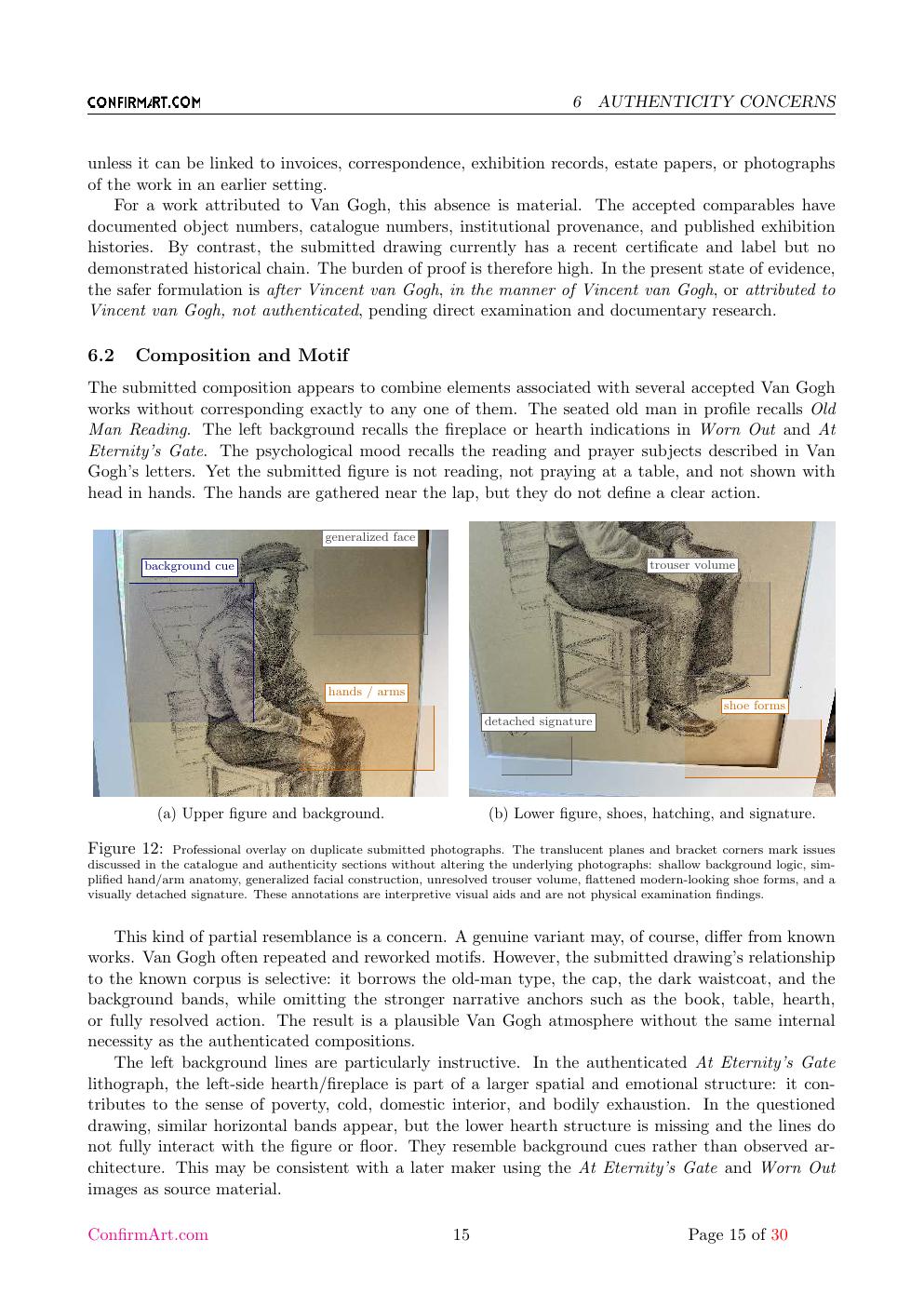
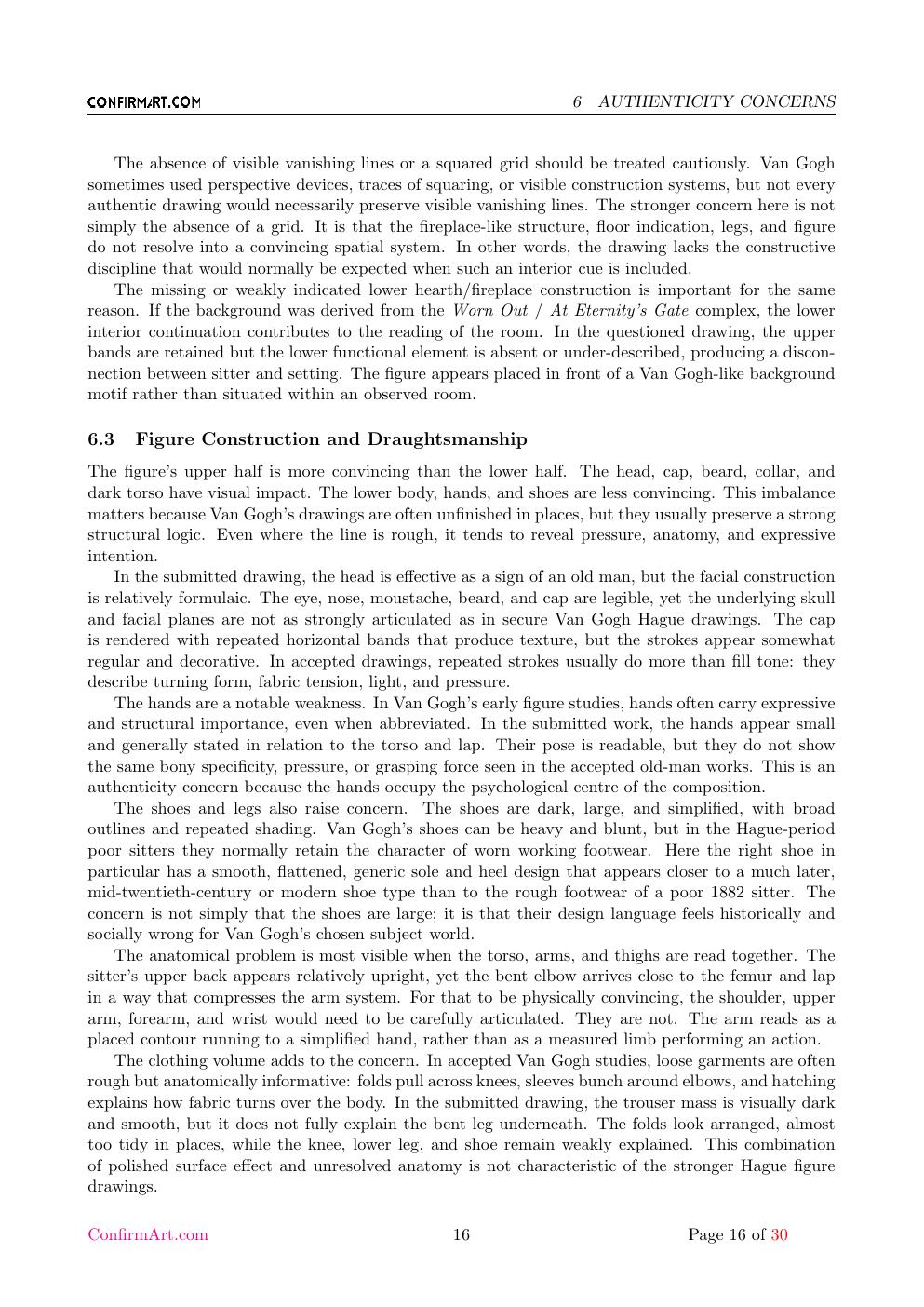
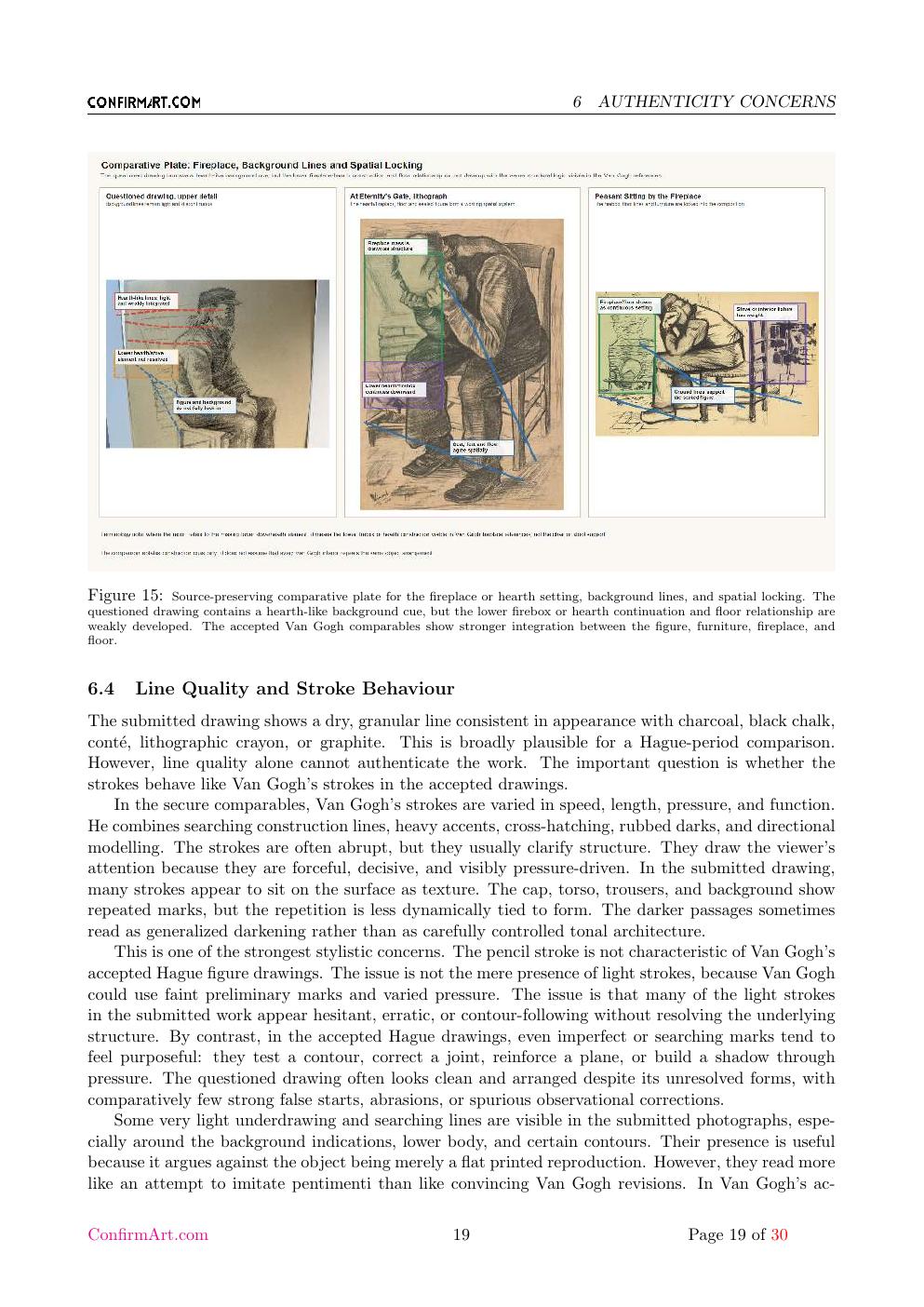
The submitted composition appears to combine elements associated with several accepted Van Gogh works without corresponding exactly to any one of them. The seated old man in profile recalls Old Man Reading . The left background recalls the fireplace or hearth indications in Worn Out and At Eternity's Gate .
07
Figure Construction and Draughtsmanship
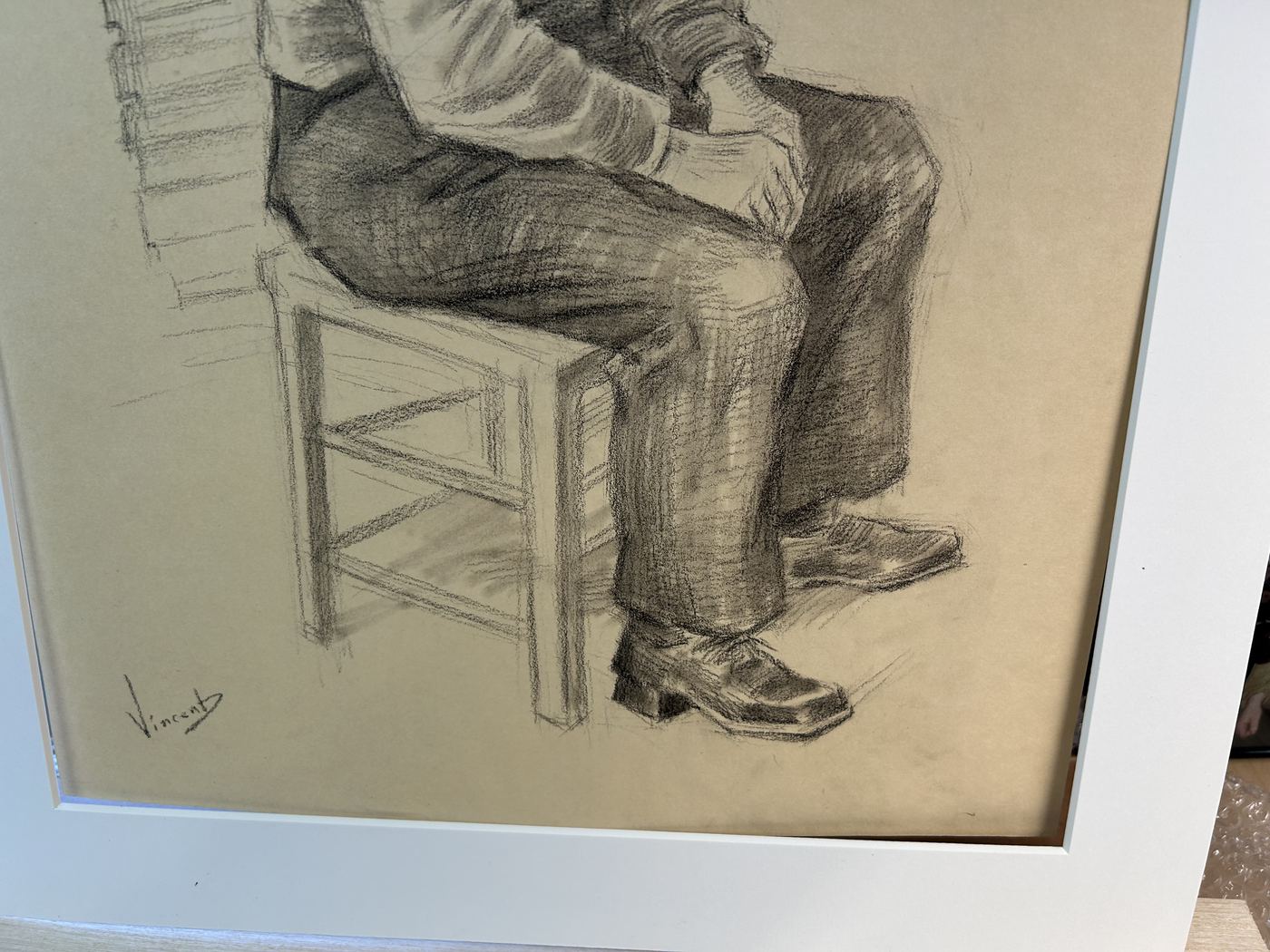
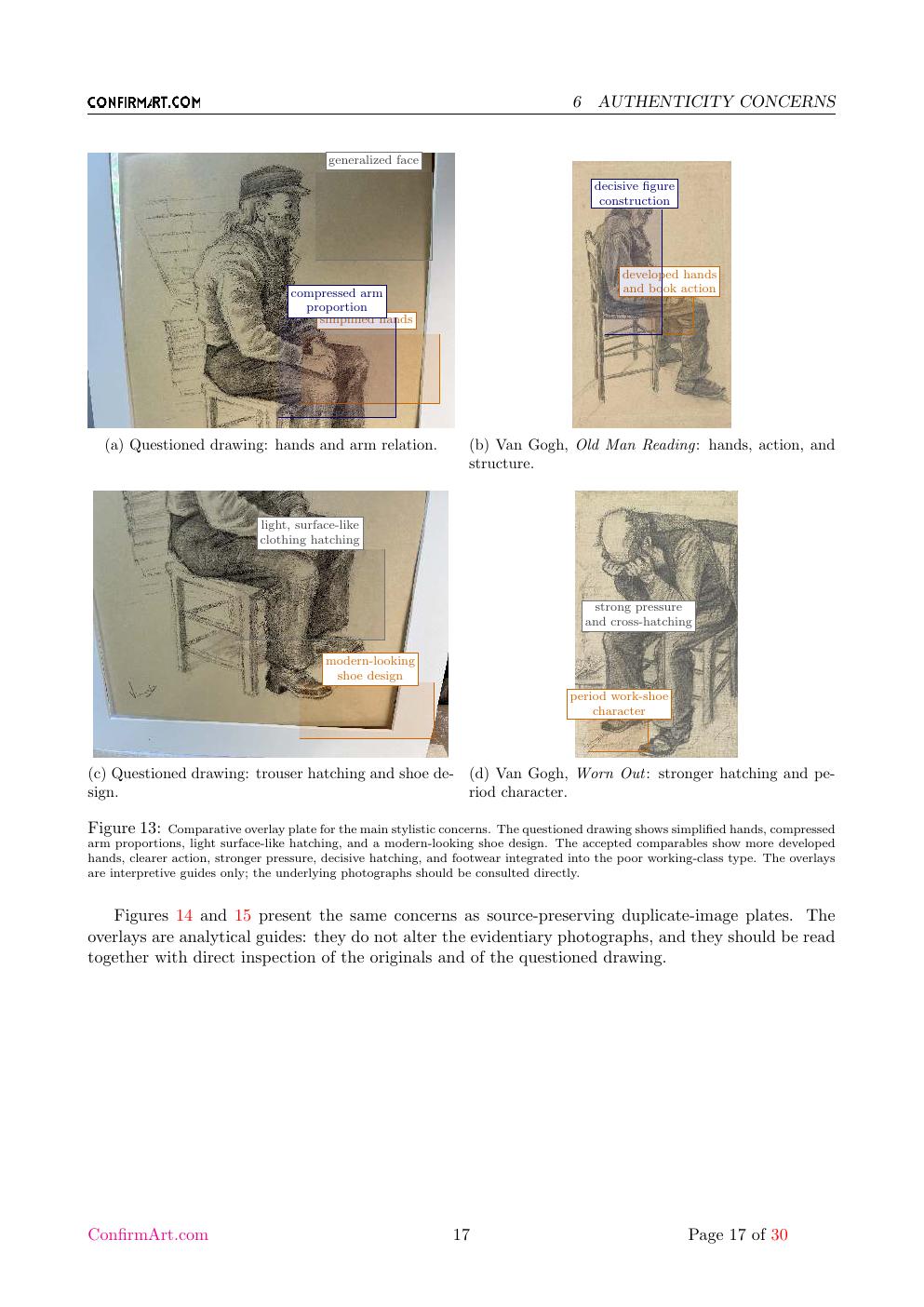
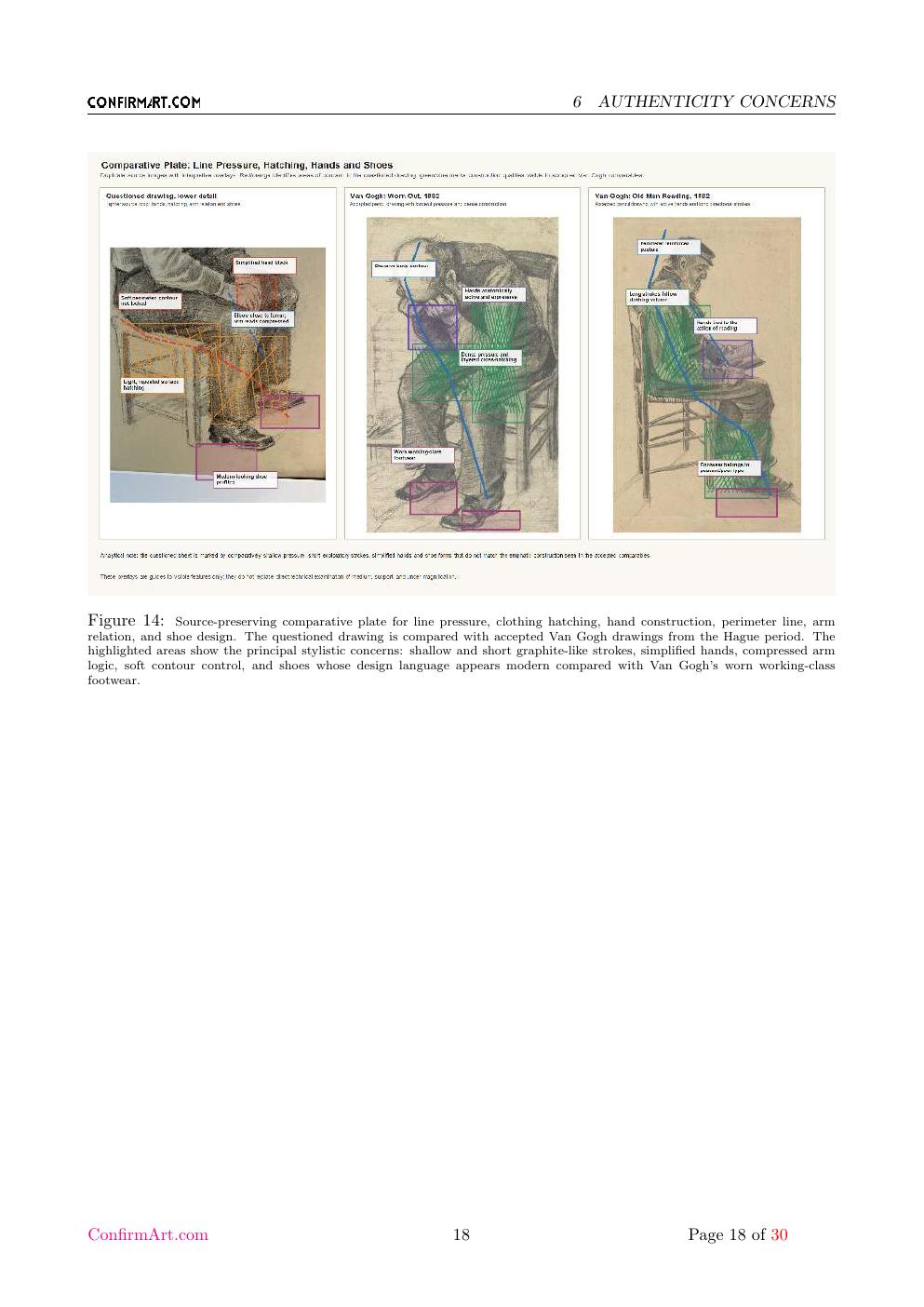
The 's upper half is more convincing than the lower half. The head, cap, beard, collar, and dark torso have visual impact. The lower body, hands, and shoes are less convincing.
08
Signature Analysis
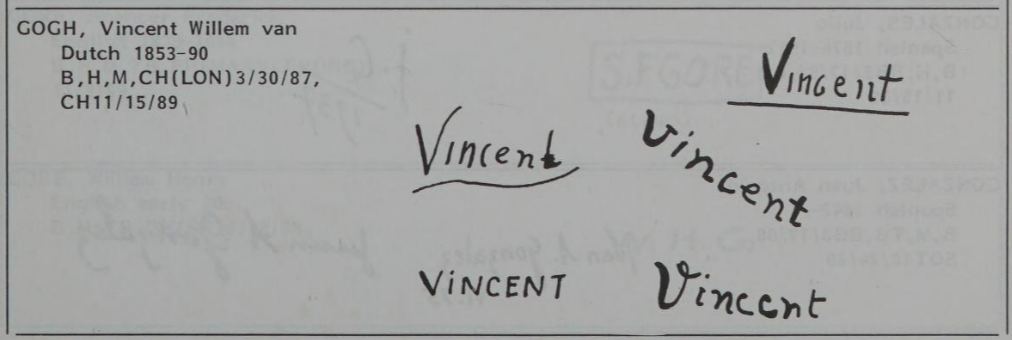
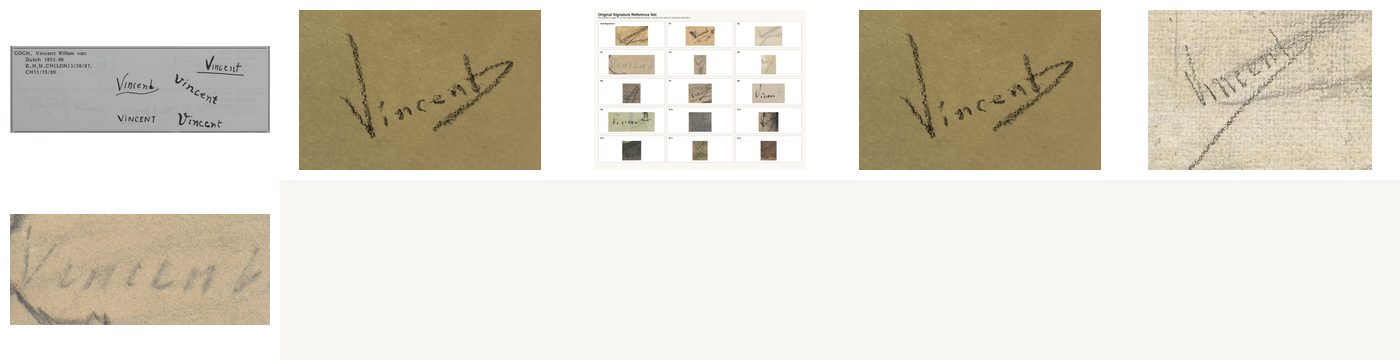
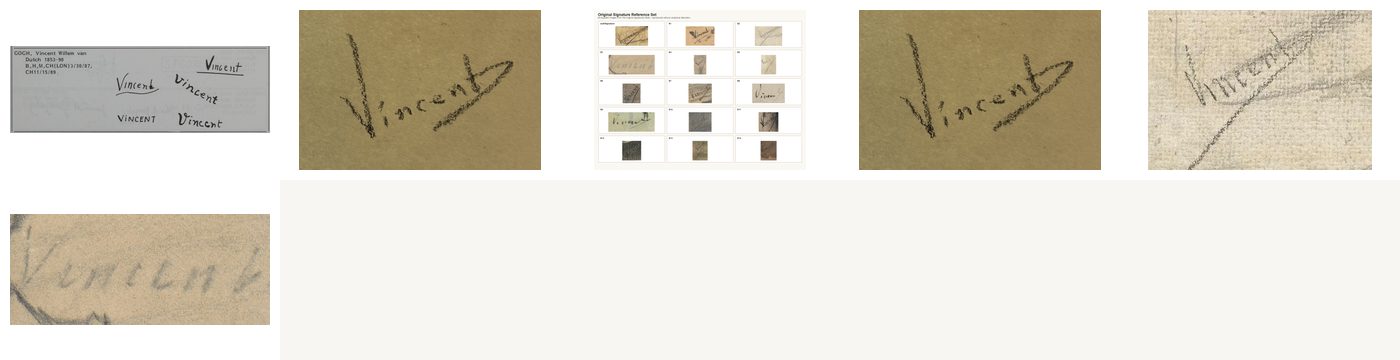
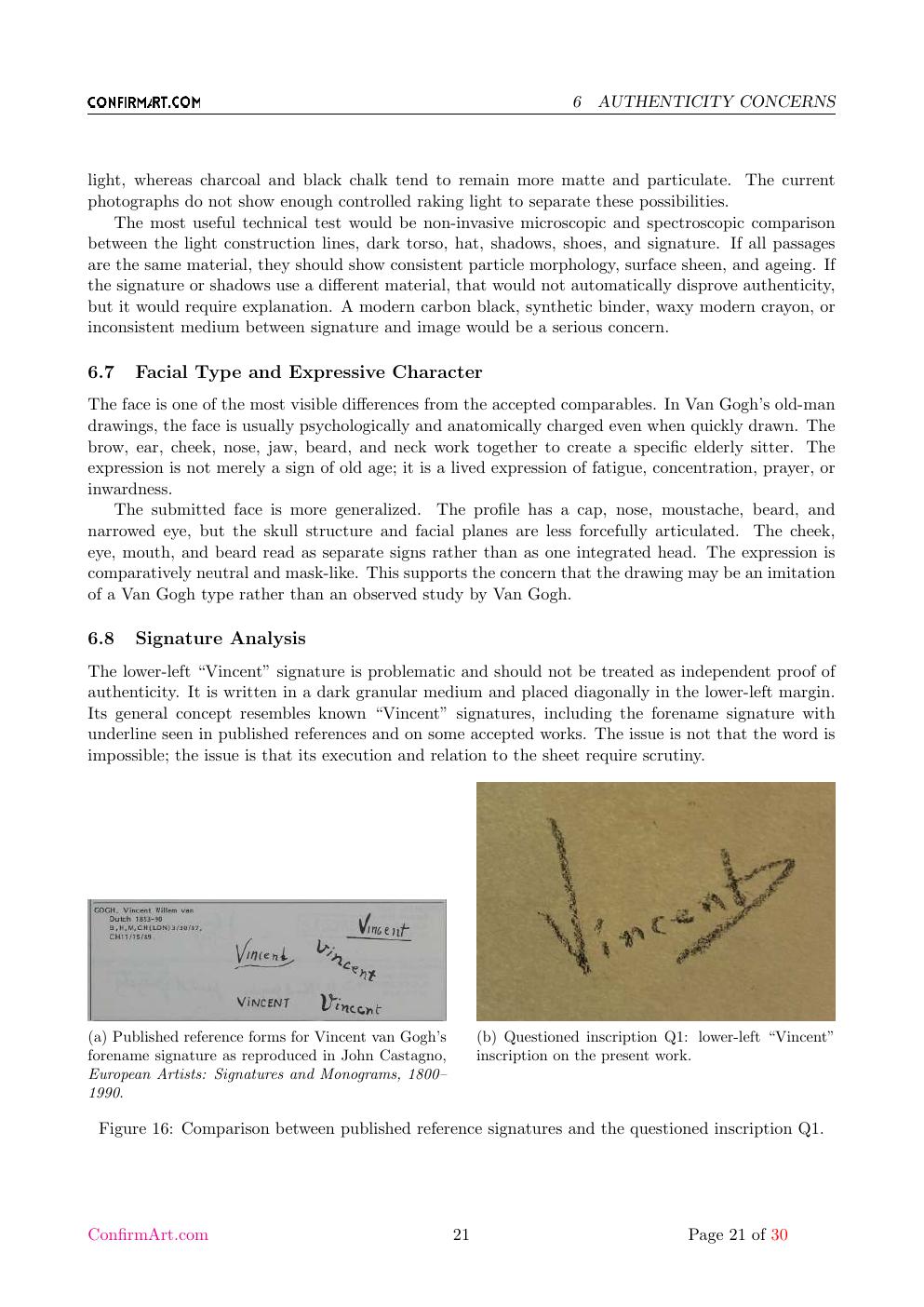
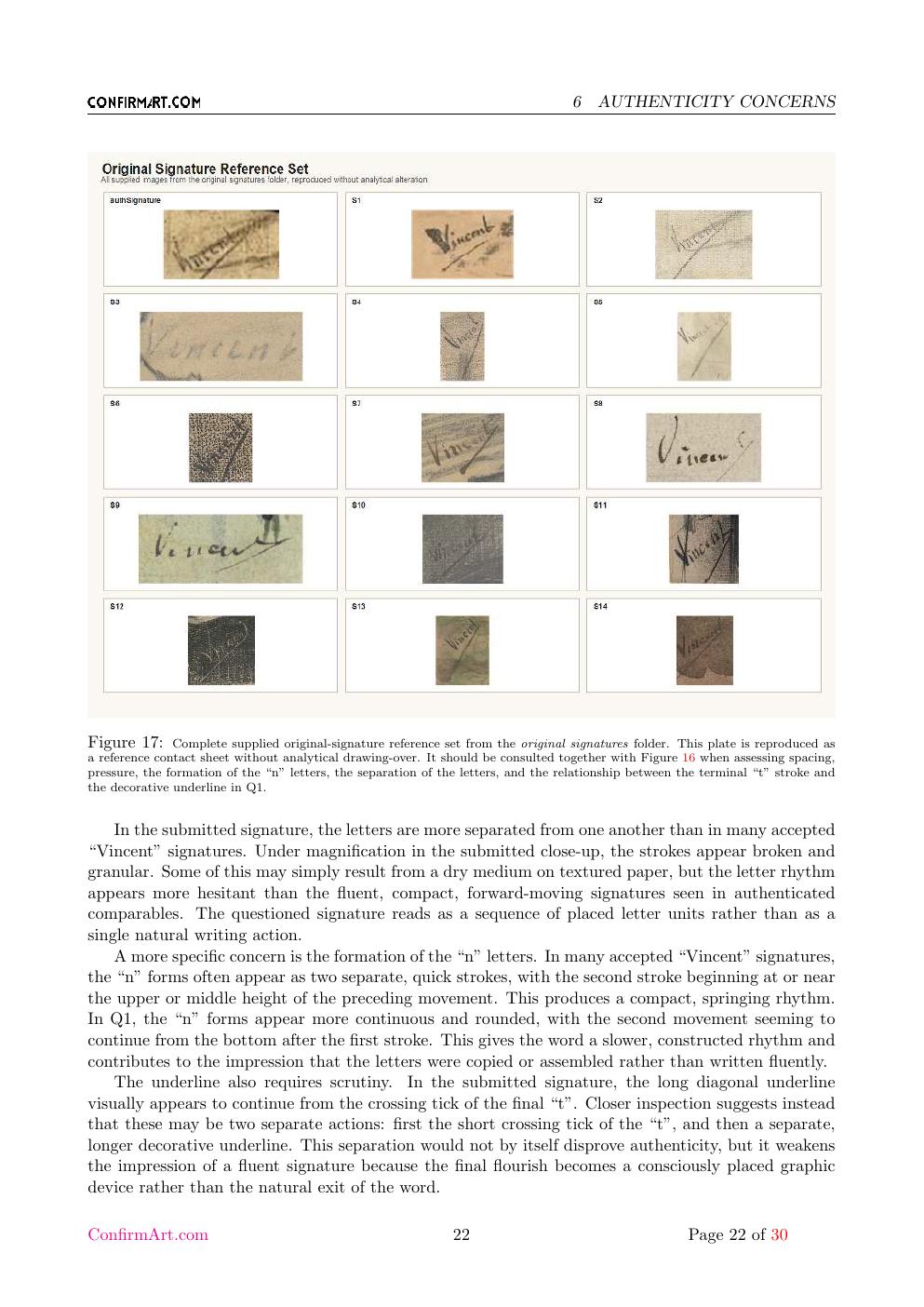
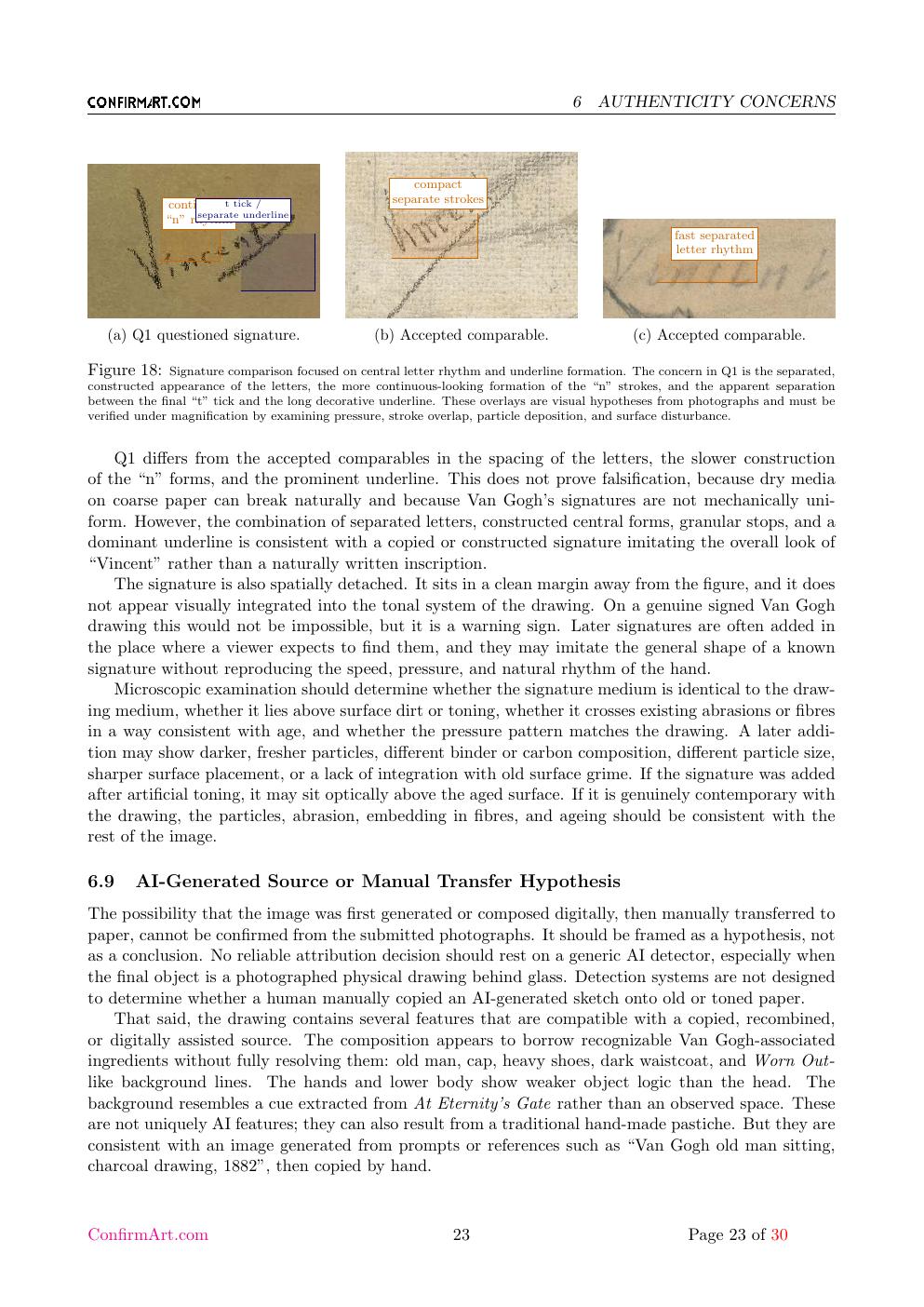
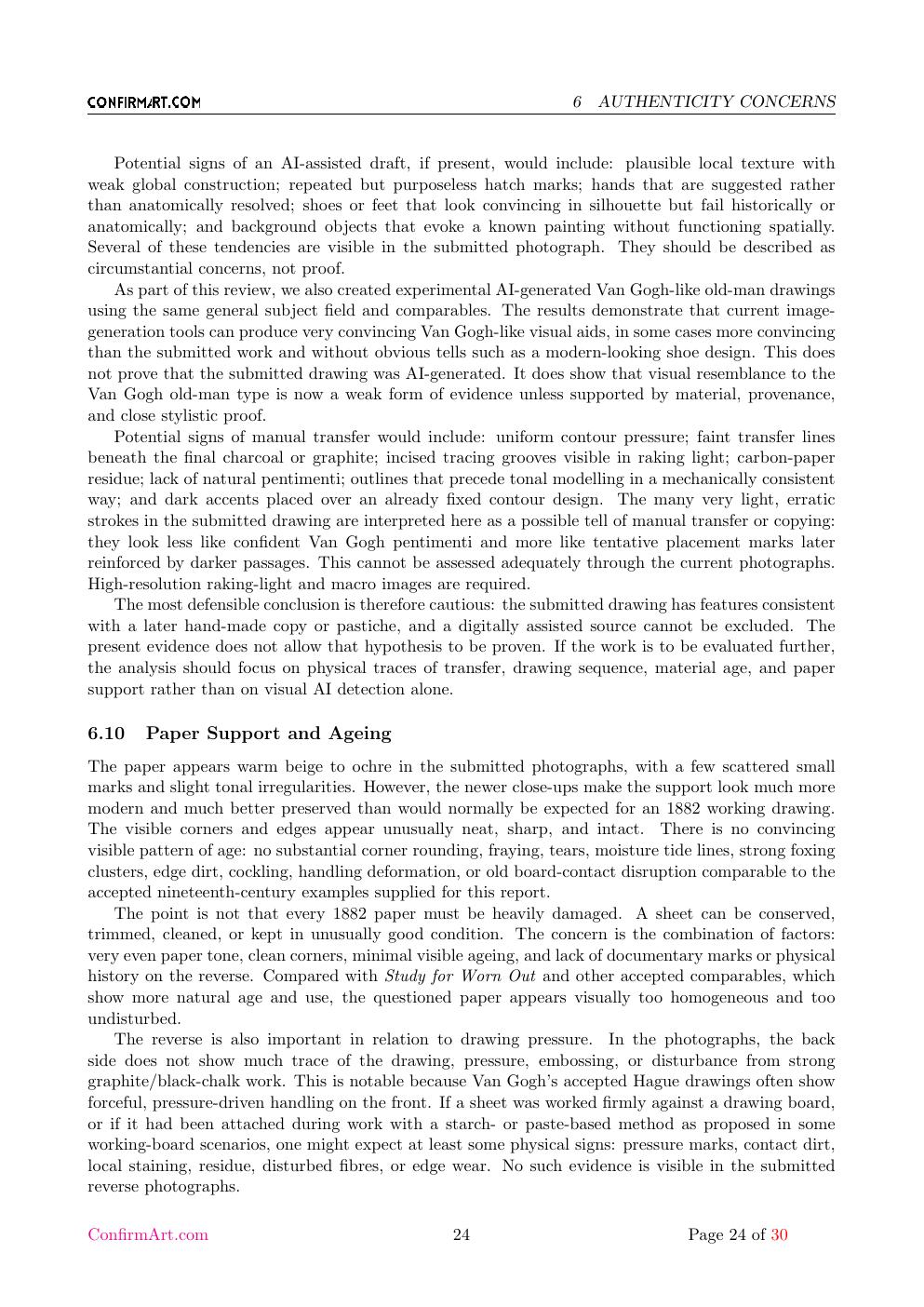
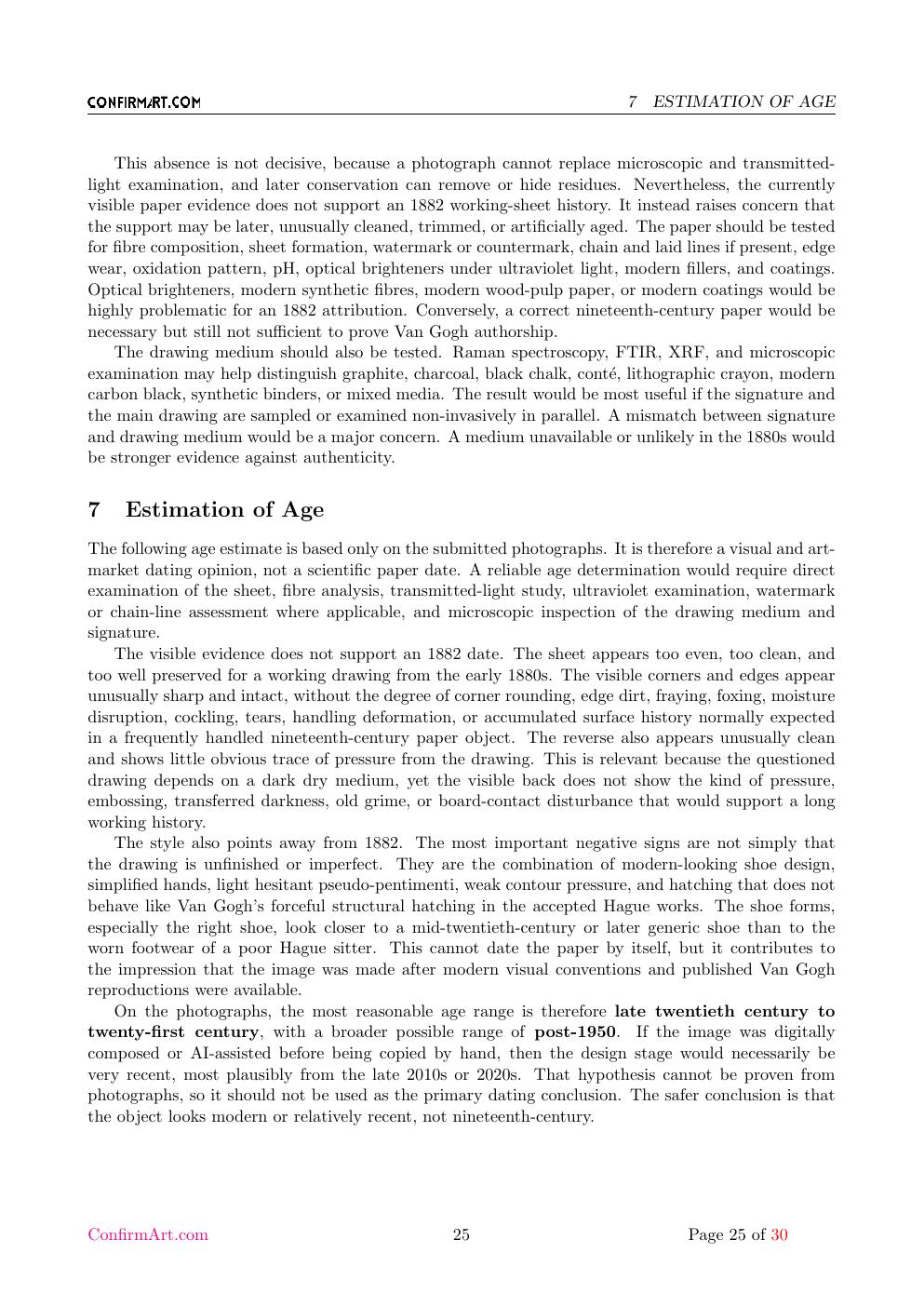
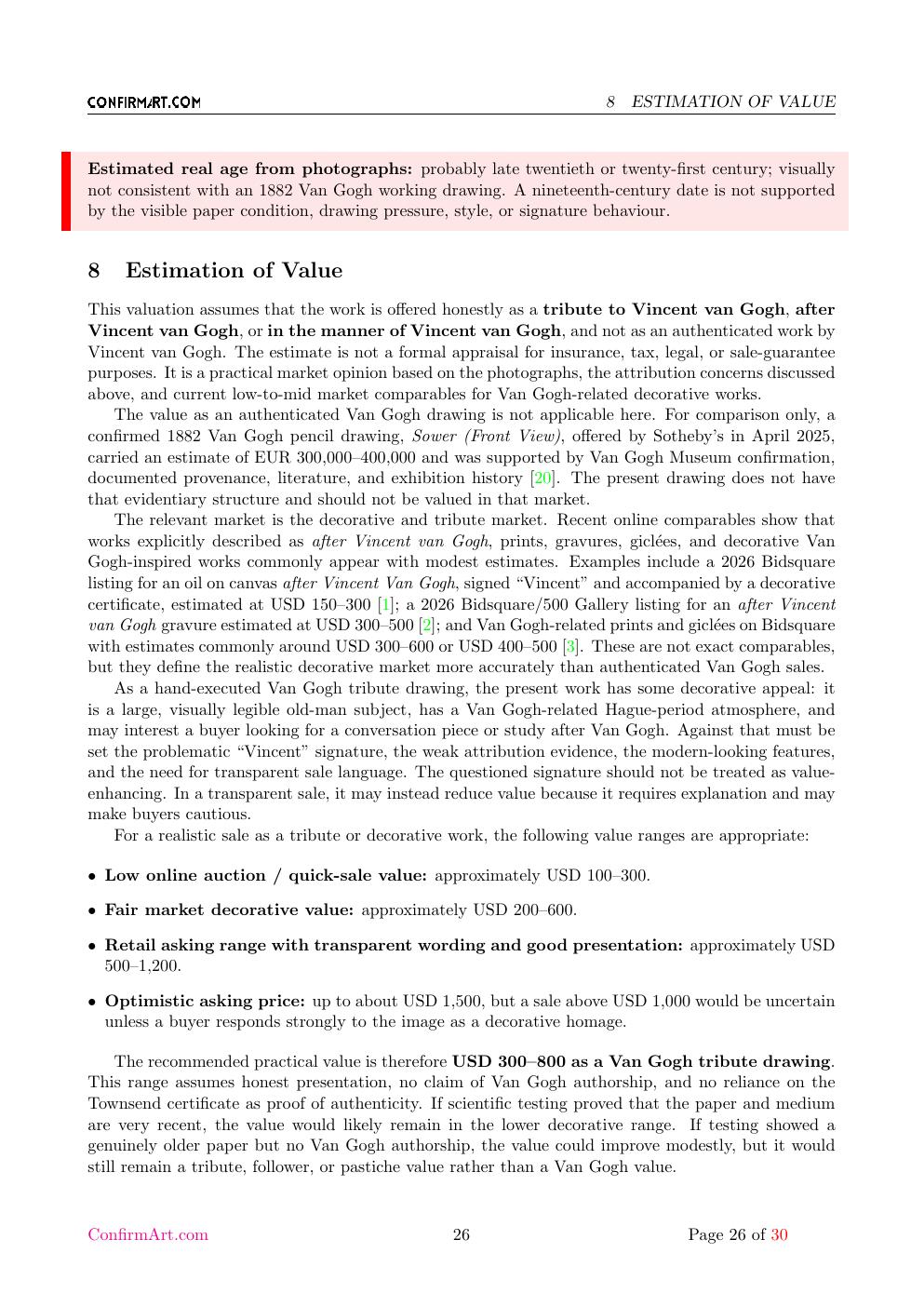
The lower-left "Vincent" signature is problematic and should not be treated as independent proof of authenticity. It is written in a dark granular medium and placed diagonally in the lower-left margin. Its general concept resembles known "Vincent" signatures, including the forename signature with underline seen in published references and on some accepted works.
Signature evidence
Signature analysis reference tables
Signature AnalysisThe lower-left "Vincent" signature is problematic and should not be treated as independent proof of authenticity. It is written in a dark granular medium and placed diagonally in the lower-left margin.
Authentication evidence
Selected close details from the human review
Description of the DocumentsThis report was prepared by ConfirmArt.com based solely on the photographic documentation submitted by the customer and the comparative references supplied in the same project folder. Submitted photographs of the questioned drawing (front, oblique, angled, reverse, signature, label, certificate, and details).Description of the ArtworkThe submitted artwork is a vertically oriented drawing on paper depicting a seated elderly male , rendered in black chalk, charcoal, graphite, conté crayon, lithographic crayon, or a closely related dry drawing medium. The composition presents the sitter in three-quarter profile, facing toward the right side of the sheet, with the body angled slightly away from the viewer and tReverse / VersoThe submitted image of the reverse shows a plain, warm-toned verso or backing surface, with no clearly visible inscription, collector's stamp, inventory number, estate mark, watermark, or handwritten provenance note. The visible surface appears relatively uniform in colour, with scattered small greyish marks and surface accretions.ProvenanceAccording to the information provided by the present owner, the submitted drawing was acquired through an auction context in which several works attributed to major modern artists were being offered from what was described by the auction house as the collection of a wealthy real estate owner in California. The owner further reported that the same seller appeared to be associateCatalogue NotesThe submitted drawing should first be placed within the visual field to which it most clearly refers. Its subject belongs, iconographically, to Vincent van Gogh's early Hague-period studies of old working men: seated, weary, inwardly absorbed figures shown in a sparse domestic or institutional setting.Figure Construction and DraughtsmanshipThe 's upper half is more convincing than the lower half. The head, cap, beard, collar, and dark torso have visual impact.Signature AnalysisThe lower-left "Vincent" signature is problematic and should not be treated as independent proof of authenticity. It is written in a dark granular medium and placed diagonally in the lower-left margin.
Private authentication
Submit your artwork for a ConfirmArt review
Use this real case as a reference for the kind of evidence that can be organized in a private authentication report.
The public browser receives rendered pages, not a native PDF viewer or direct PDF URL. Public pixels can still be screen-captured; private commissioned reports remain controlled client deliverables.
QR verification
Traceable real case
This real case has a stable verification URL and source fingerprints. The QR code resolves to the public verification record for this case.
Only your email and service selection are needed to submit the request. Optional images, dimensions and notes can be added now or later.
Payment is requested only for the Authentication report. Catalogue search, advisory, restoration and local inspection requests are reviewed first so the scope can be confirmed.
Authentication is a human expert review. ConfirmArt may use AI for bounded research support such as database, image, book or provenance searches, but not as a classifier verdict.
Complete front image
Reverse, support, frame and condition details
Signature, inscriptions, labels or seals
Invoices, certificates, provenance or catalogues
Comparative images, references or previous opinions, if available