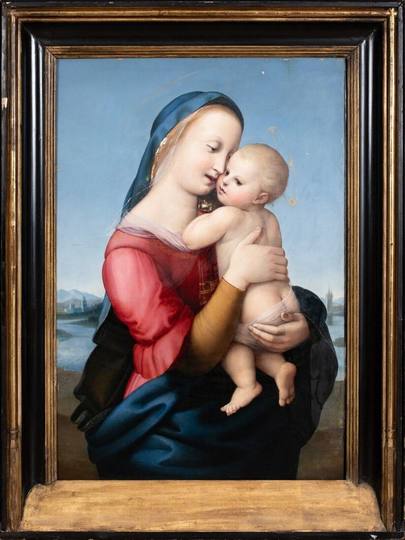
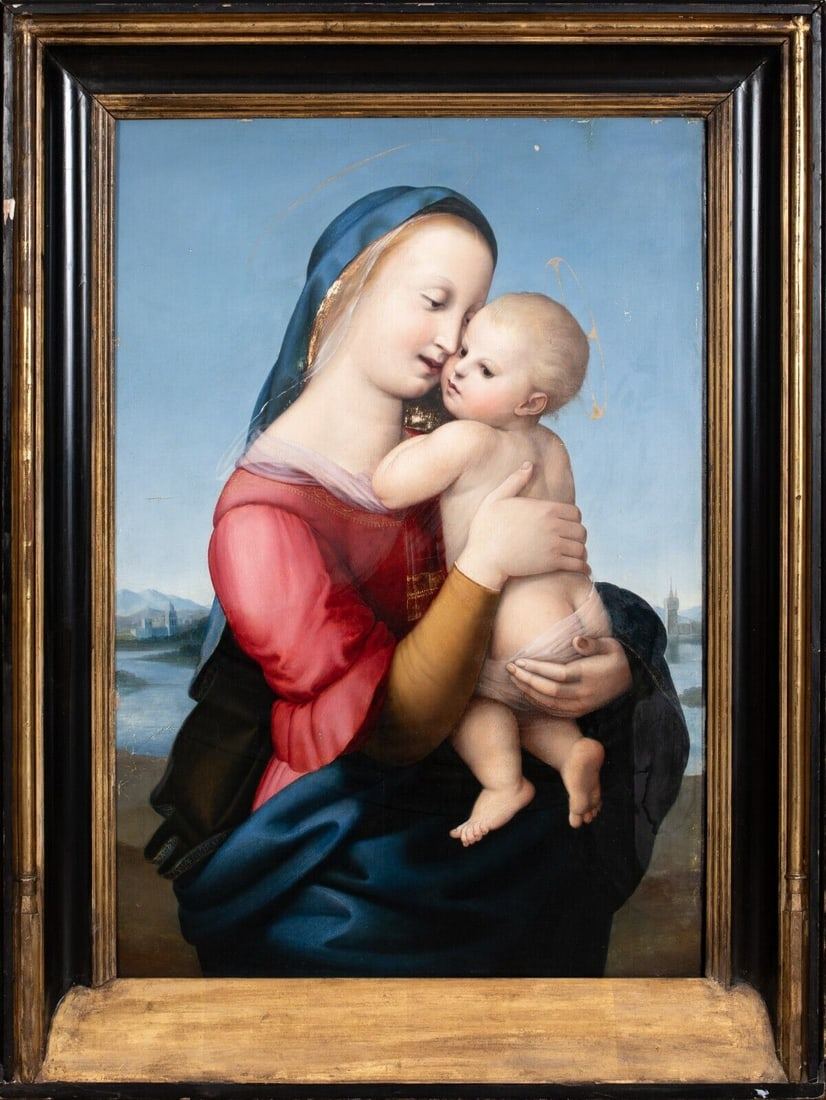
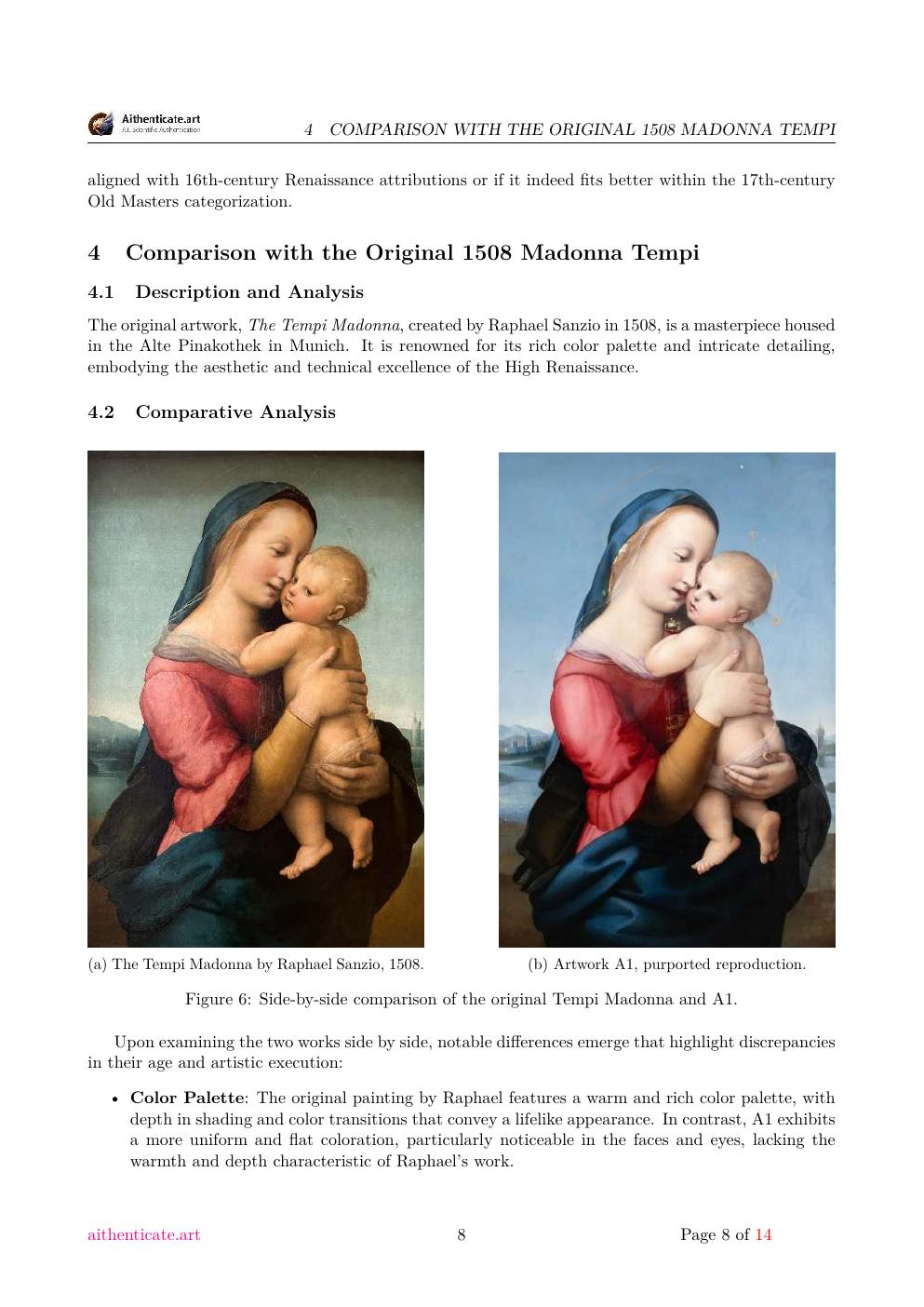
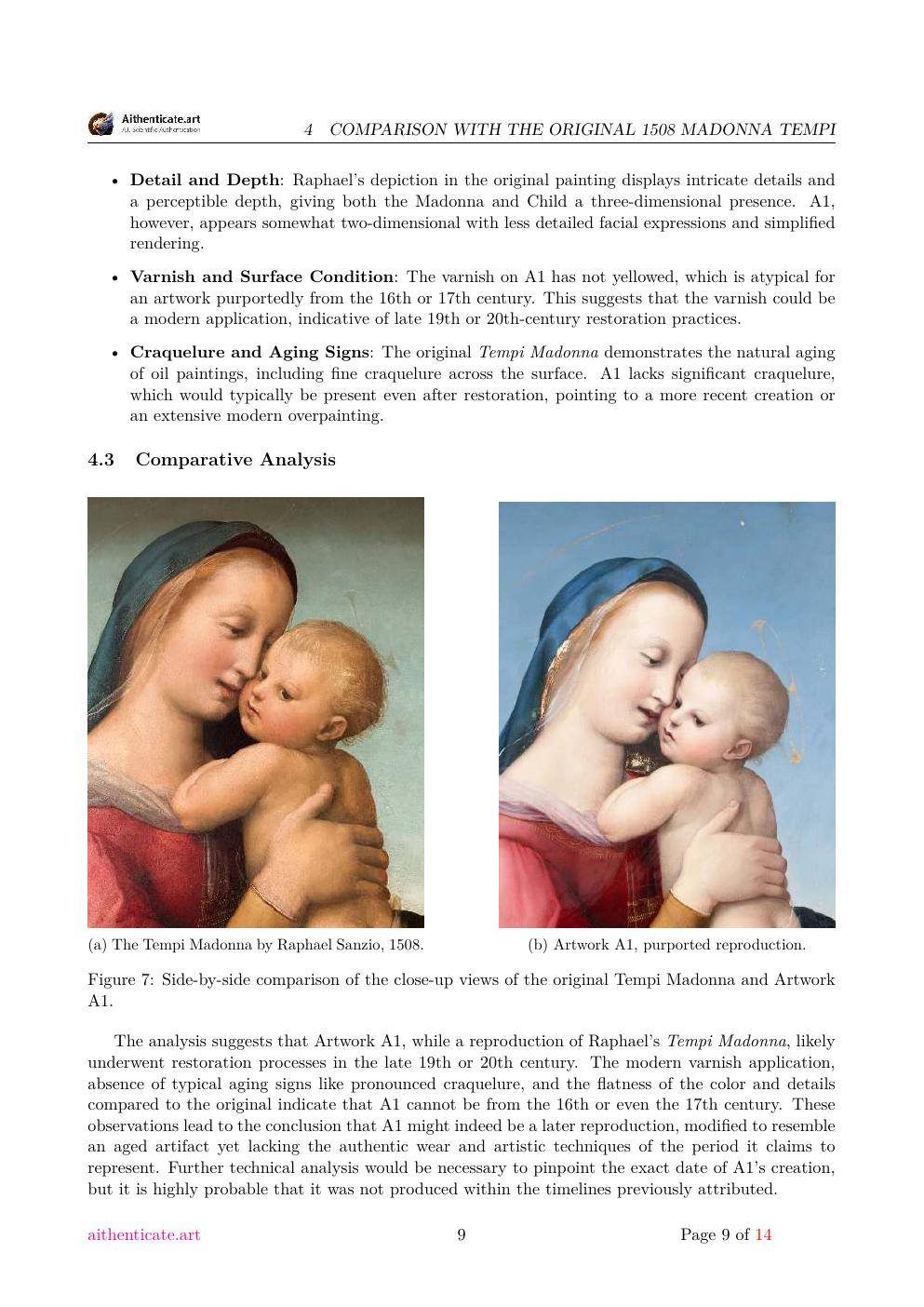
Real client case reviewed by ConfirmArt for Tempi, attributed or related to Madonna. The public page presents selected visual evidence and a rendered report viewer without exposing the private commissioned PDF.
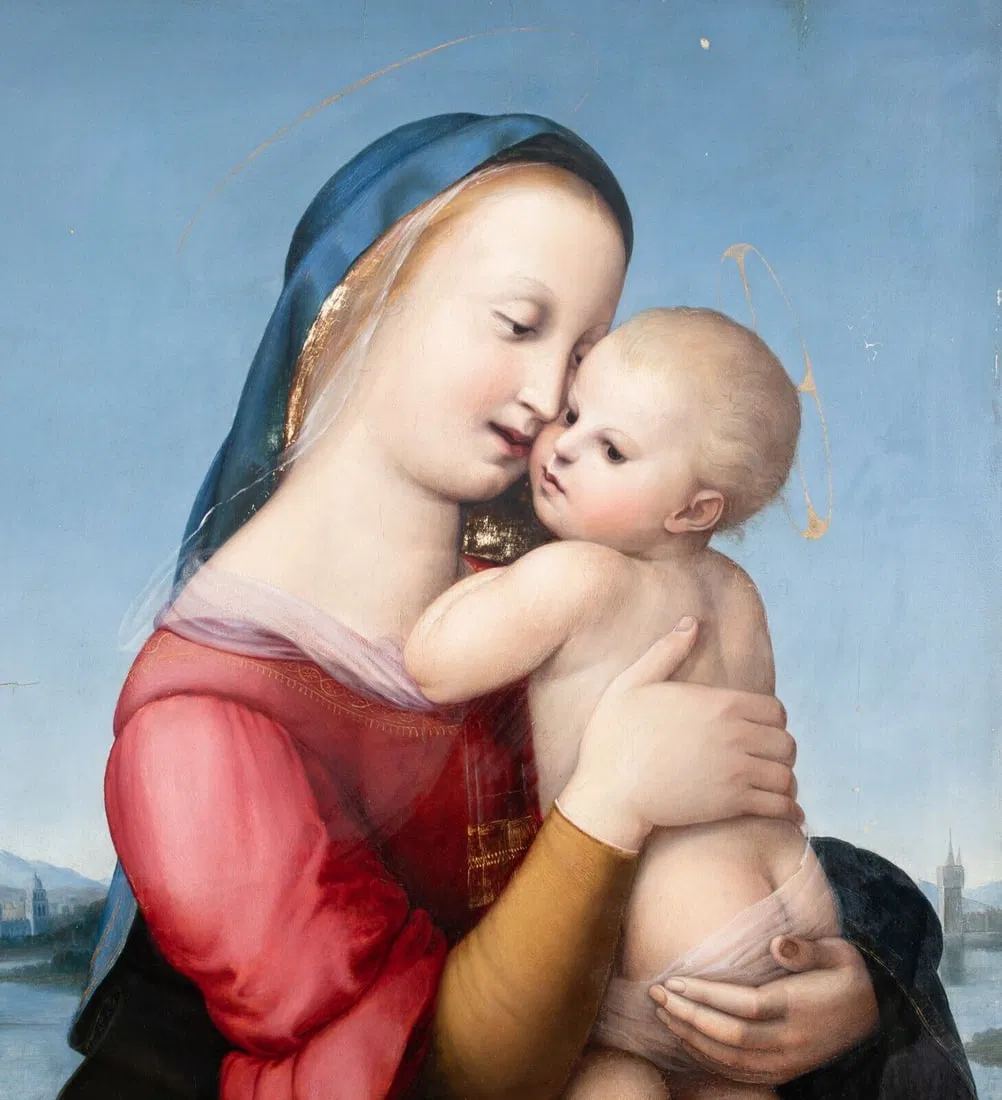
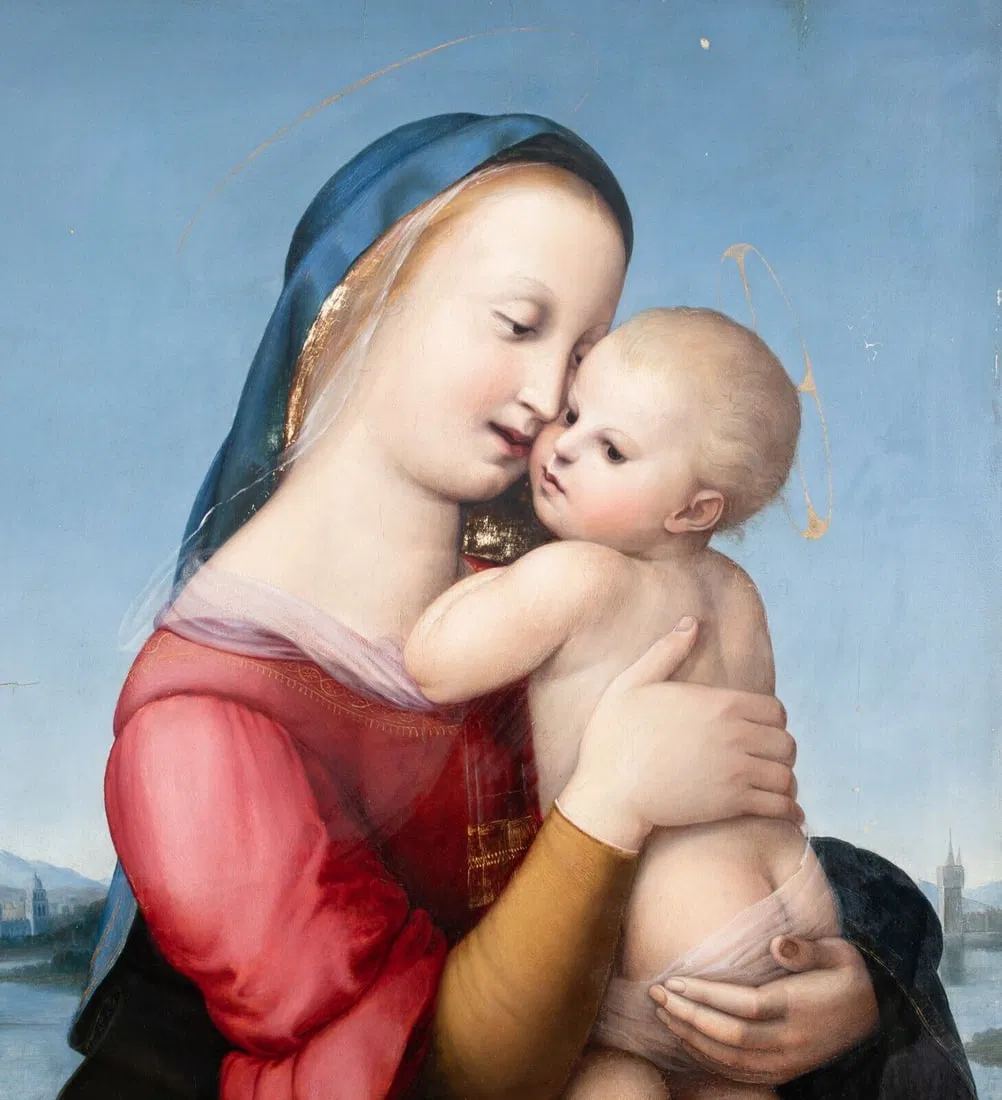
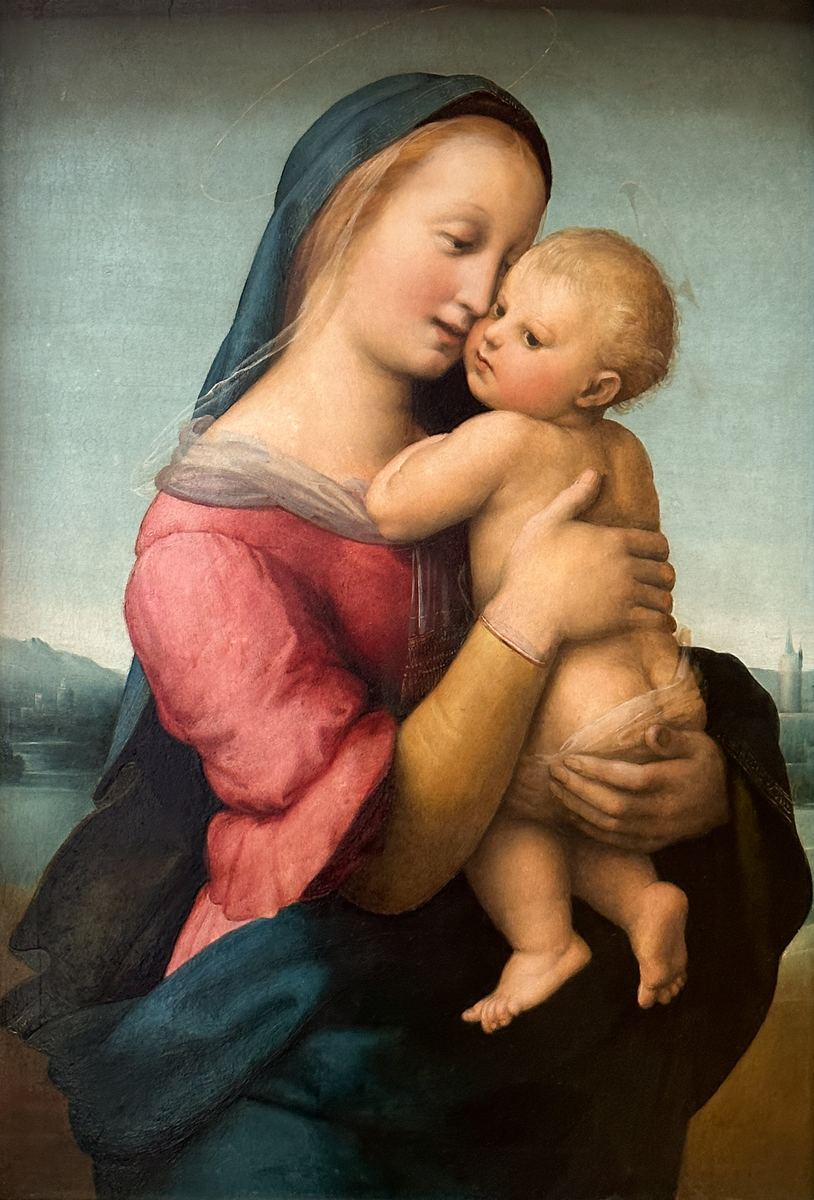
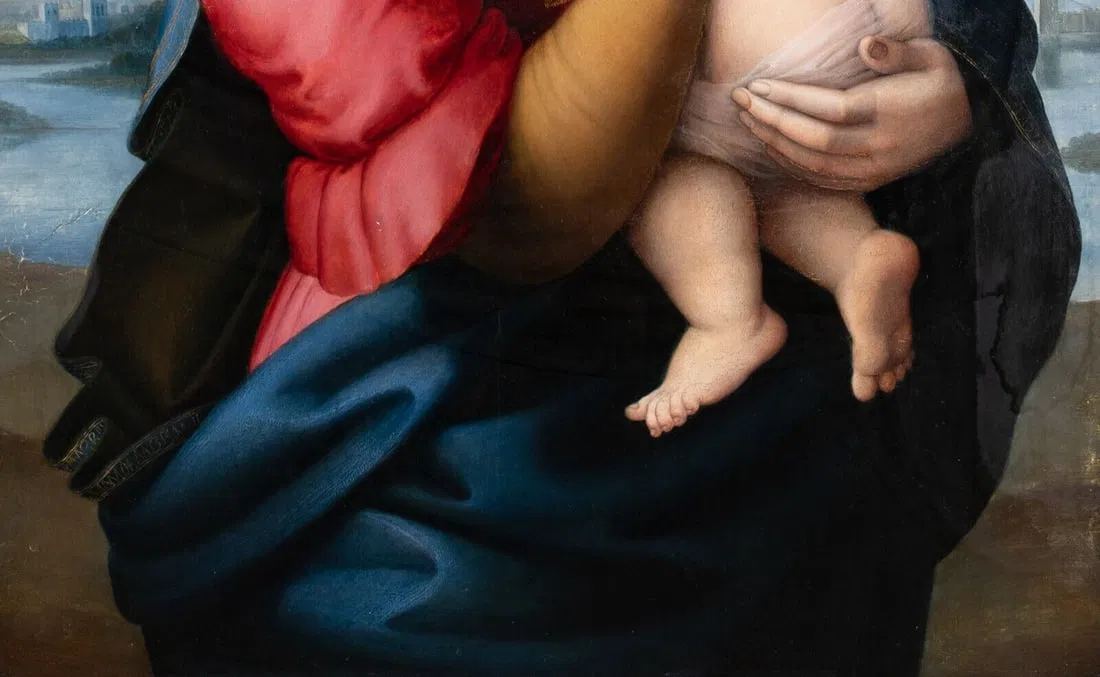
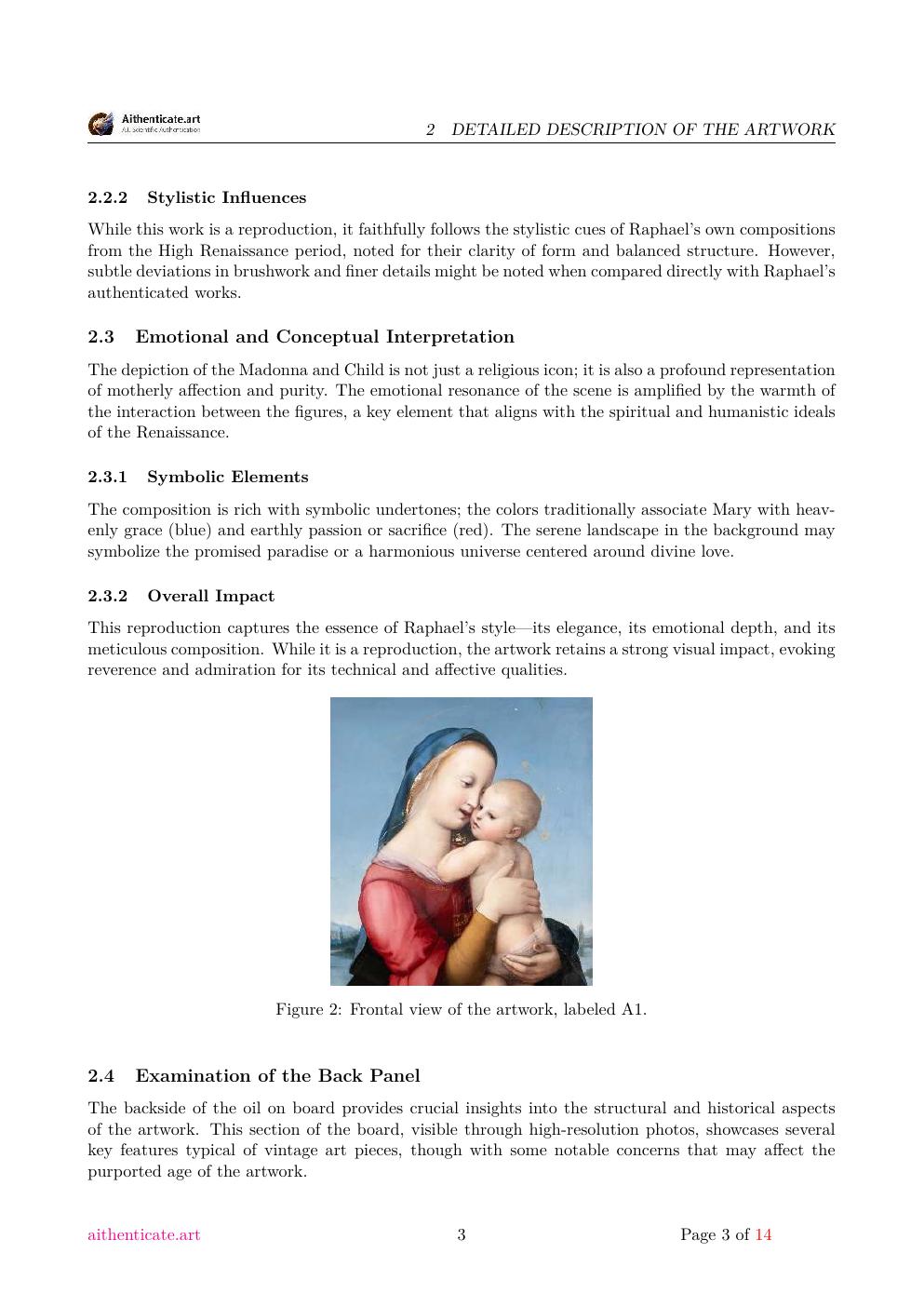
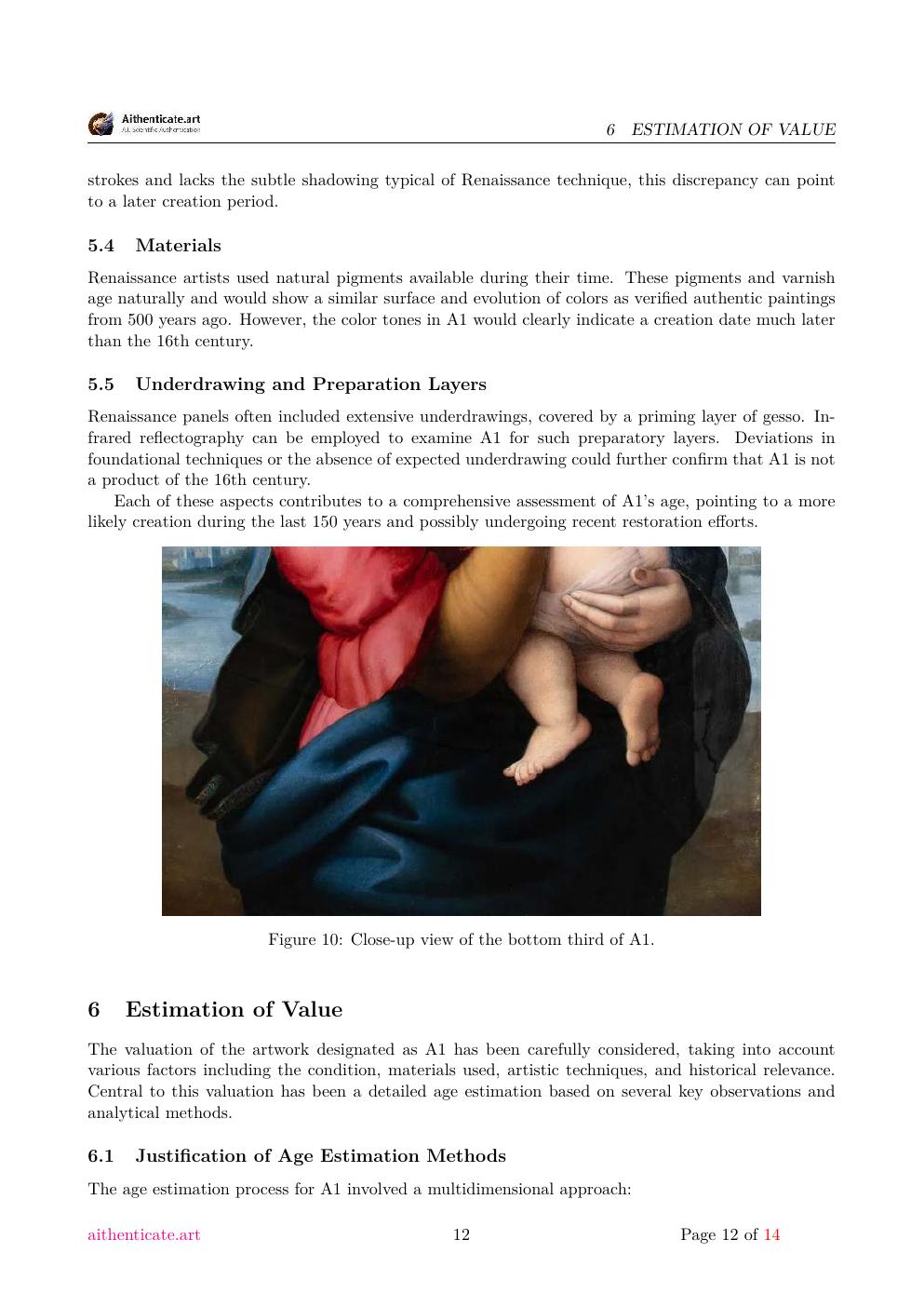
The depiction of the Madonna and Child is not just a religious icon; it is also a profound representation of motherly affection and purity. The emotional resonance of the scene is amplified by the warmth of the interaction between the figures, a key element that aligns with the spiritual and humanistic ideals of the Renaissance. Symbolic Elements The composition is rich with symbolic undertones; the colors traditionally associate Mary with heavenly grace (blue) and earthly passion or sacrifice (red).
02
Examination of the Back Panel
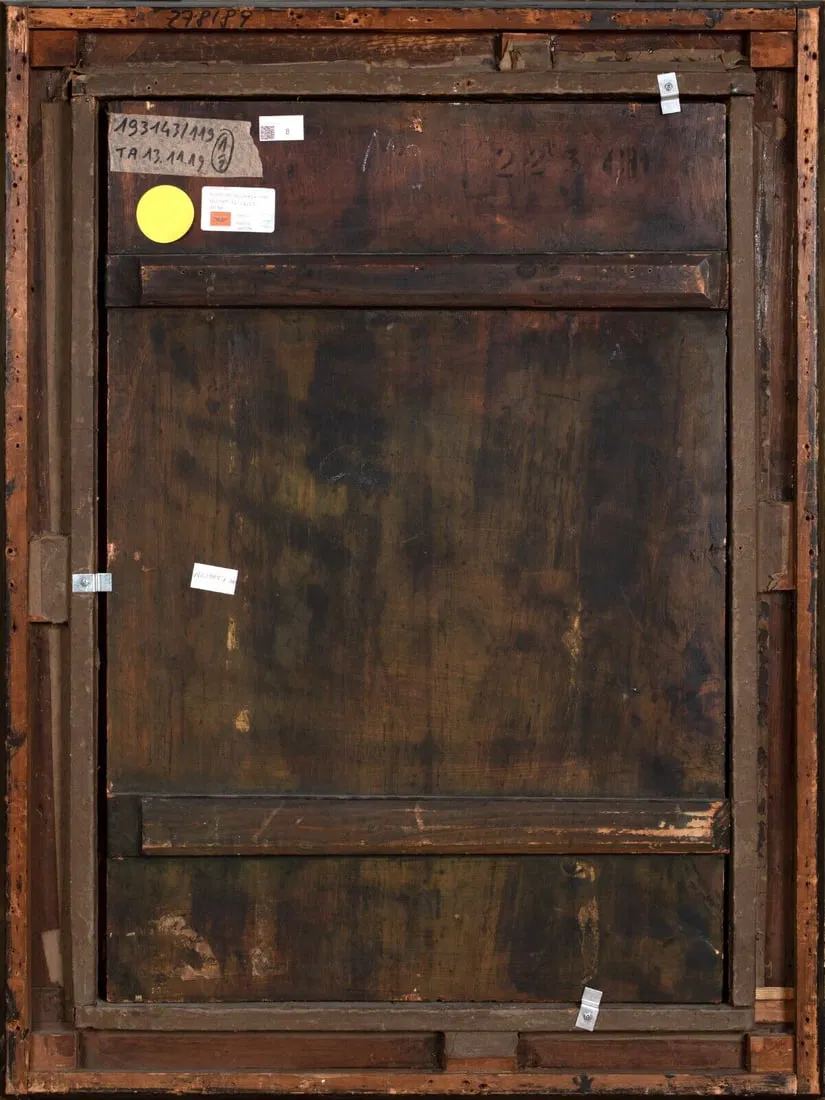
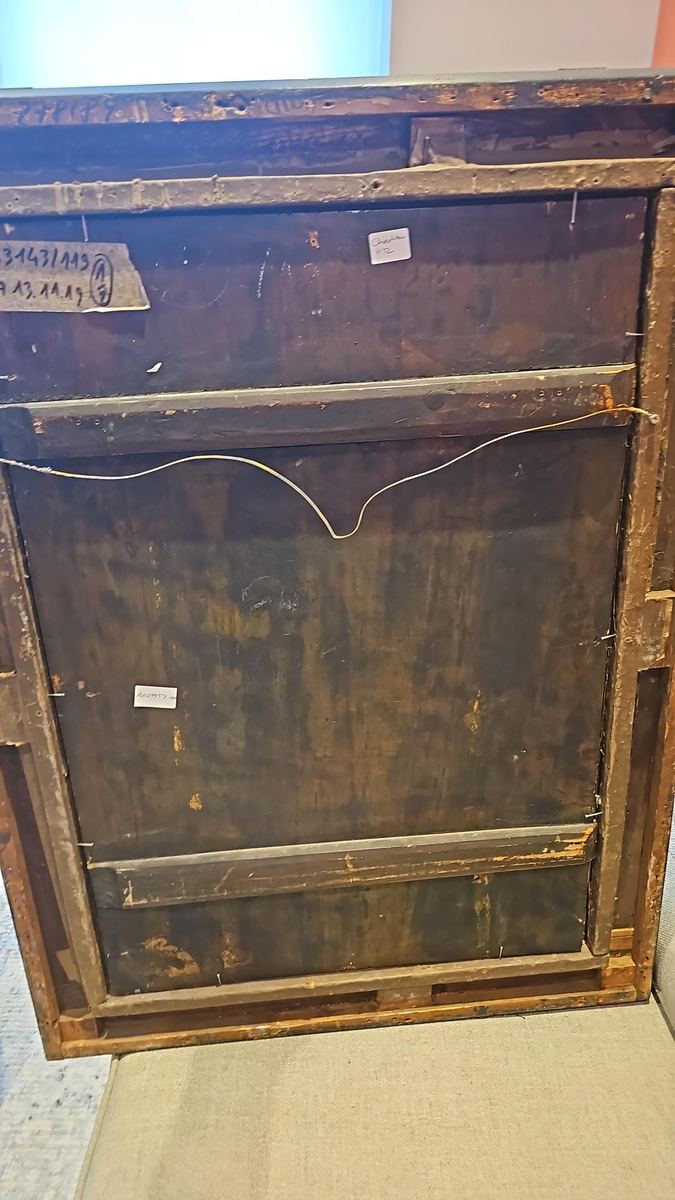
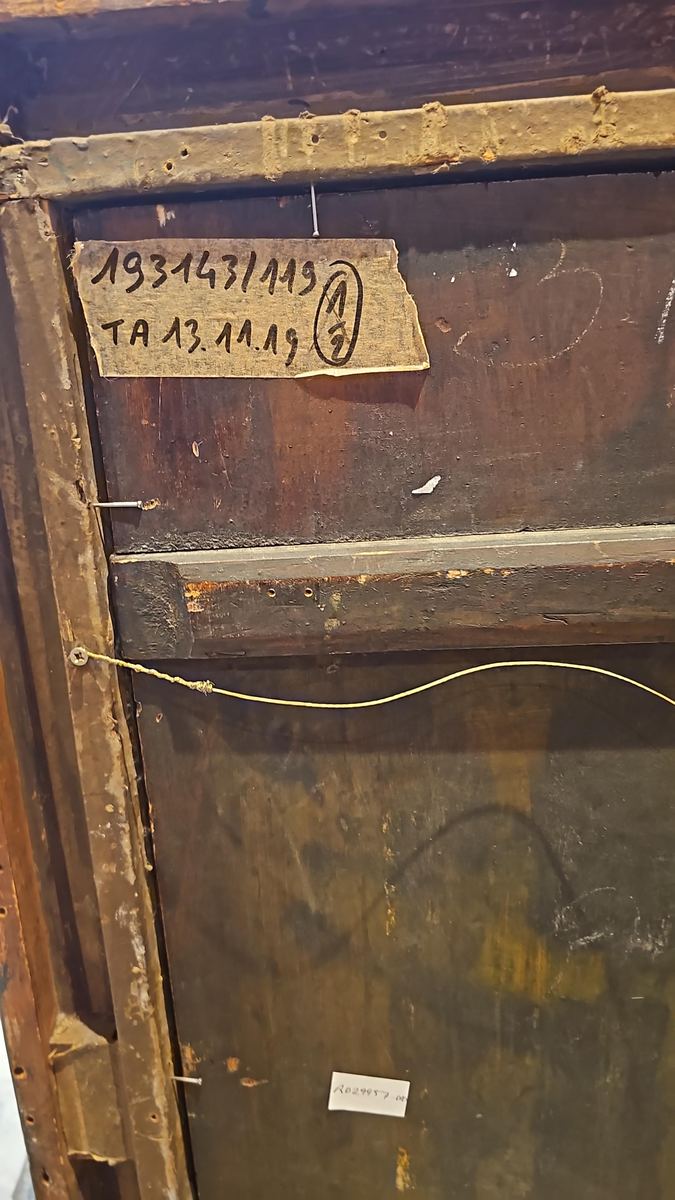
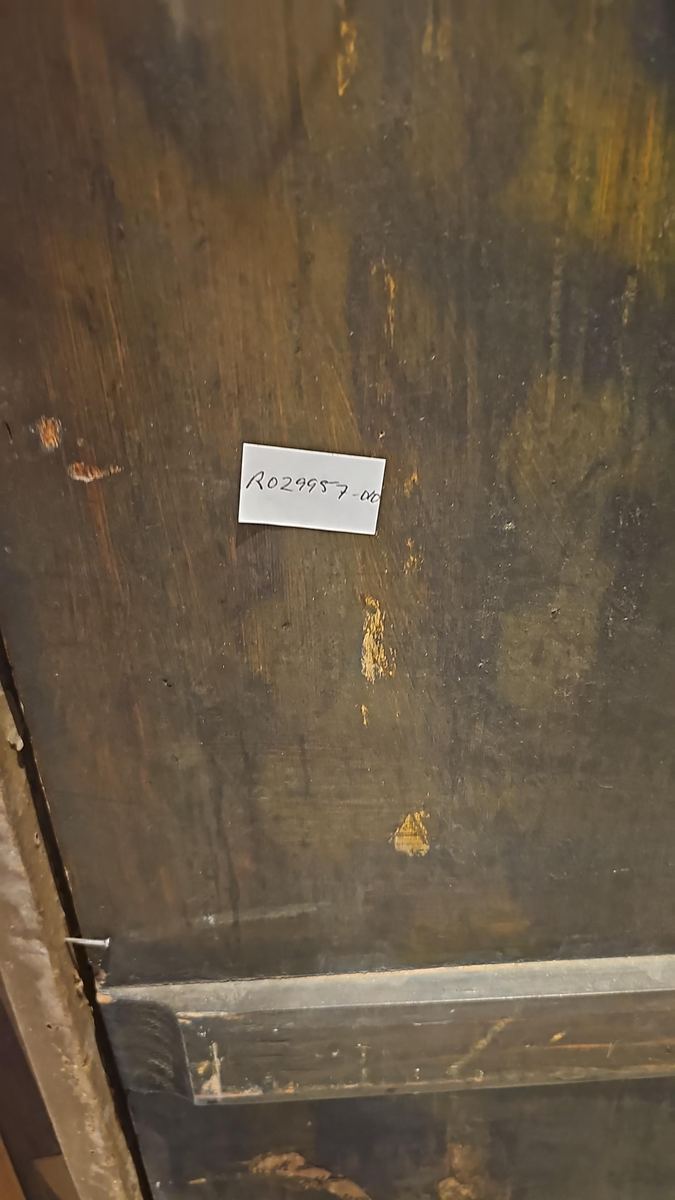
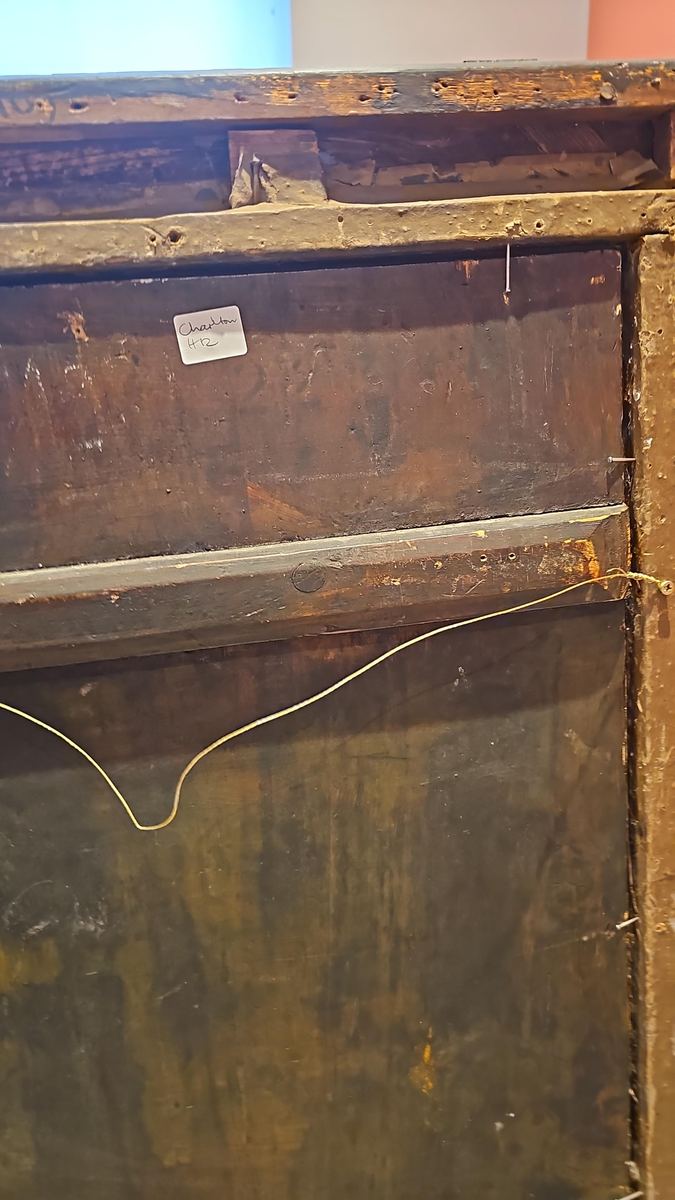
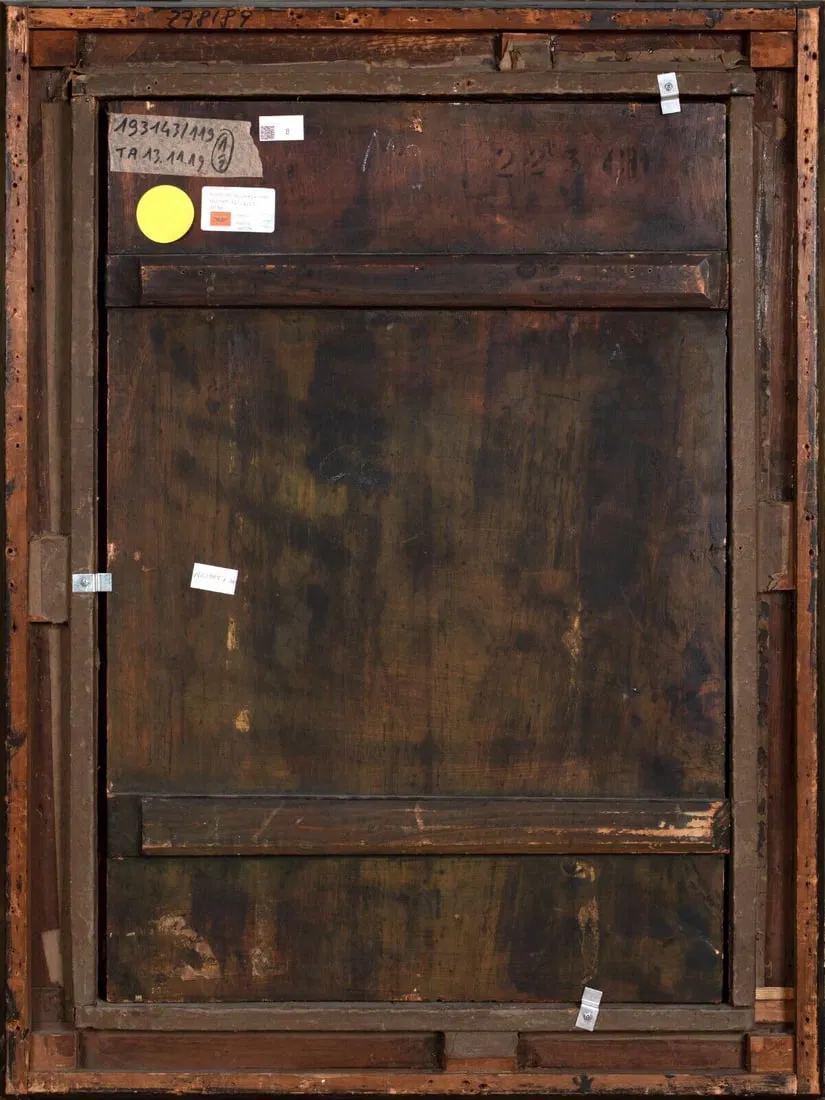
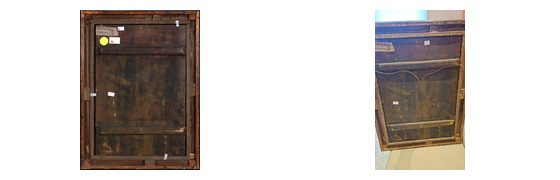
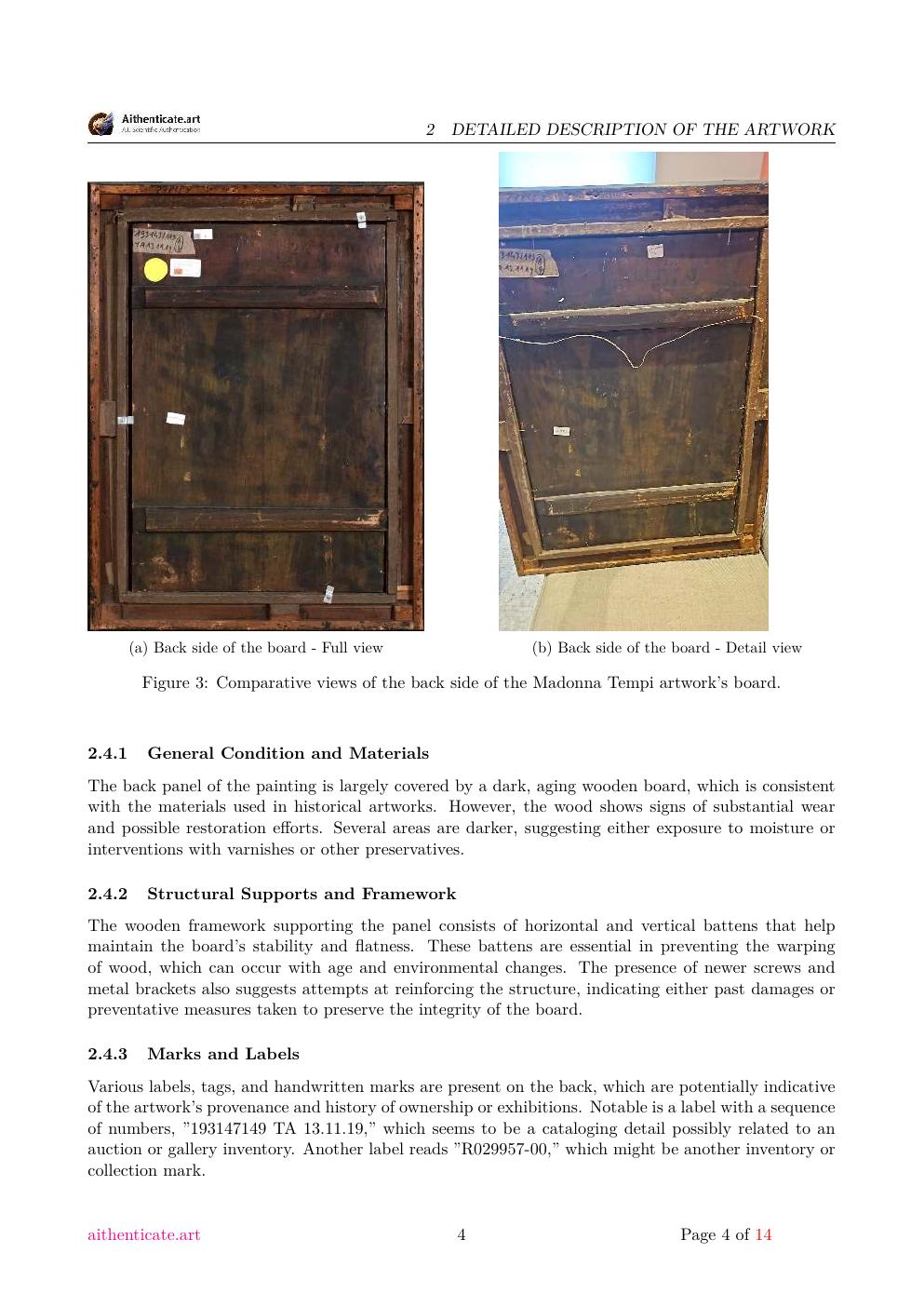
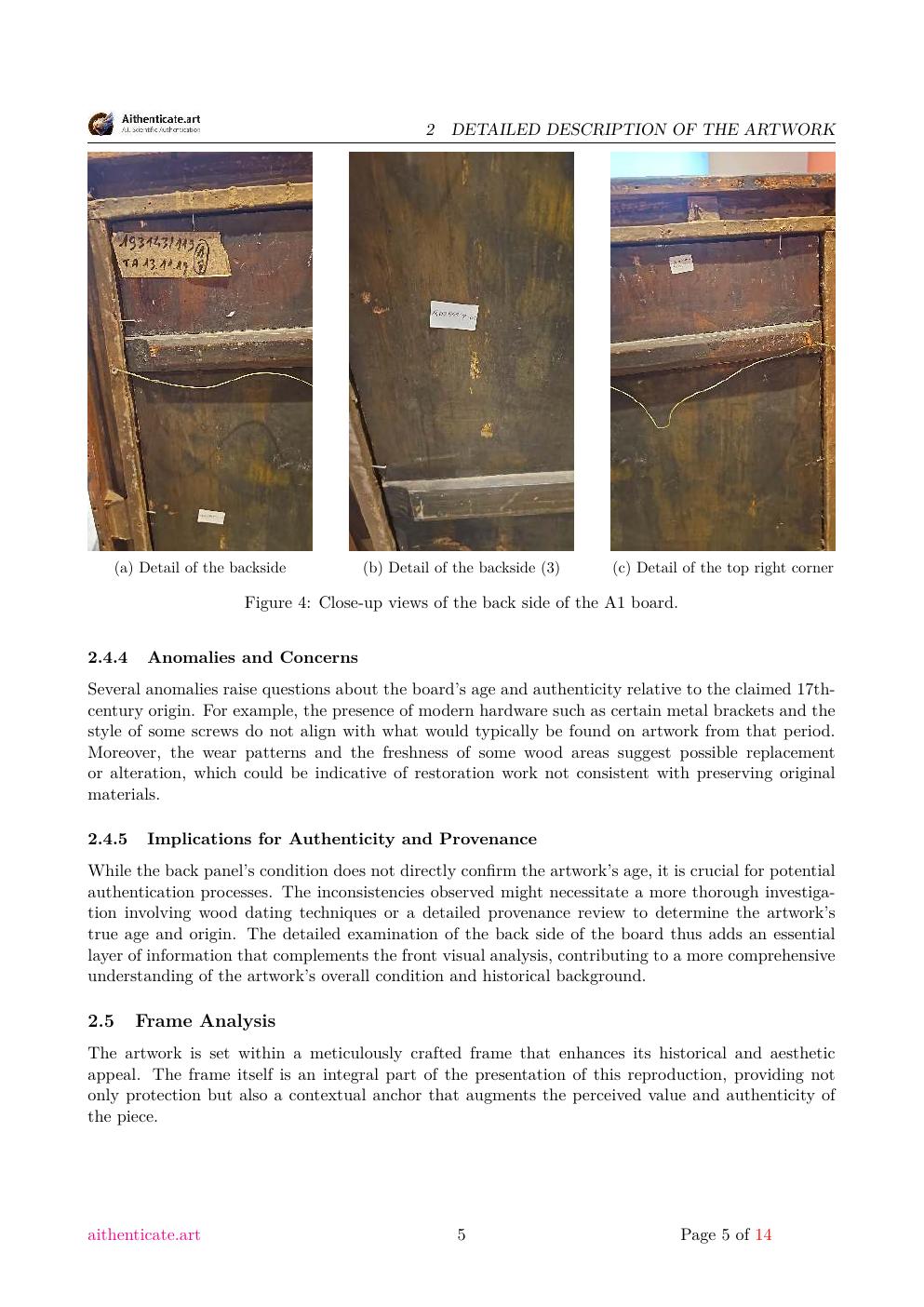
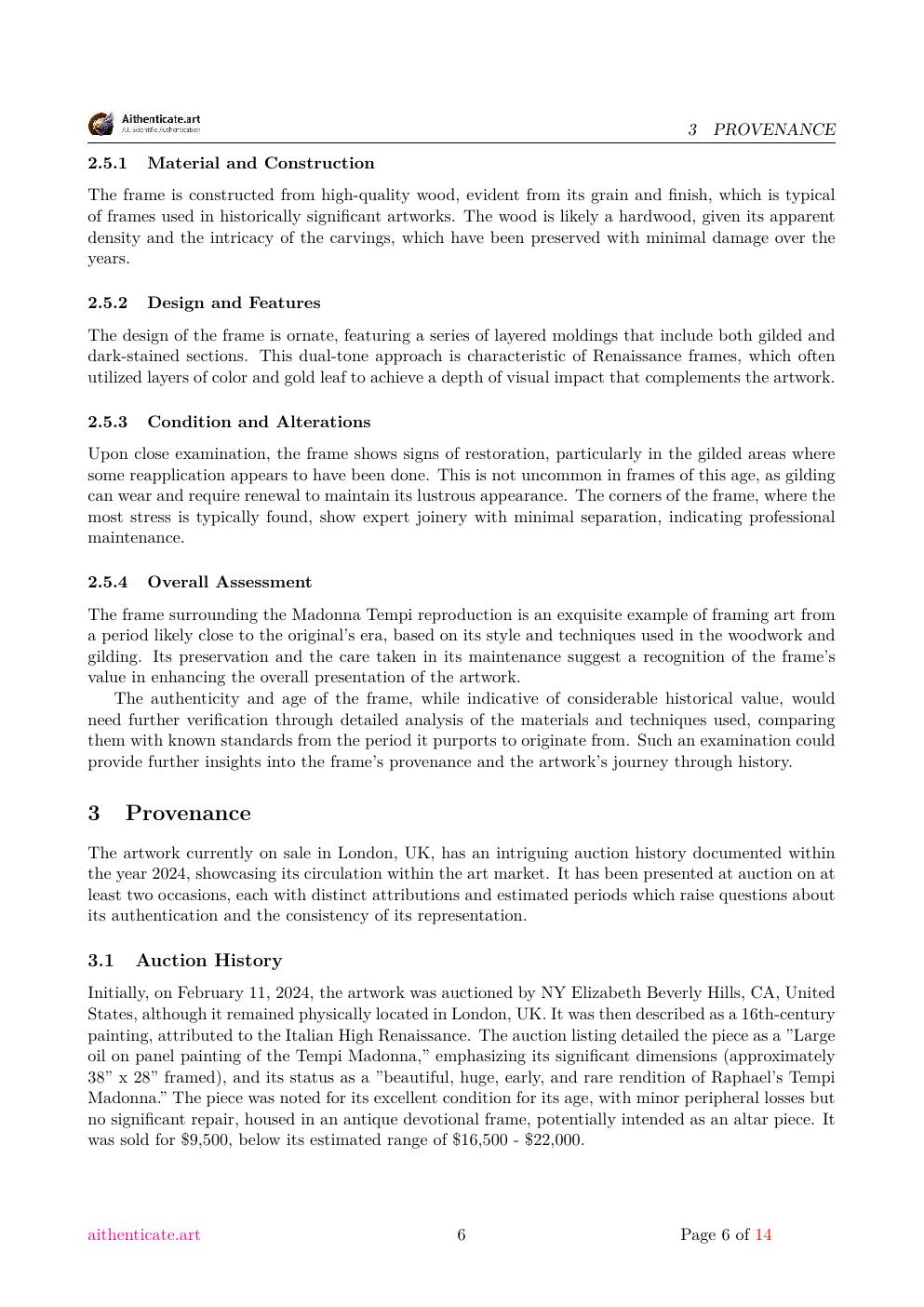
The backside of the oil on board provides crucial insights into the structural and historical aspects of the artwork. This section of the board, visible through high-resolution photos, showcases several key features typical of vintage art pieces, though with some notable concerns that may affect the purported age of the artwork. 0.45 Back side of the board - Full view 0.45 Back side of the board - Detail view Comparative views of the back side of the Madonna Tempi artwork's board.
03
Auction History
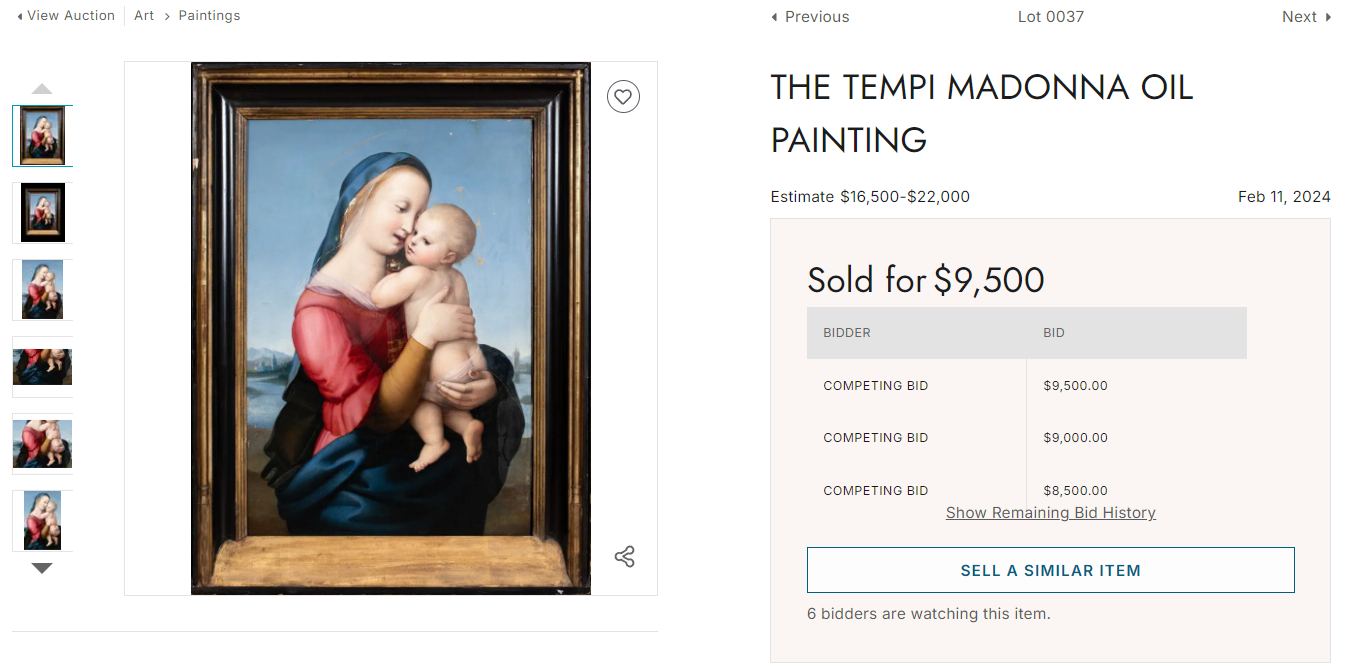
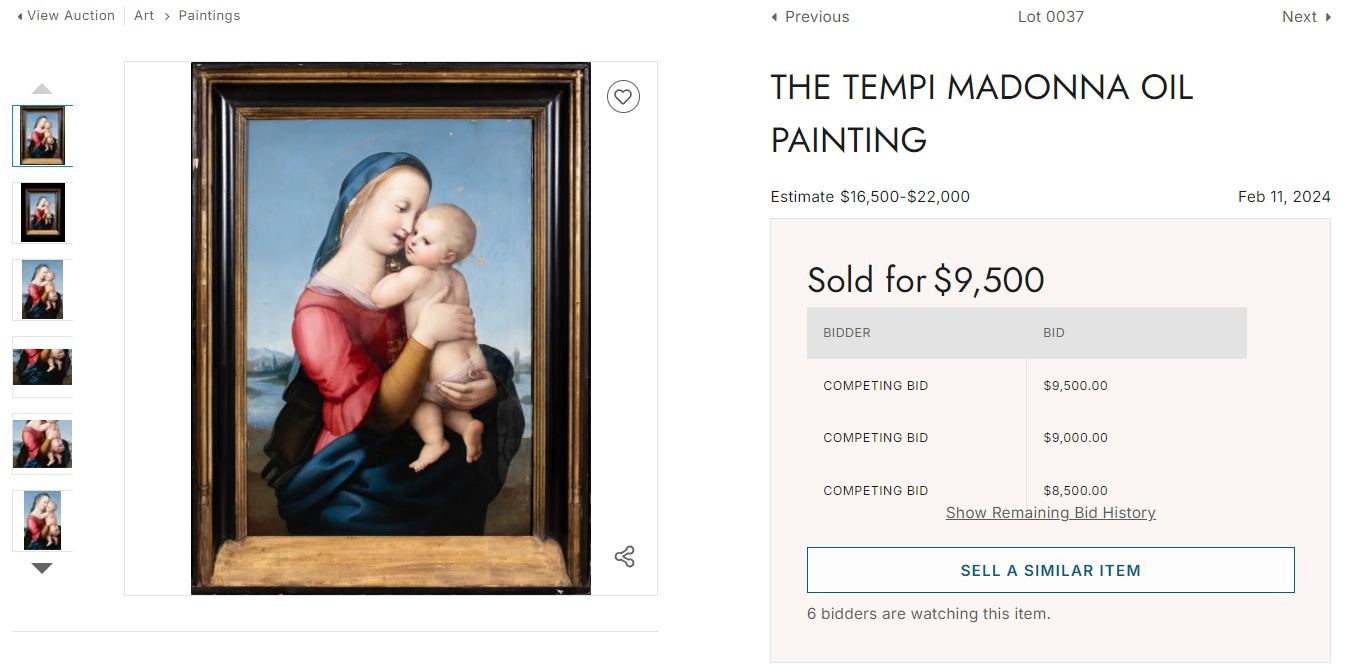
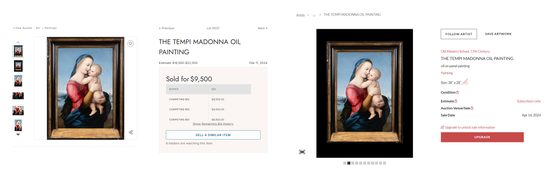
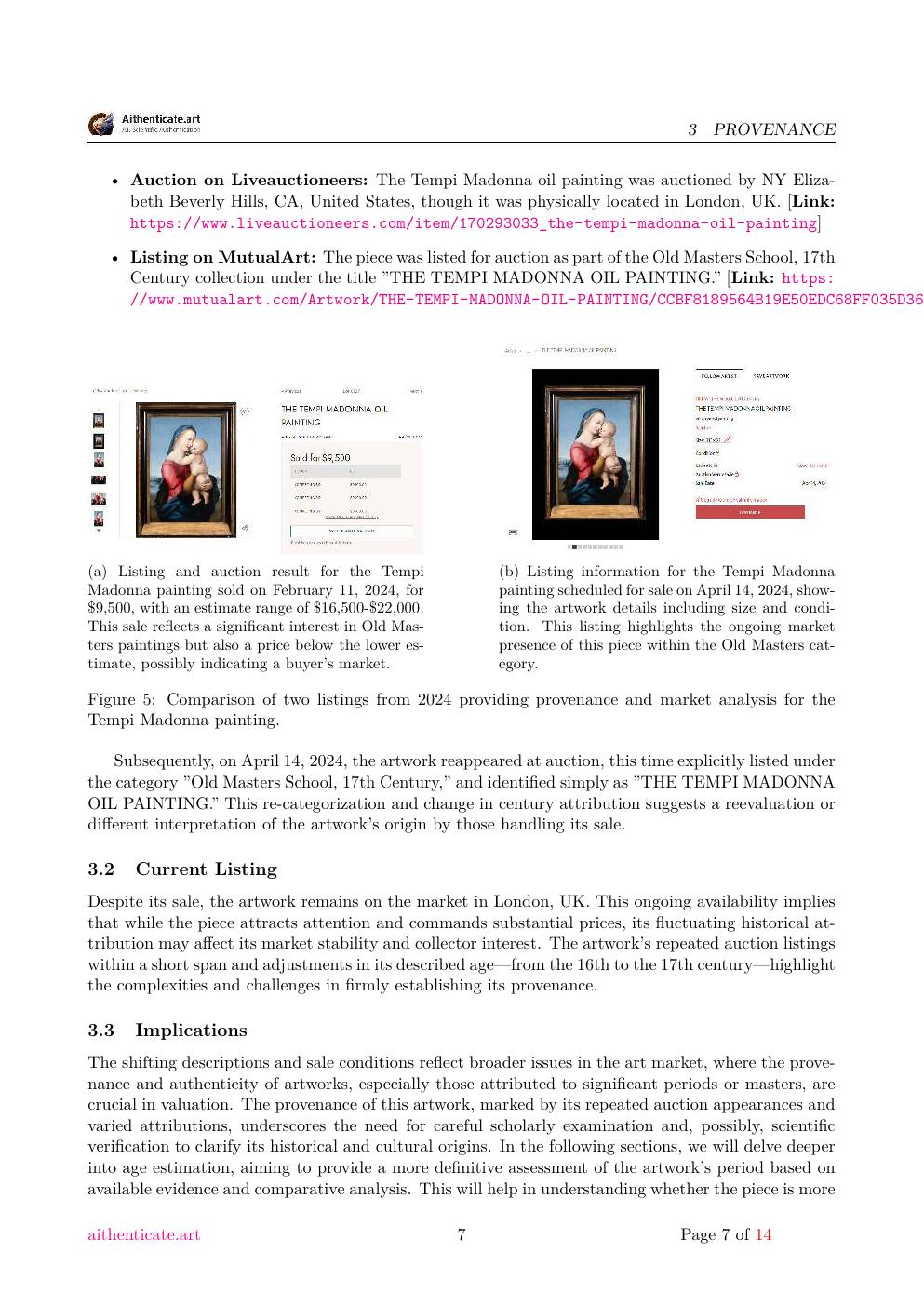
Initially, on February 11, 2024, the artwork was auctioned by NY Elizabeth Beverly Hills, CA, United States, although it remained physically located in London, UK. It was then described as a 16th-century painting, attributed to the Italian High Renaissance. The auction listing detailed the piece as a "Large oil on panel painting of the Tempi Madonna," emphasizing its significant dimensions (approximately 38" x 28" framed), and its status as a "beautiful, huge, early, and rare rendition of Raphael's Tempi Madonna."
04
Comparative Analysis
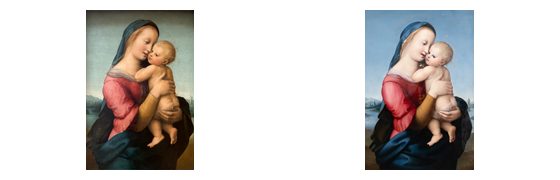
Selected evidence from this section shows how ConfirmArt structures a real client case for Madonna, combining visual review with documented comparables.
05
Comparative Analysis
Selected evidence from this section shows how ConfirmArt structures a real client case for Madonna, combining visual review with documented comparables.
06
Wood structure
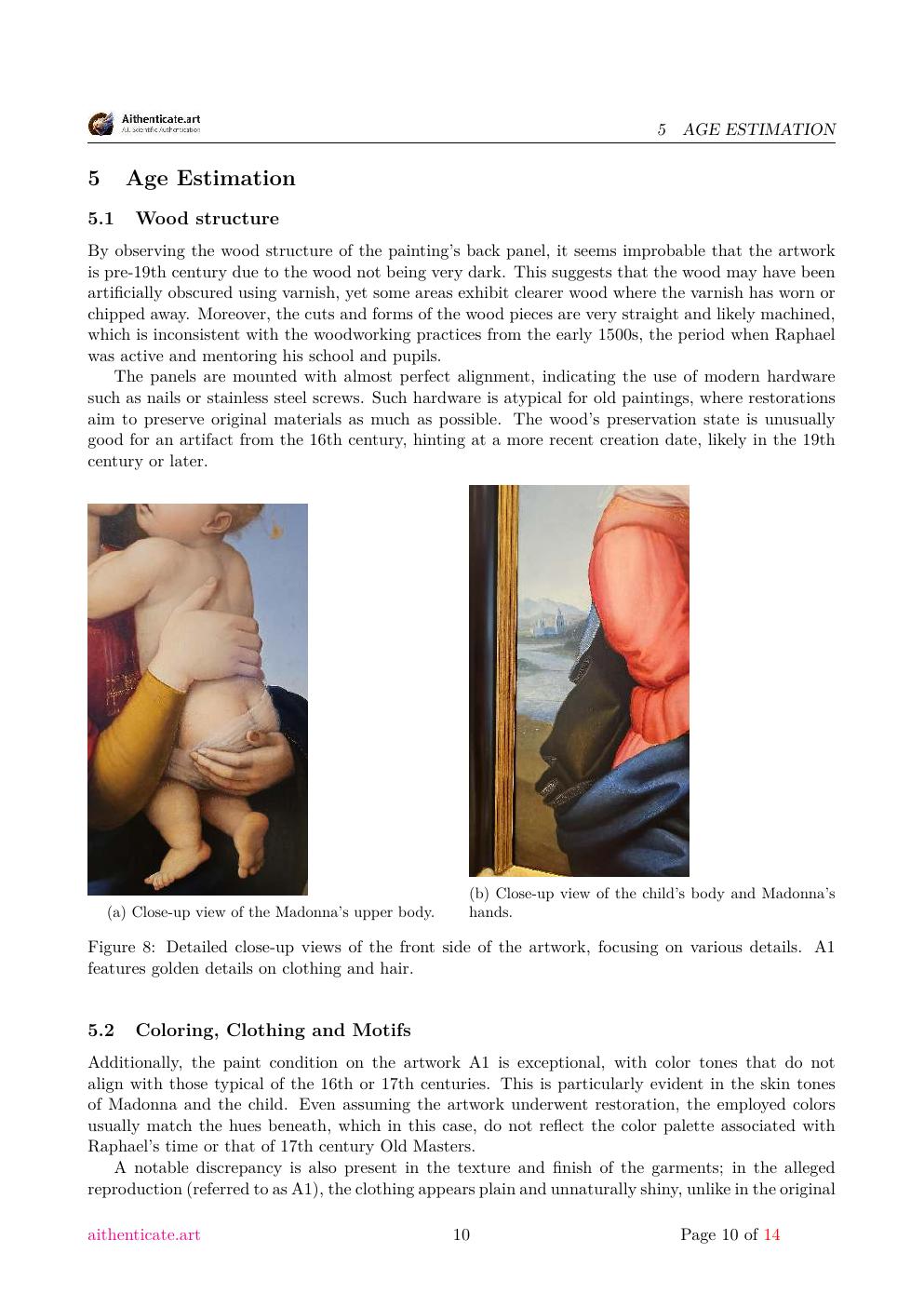
By observing the wood structure of the painting's back panel, it seems improbable that the artwork is pre-19th century due to the wood not being very dark. This suggests that the wood may have been artificially obscured using varnish, yet some areas exhibit clearer wood where the varnish has worn or chipped away. Moreover, the cuts and forms of the wood pieces are very straight and likely machined, which is inconsistent with the woodworking practices from the early 1500s, the period when Raphael was active and ment
07
Coloring, Clothing and Motifs
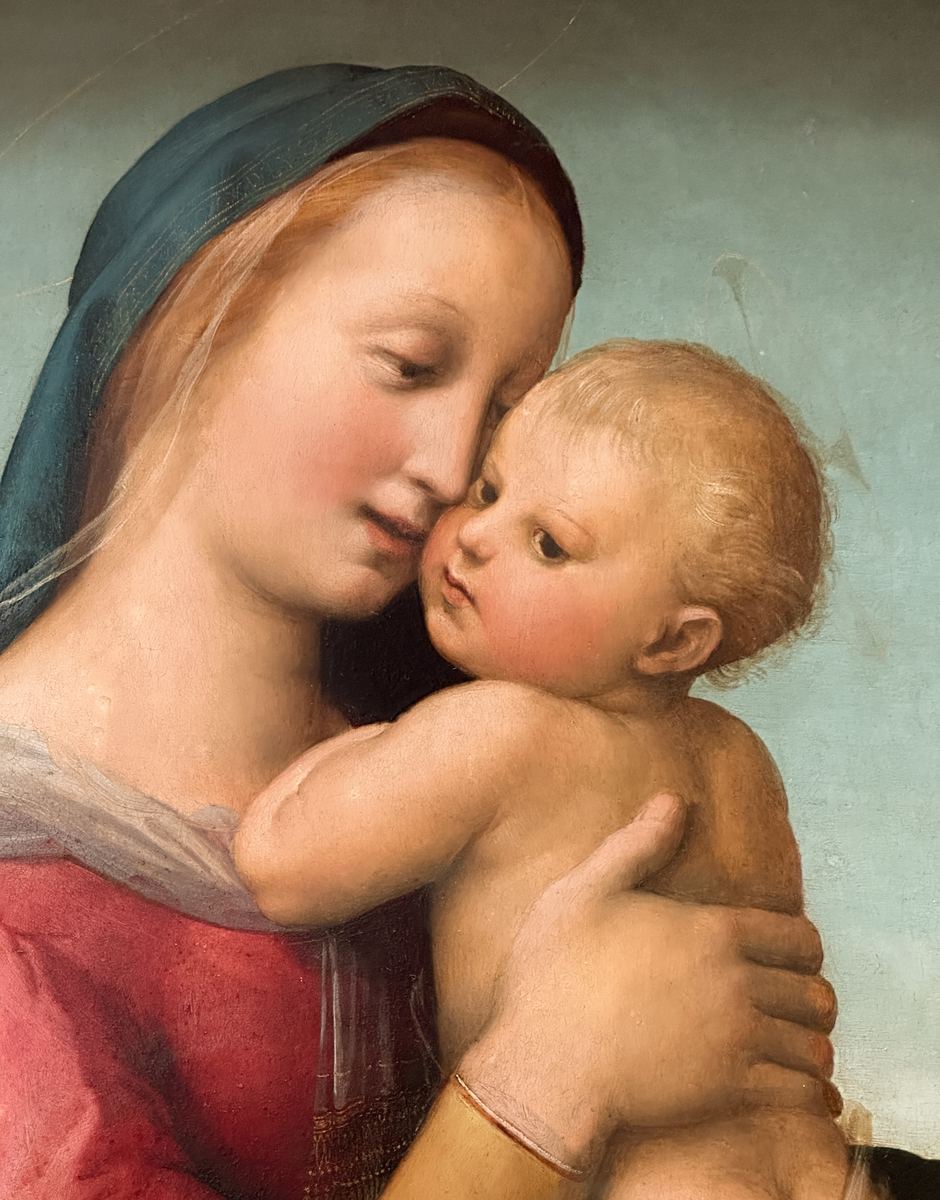
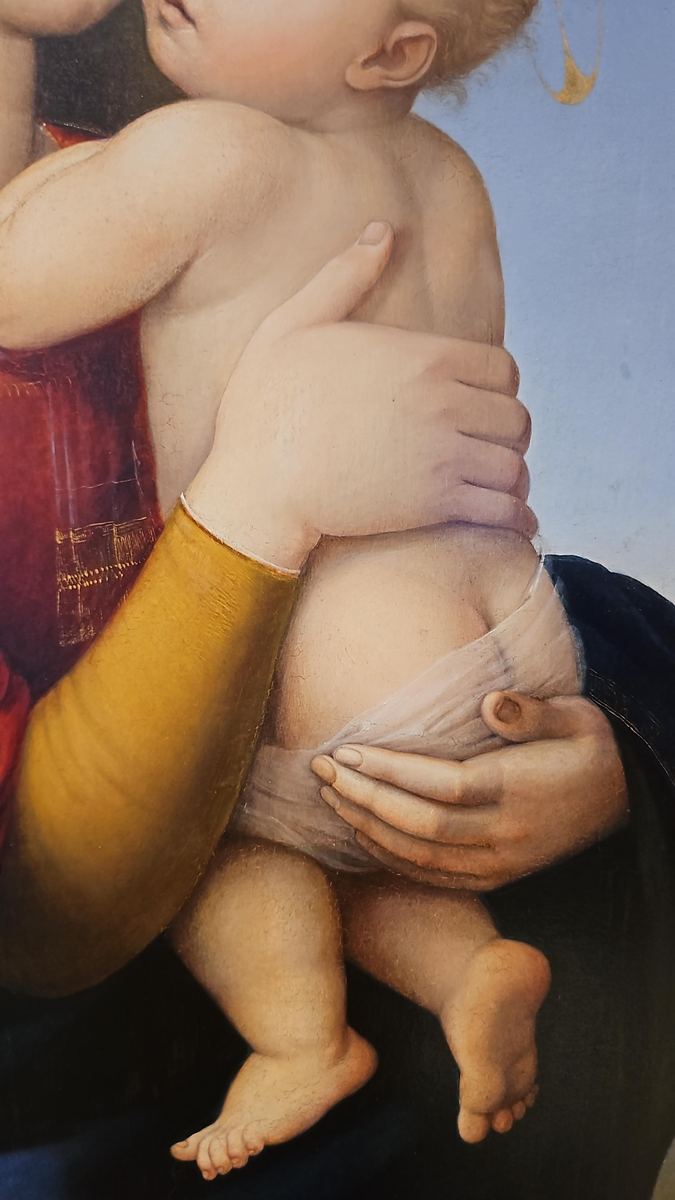
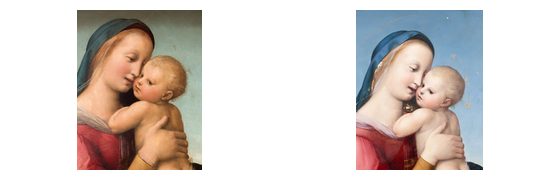
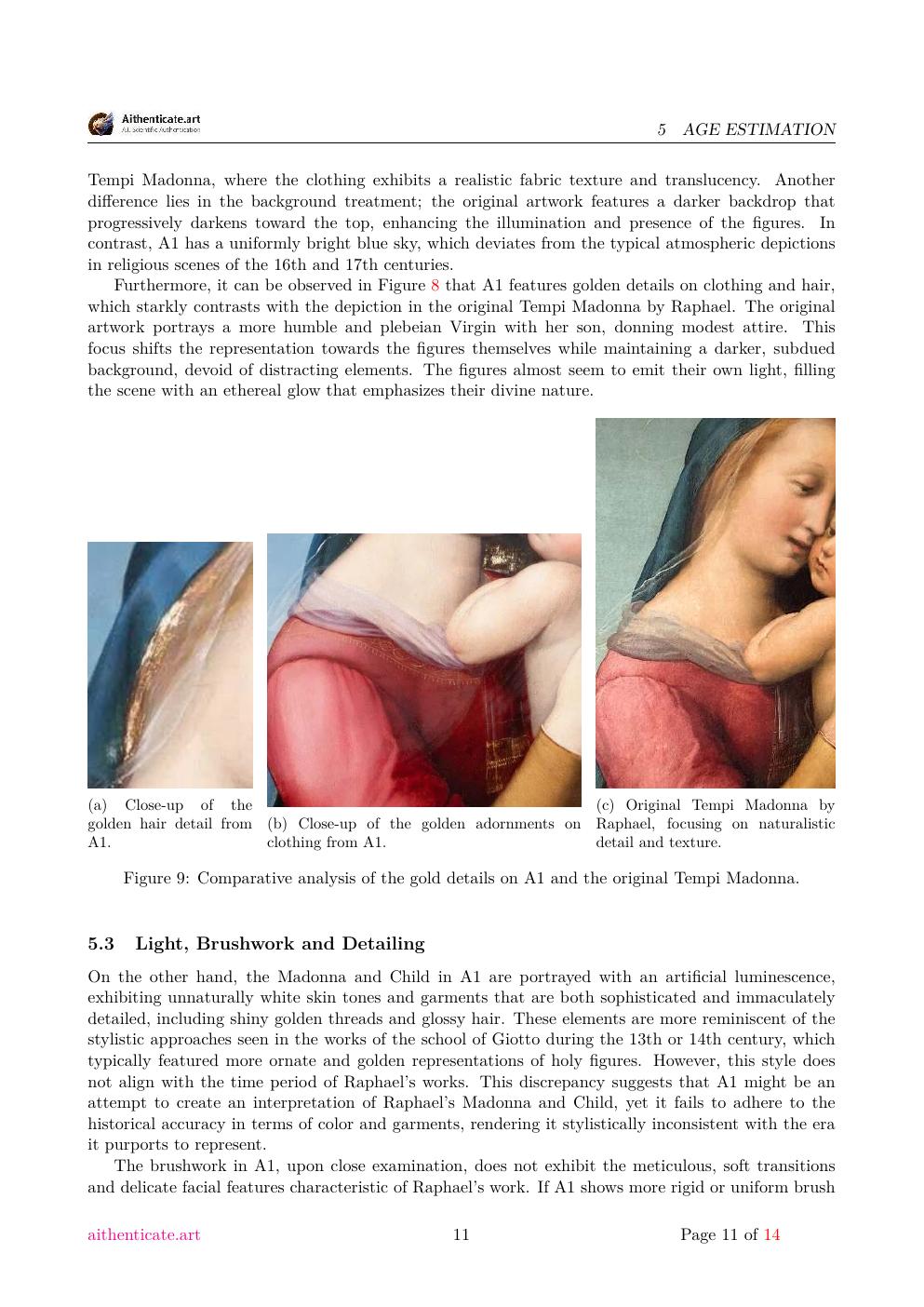
Additionally, the paint condition on the artwork A1 is exceptional, with color tones that do not align with those typical of the 16th or 17th centuries. This is particularly evident in the skin tones of Madonna and the child. Even assuming the artwork underwent restoration, the employed colors usually match the hues beneath, which in this case, do not reflect the color palette associated with Raphael's time or that of 17th century Old Masters.
08
Underdrawing and Preparation Layers
Renaissance panels often included extensive underdrawings, covered by a priming layer of gesso. Infrared reflectography can be employed to examine A1 for such preparatory layers. Deviations in foundational techniques or the absence of expected underdrawing could further confirm that A1 is not a product of the 16th century.
Authentication evidence
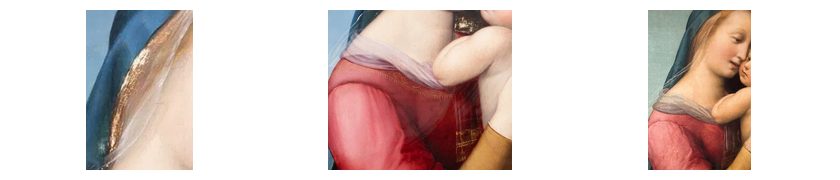
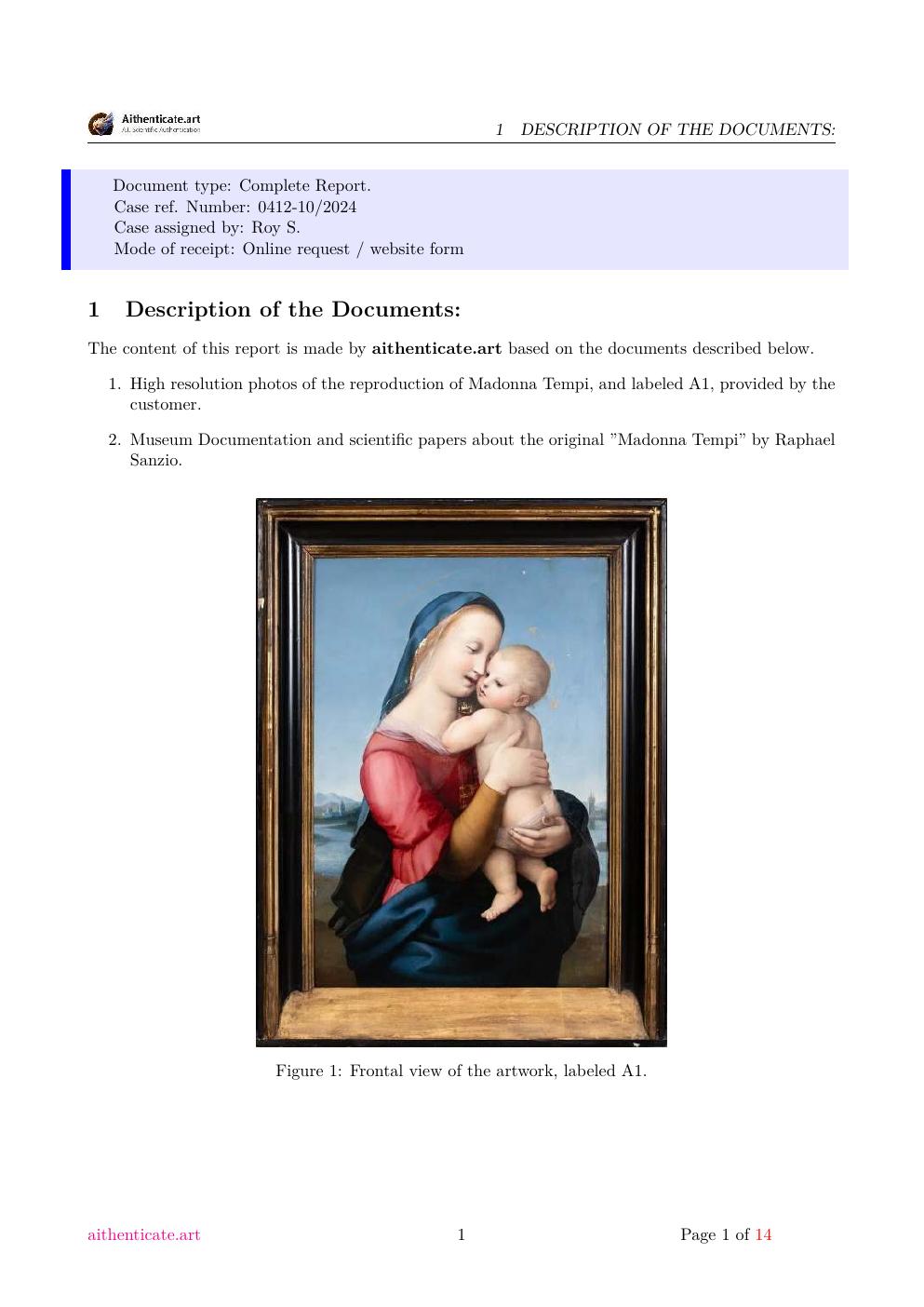
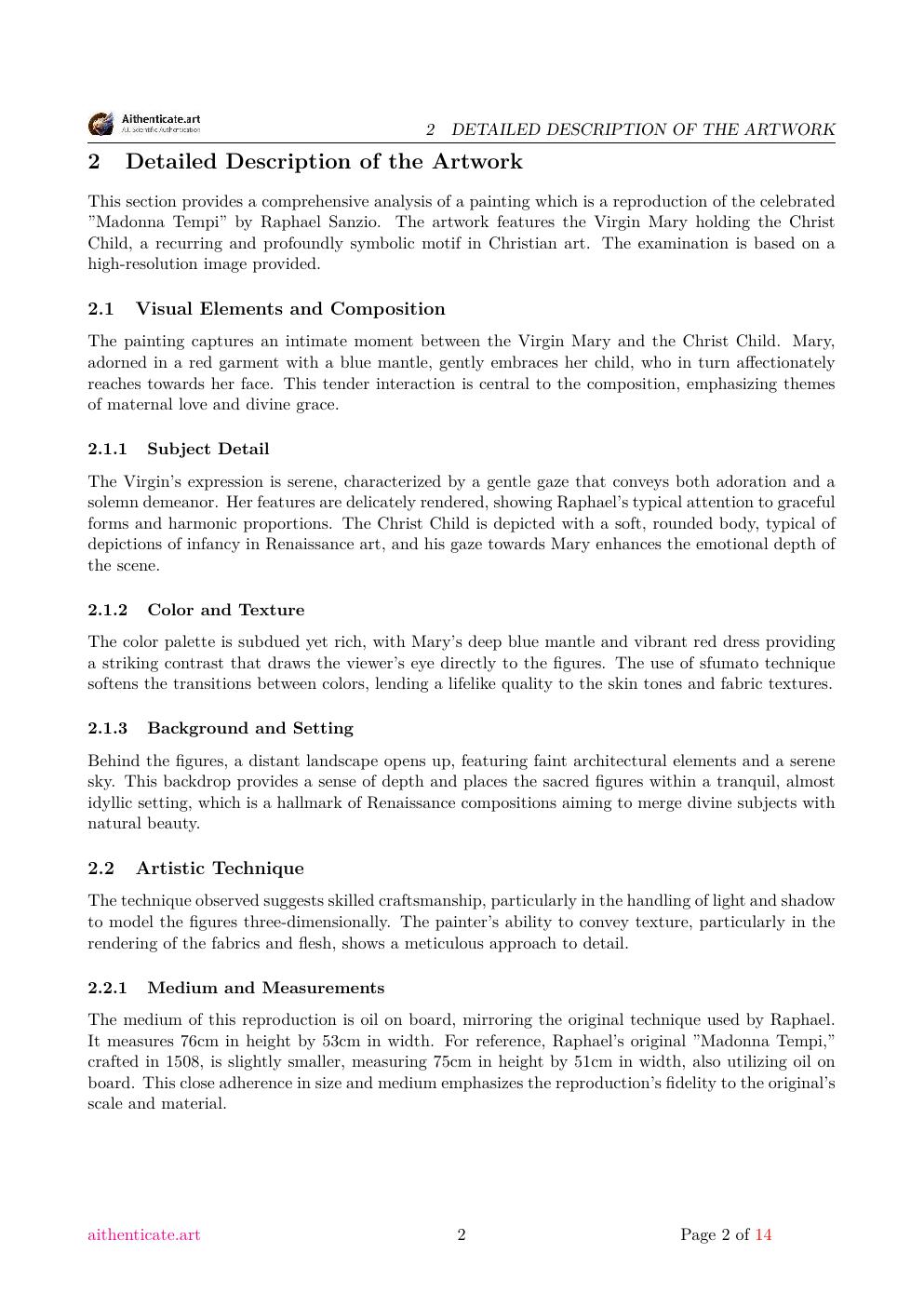
Selected close details from the human review
Examination of the Back PanelThe backside of the oil on board provides crucial insights into the structural and historical aspects of the artwork. This section of the board, visible through high-resolution photos, showcases several key features typical of vintage art pieces, though with some notable concerns that may affect the purported age of the artwork.Auction HistoryInitially, on February 11, 2024, the artwork was auctioned by NY Elizabeth Beverly Hills, CA, United States, although it remained physically located in London, UK. It was then described as a 16th-century painting, attributed to the Italian High Renaissance.Comparative AnalysisSelected evidence from this section shows how ConfirmArt structures a real client case for Madonna, combining visual review with documented comparables.Comparative AnalysisSelected evidence from this section shows how ConfirmArt structures a real client case for Madonna, combining visual review with documented comparables.Coloring, Clothing and MotifsAdditionally, the paint condition on the artwork A1 is exceptional, with color tones that do not align with those typical of the 16th or 17th centuries. This is particularly evident in the skin tones of Madonna and the child.
Private authentication
Submit your artwork for a ConfirmArt review
Use this real case as a reference for the kind of evidence that can be organized in a private authentication report.
The public browser receives rendered pages, not a native PDF viewer or direct PDF URL. Public pixels can still be screen-captured; private commissioned reports remain controlled client deliverables.
QR verification
Traceable real case
This real case has a stable verification URL and source fingerprints. The QR code resolves to the public verification record for this case.
Only your email and service selection are needed to submit the request. Optional images, dimensions and notes can be added now or later.
Payment is requested only for the Authentication report. Catalogue search, advisory, restoration and local inspection requests are reviewed first so the scope can be confirmed.
Authentication is a human expert review. ConfirmArt may use AI for bounded research support such as database, image, book or provenance searches, but not as a classifier verdict.
Complete front image
Reverse, support, frame and condition details
Signature, inscriptions, labels or seals
Invoices, certificates, provenance or catalogues
Comparative images, references or previous opinions, if available