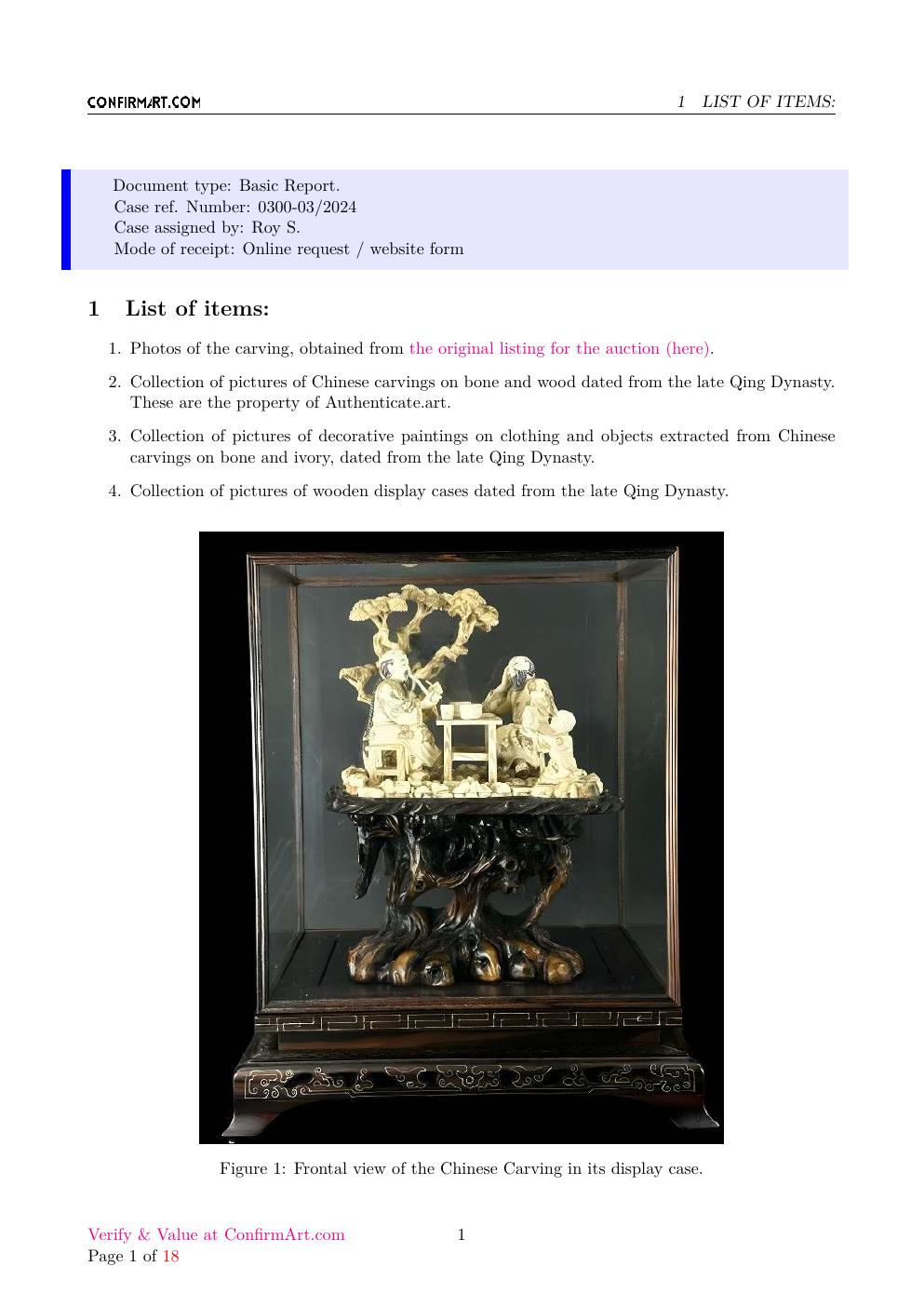
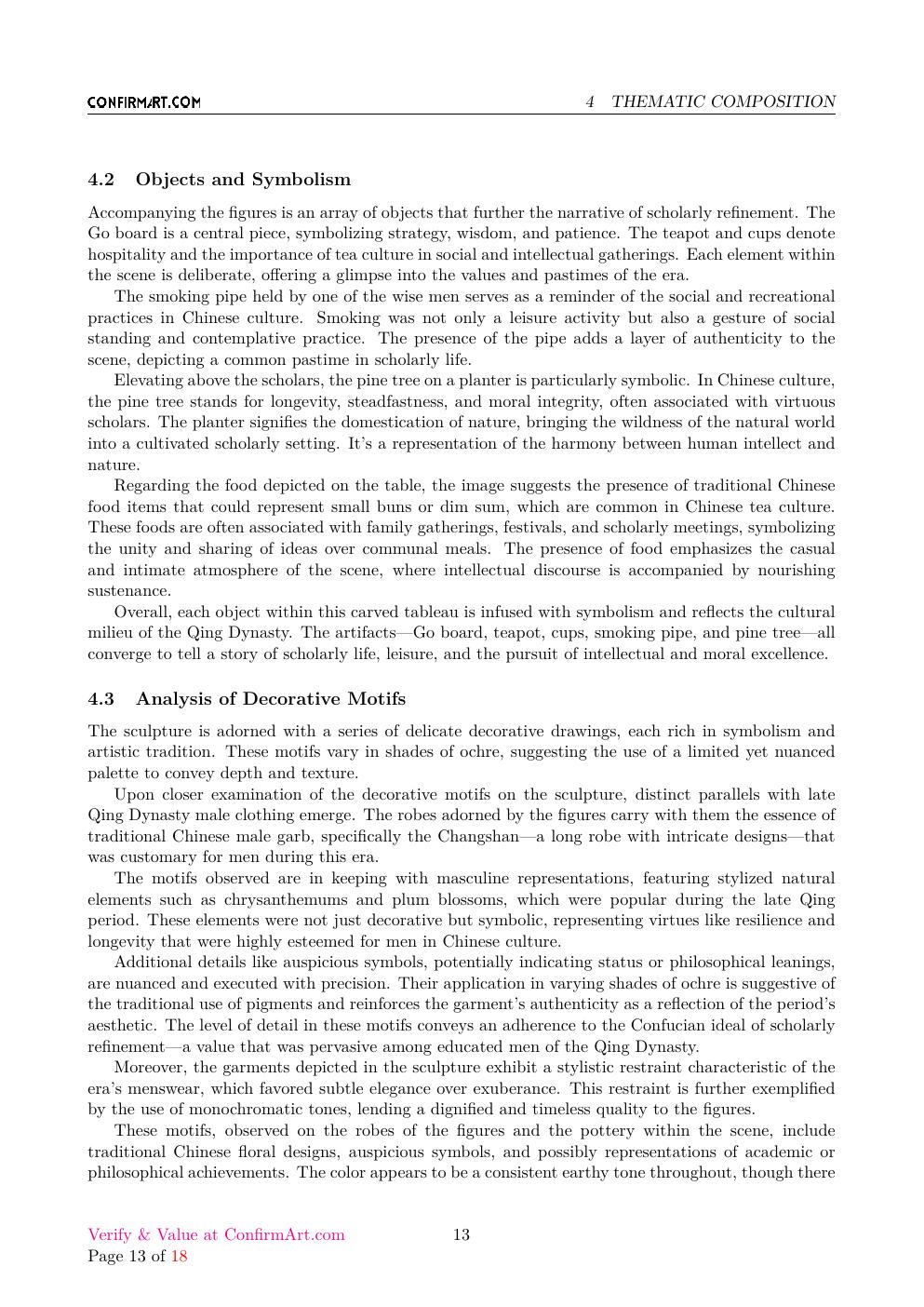
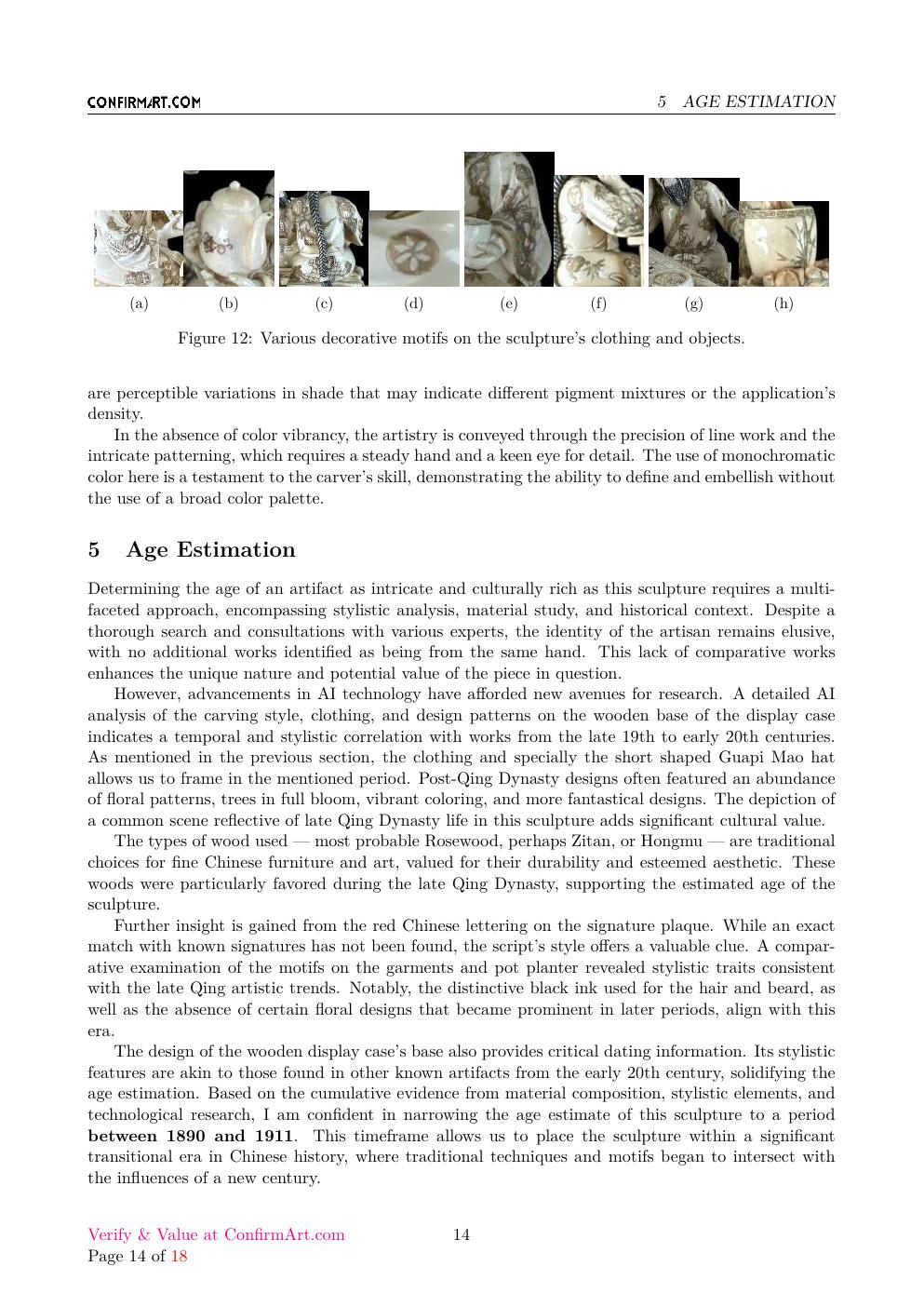
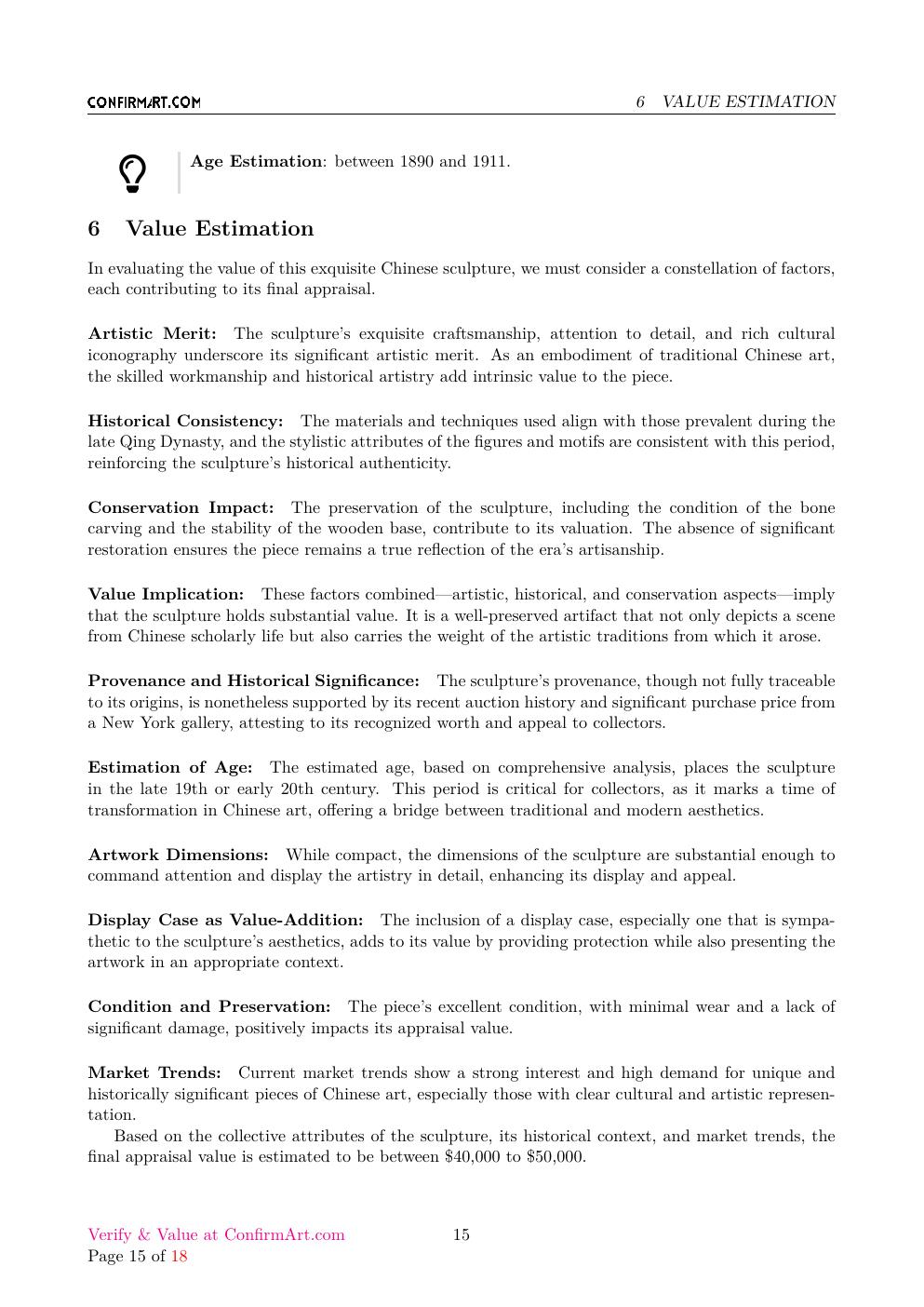
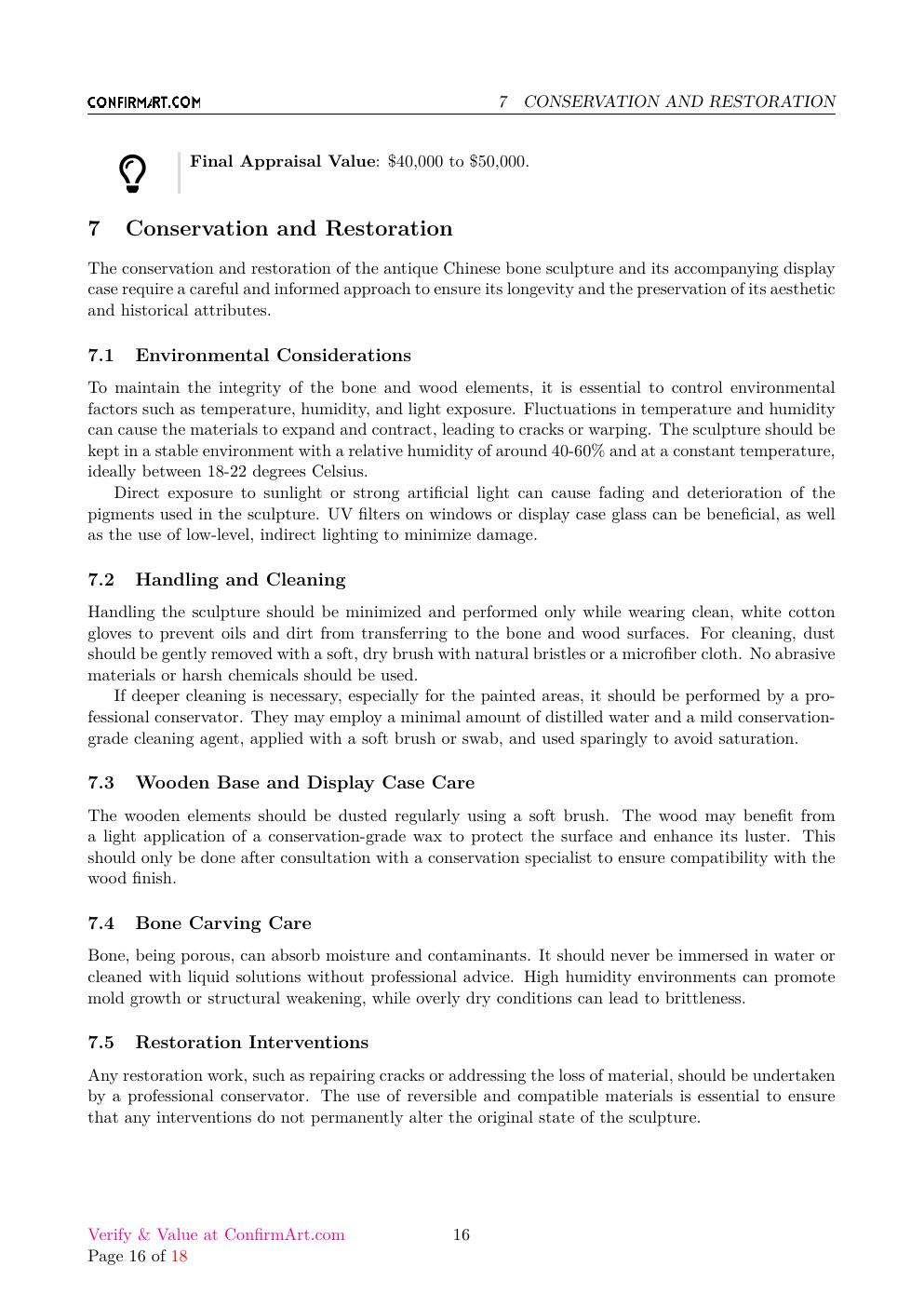
Real client case reviewed by ConfirmArt for Chinese Carving in its display case, attributed or related to Chinese Carving. The public page presents selected visual evidence and a rendered report viewer without exposing the private commissioned PDF.
Chinese Carving authentication evidence image 1: Chinese Carving in its display caseChinese Carving authentication evidence image 2: Chinese Carving in its display caseChinese Carving authentication evidence image 3: Chinese Carving in its display caseChinese Carving authentication evidence image 4: Chinese Carving in its display caseChinese Carving authentication evidence image 5: Chinese Carving in its display caseChinese Carving authentication evidence image 6: Chinese Carving in its display caseChinese Carving authentication evidence image 7: Chinese Carving in its display caseChinese Carving authentication evidence image 8: Chinese Carving in its display case
Report structure
Section summaries
01
List of items
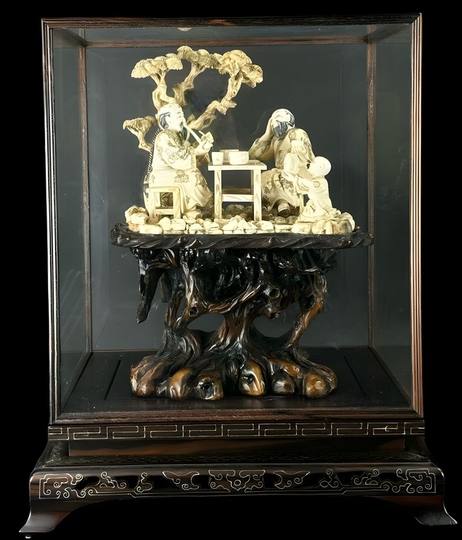
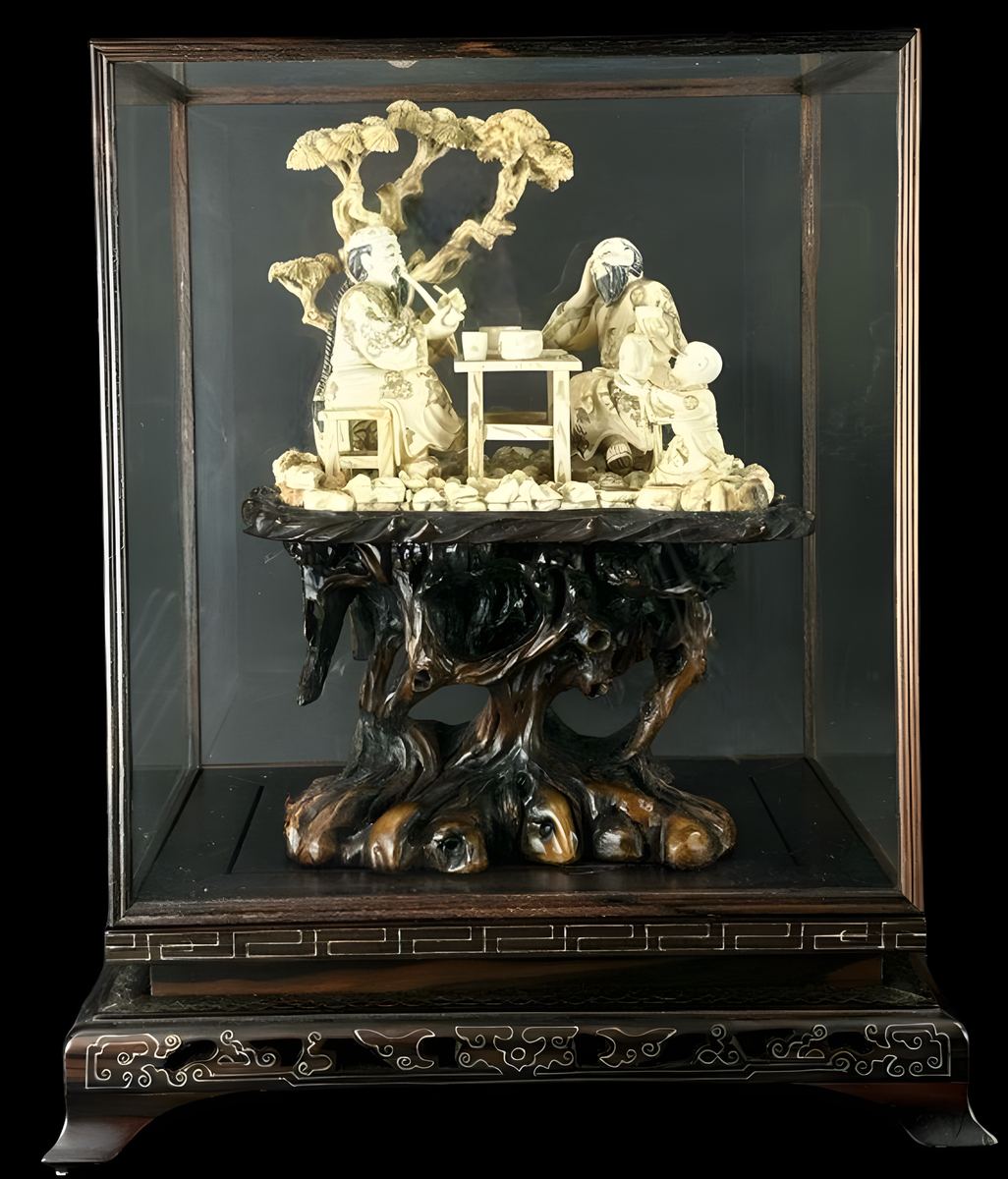
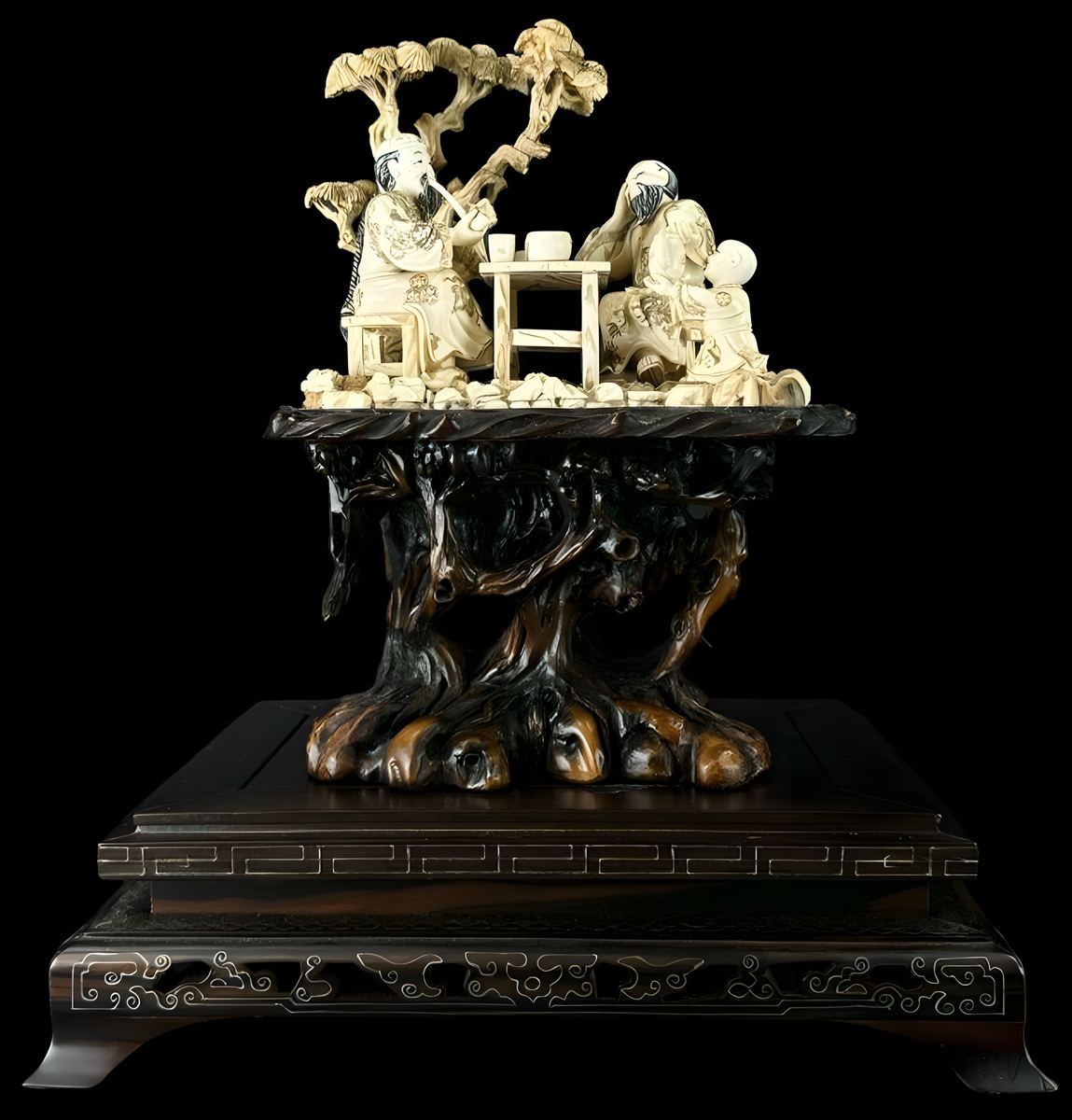
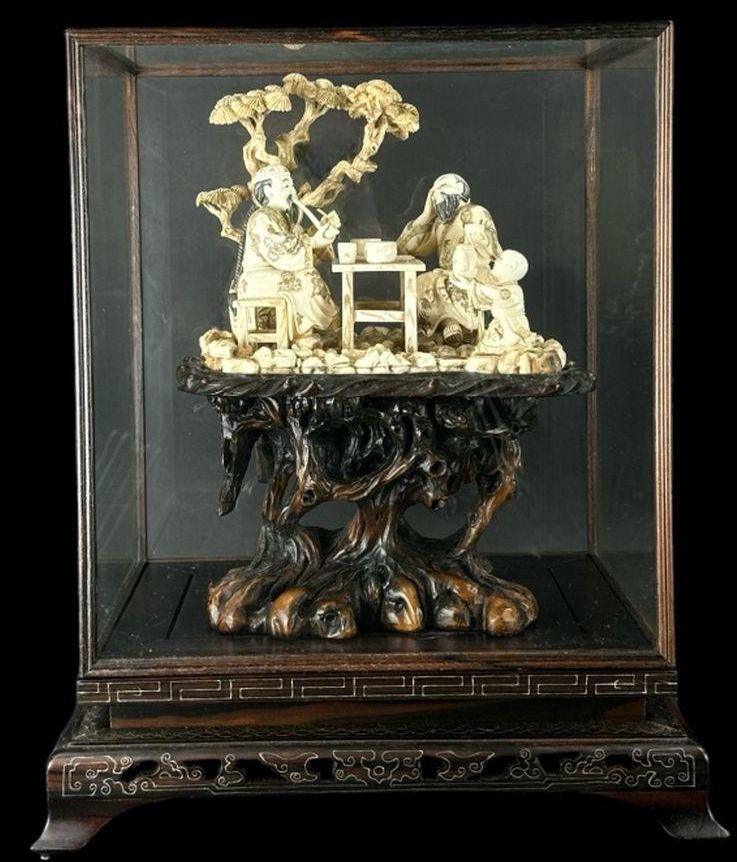
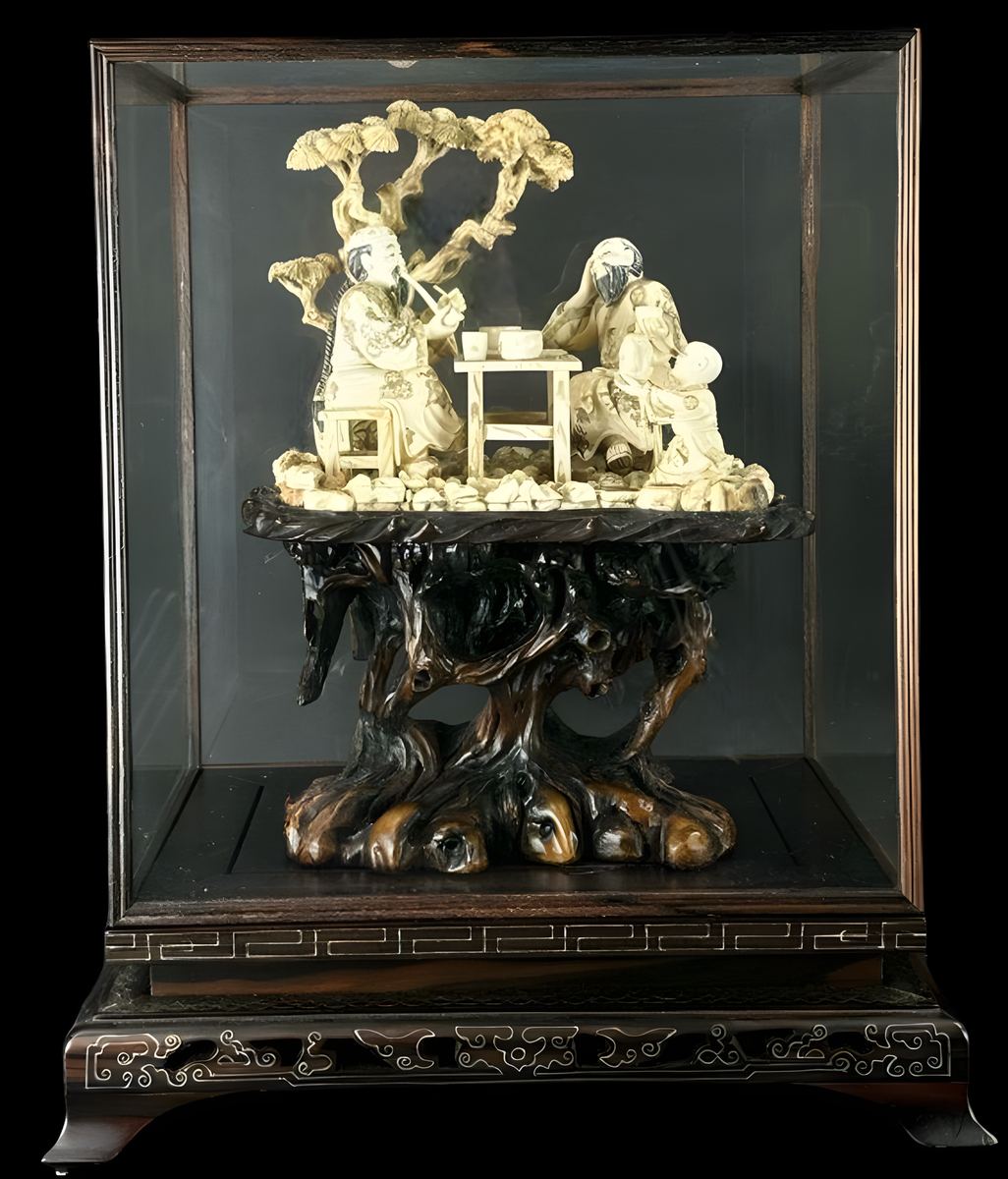
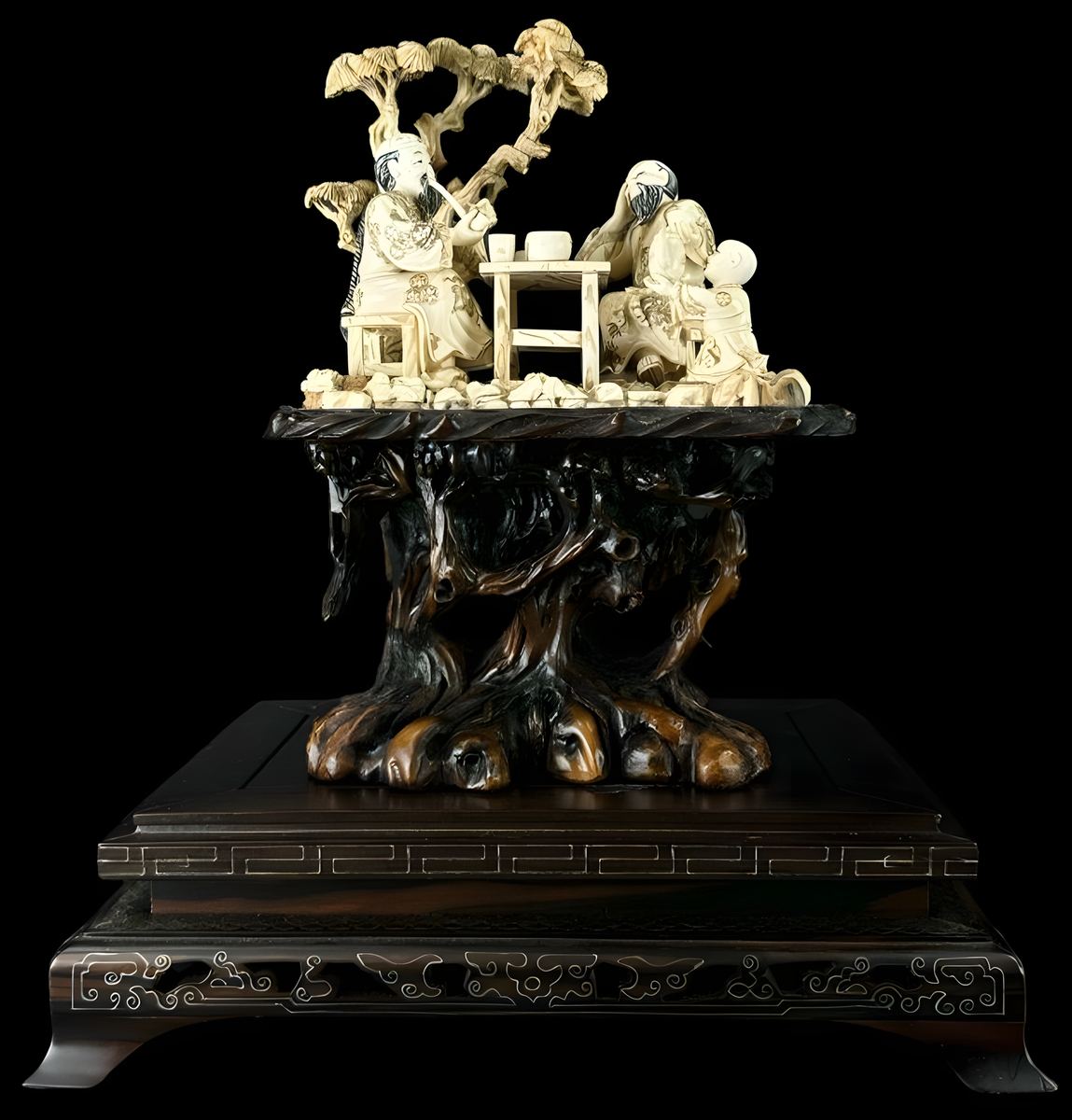
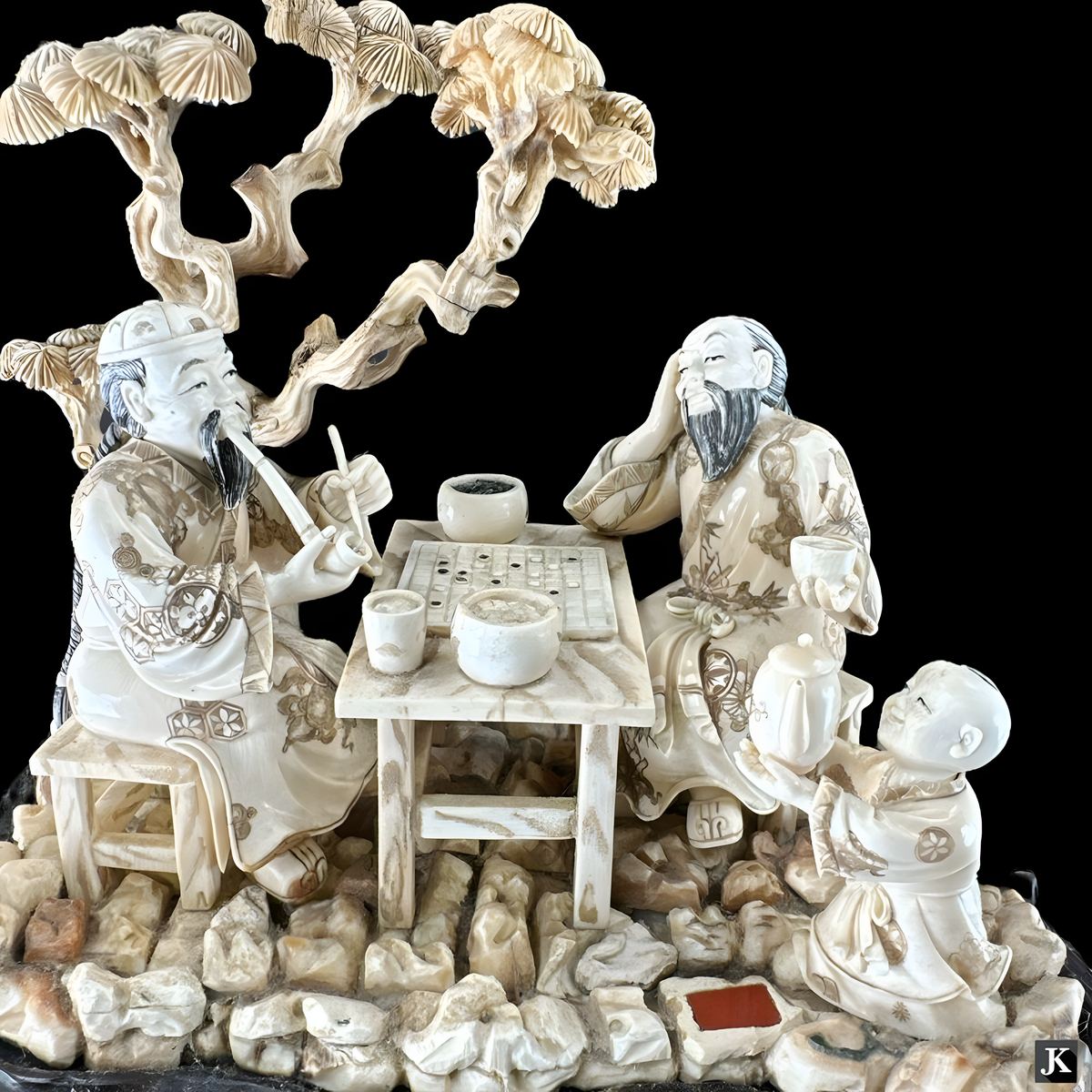
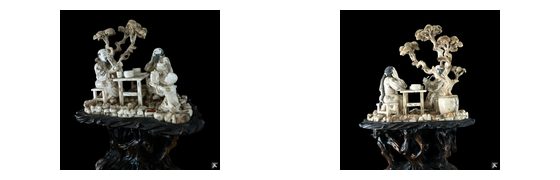
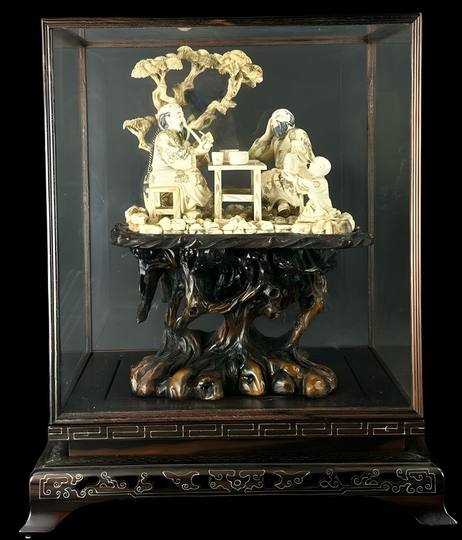
Photos of the carving, obtained from the original listing for the auction (here). Collection of pictures of Chinese carvings on bone and wood dated from the late Qing Dynasty. These are the property of Authenticate.art. Collection of pictures of decorative paintings on clothing and objects extracted from Chinese carvings on bone and ivory, dated from the late Qing Dynasty. Collection of pictures of wooden display cases dated from the late Qing Dynasty. Frontal view of the Chinese Carving in its display case
02
Upper Half Scene Description
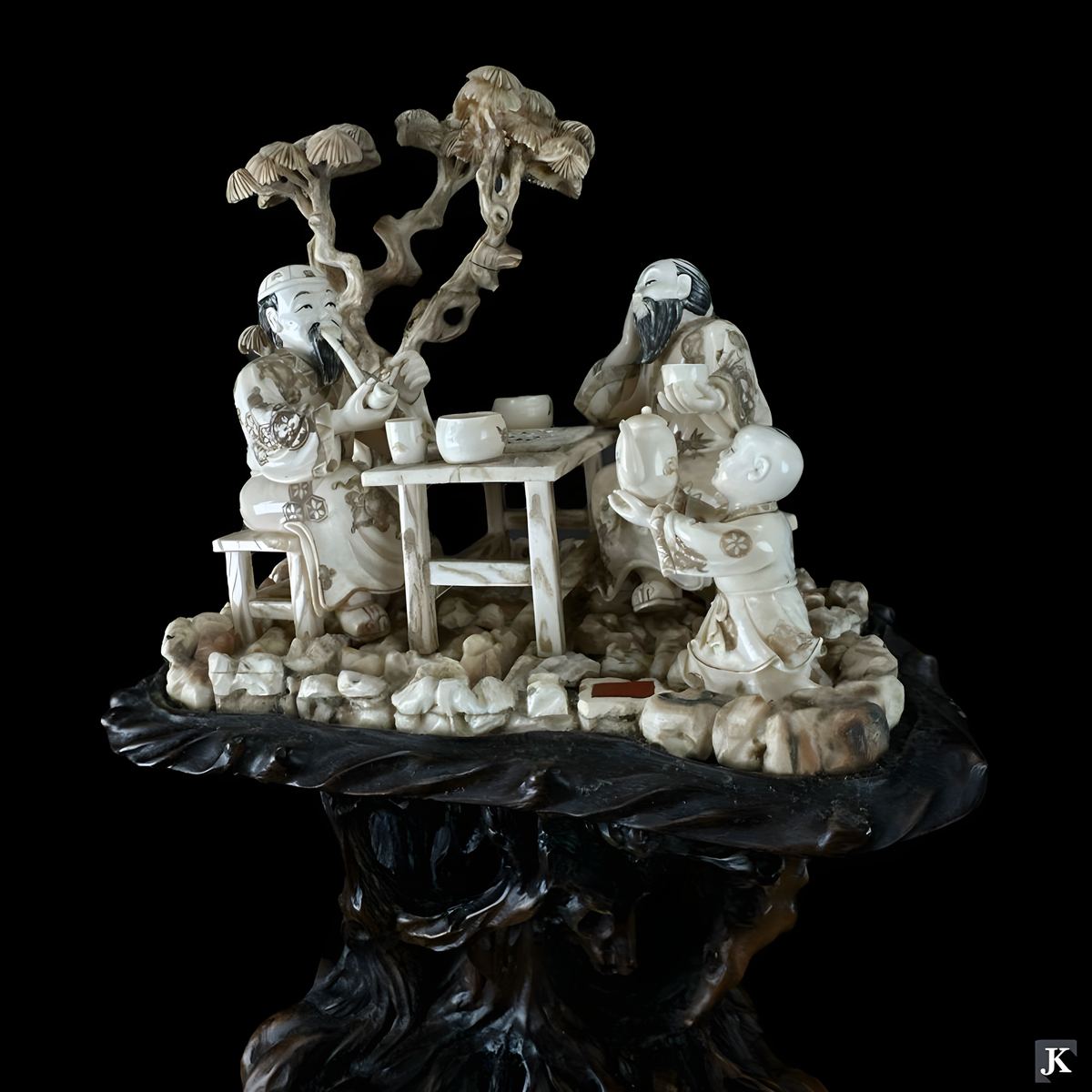
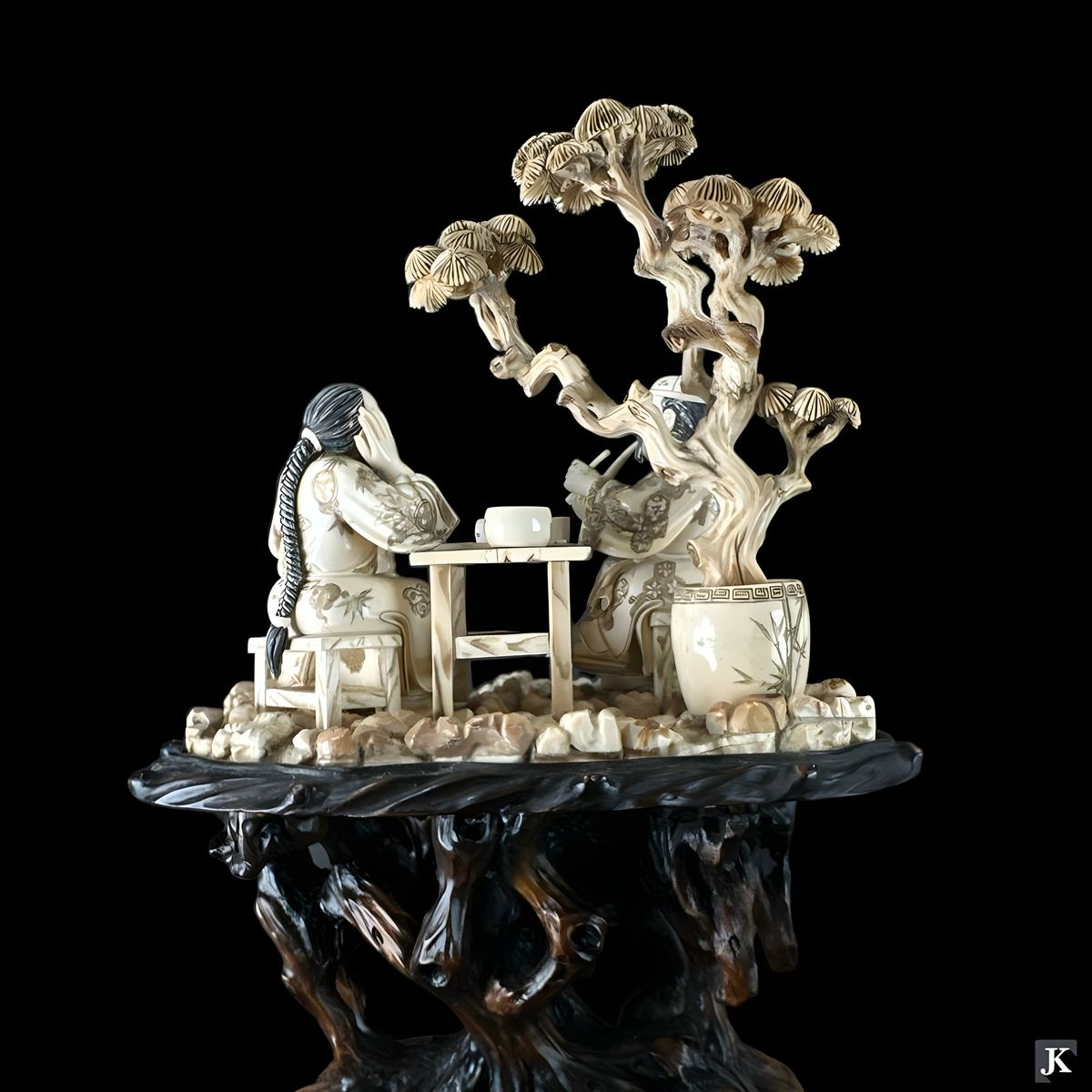
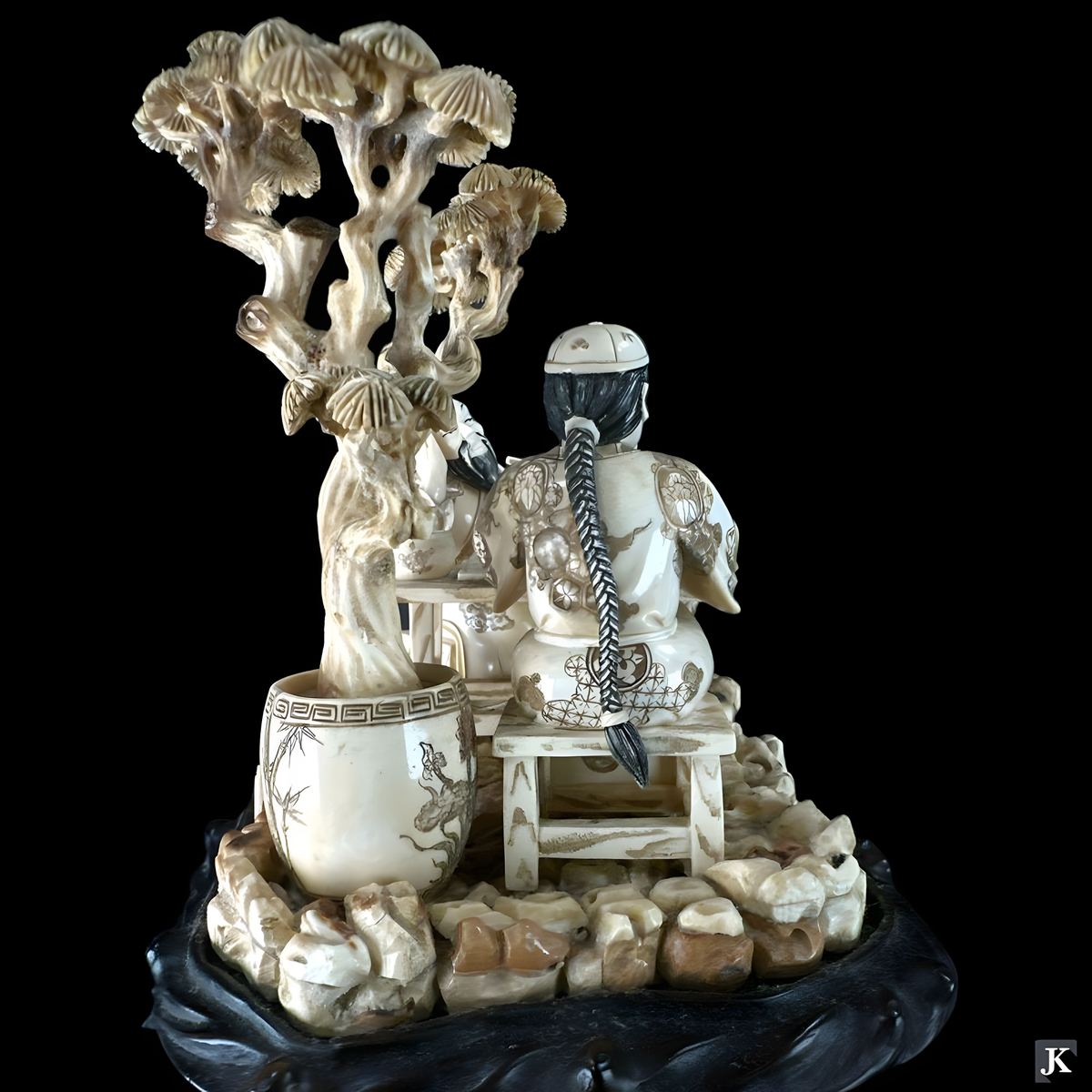
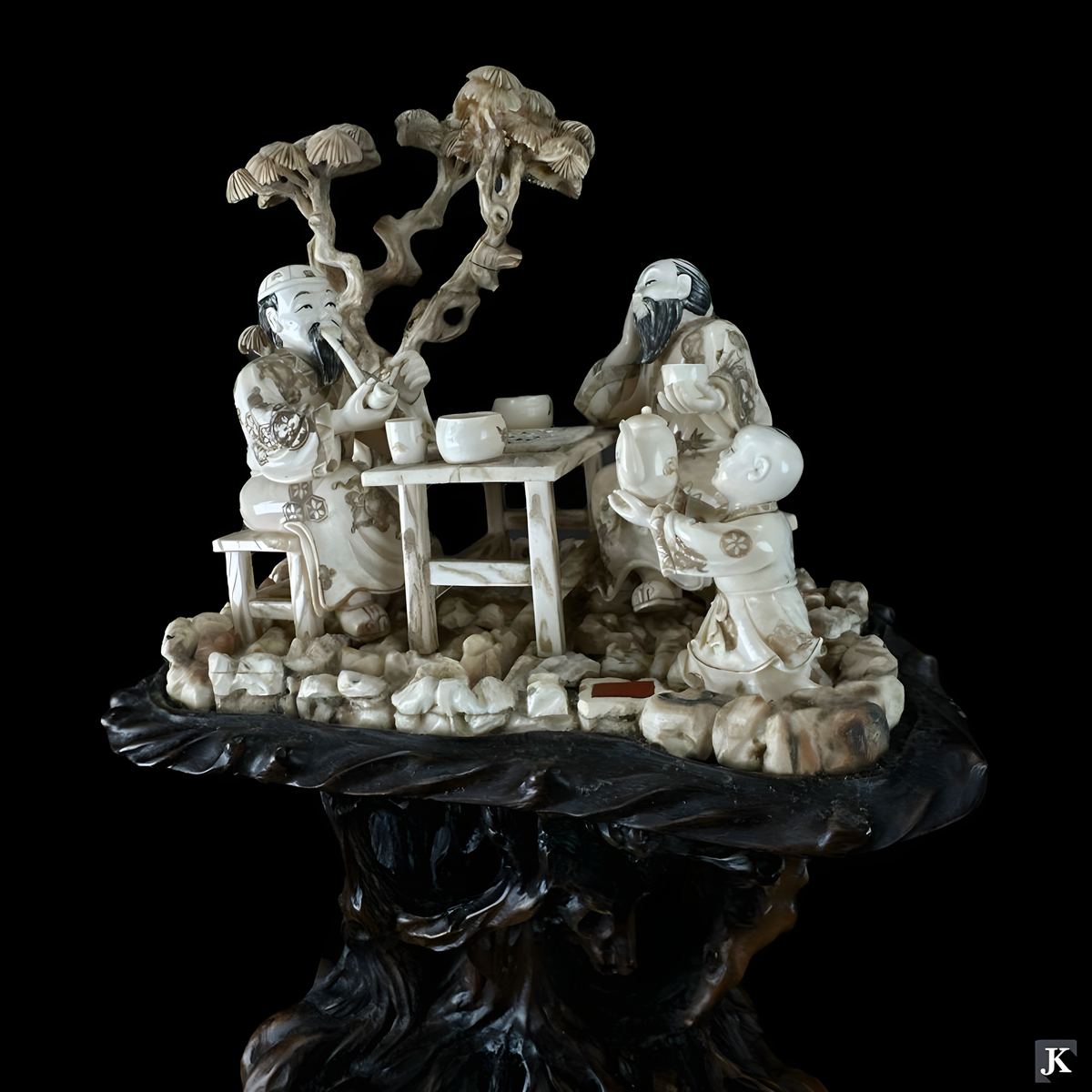
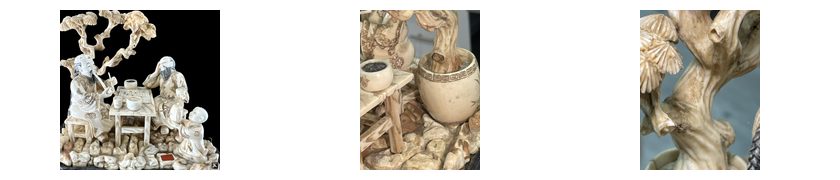
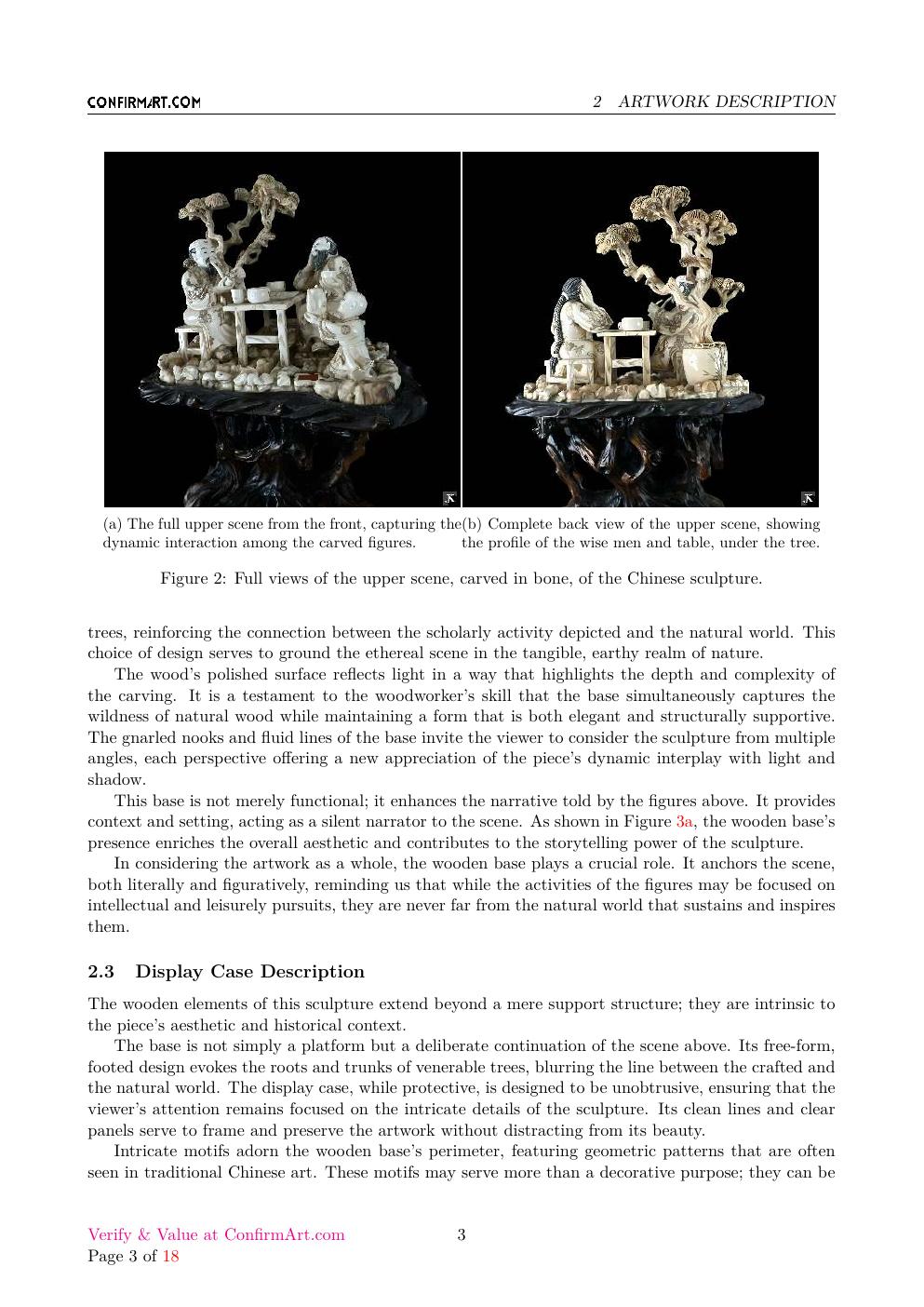
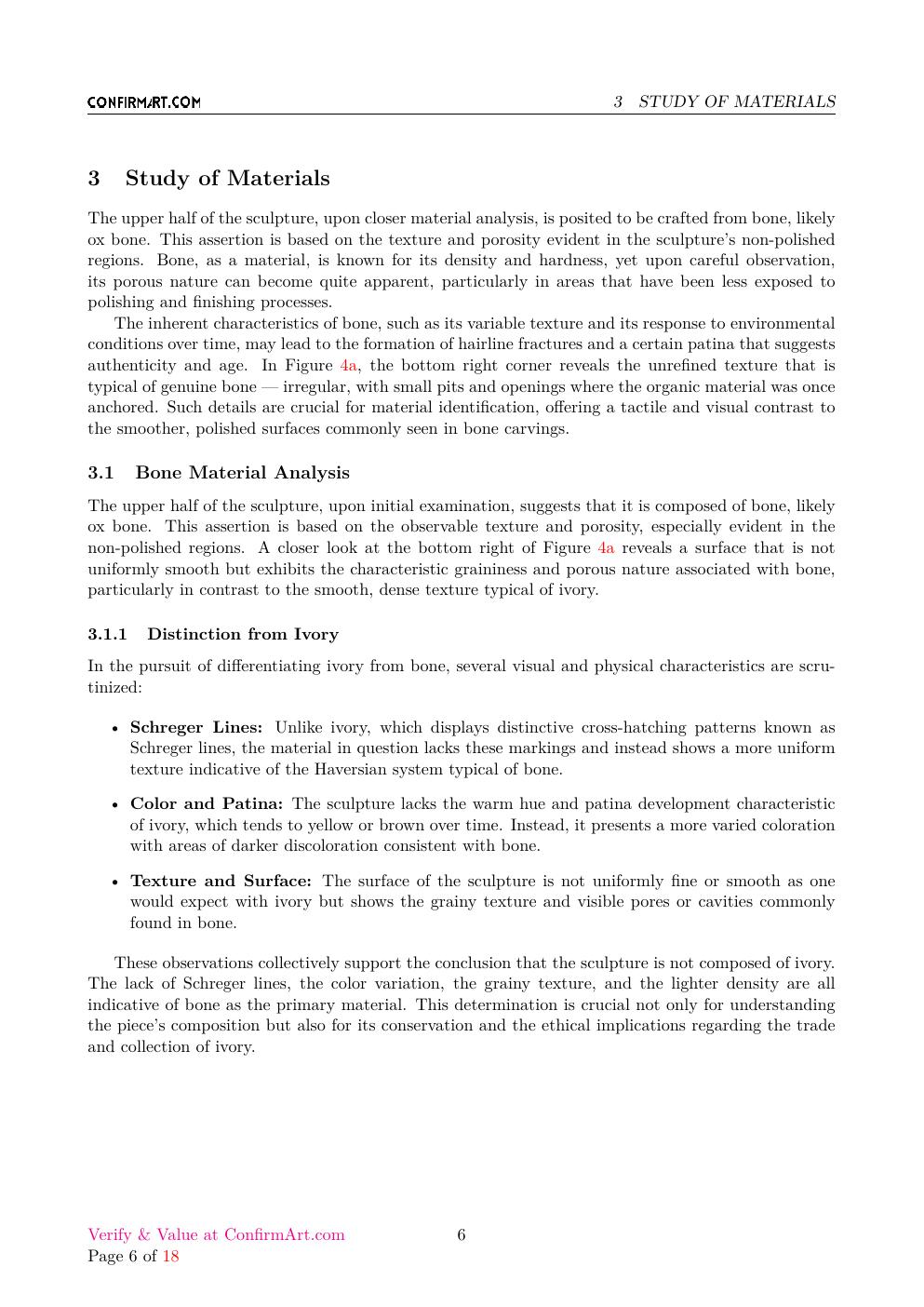
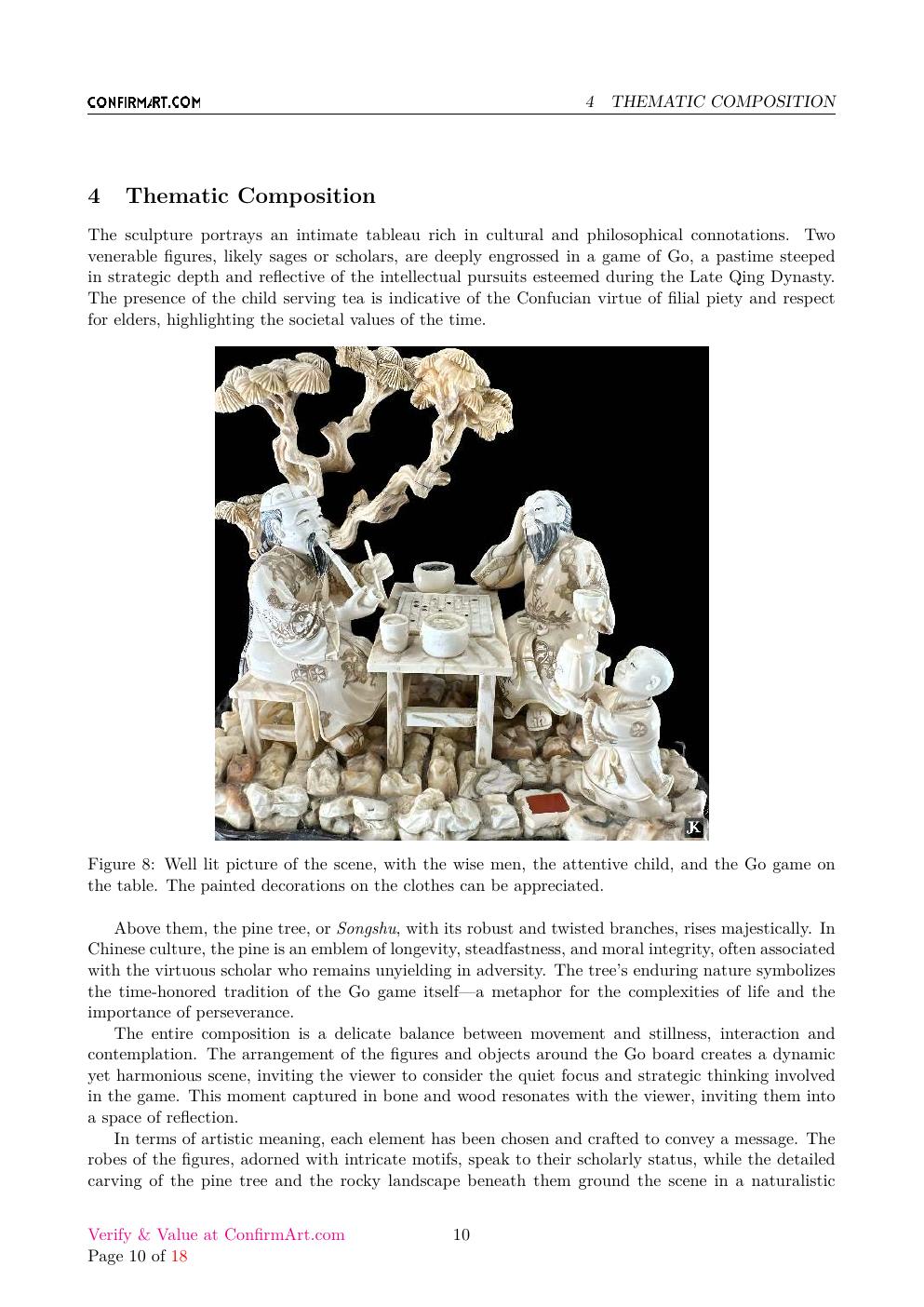
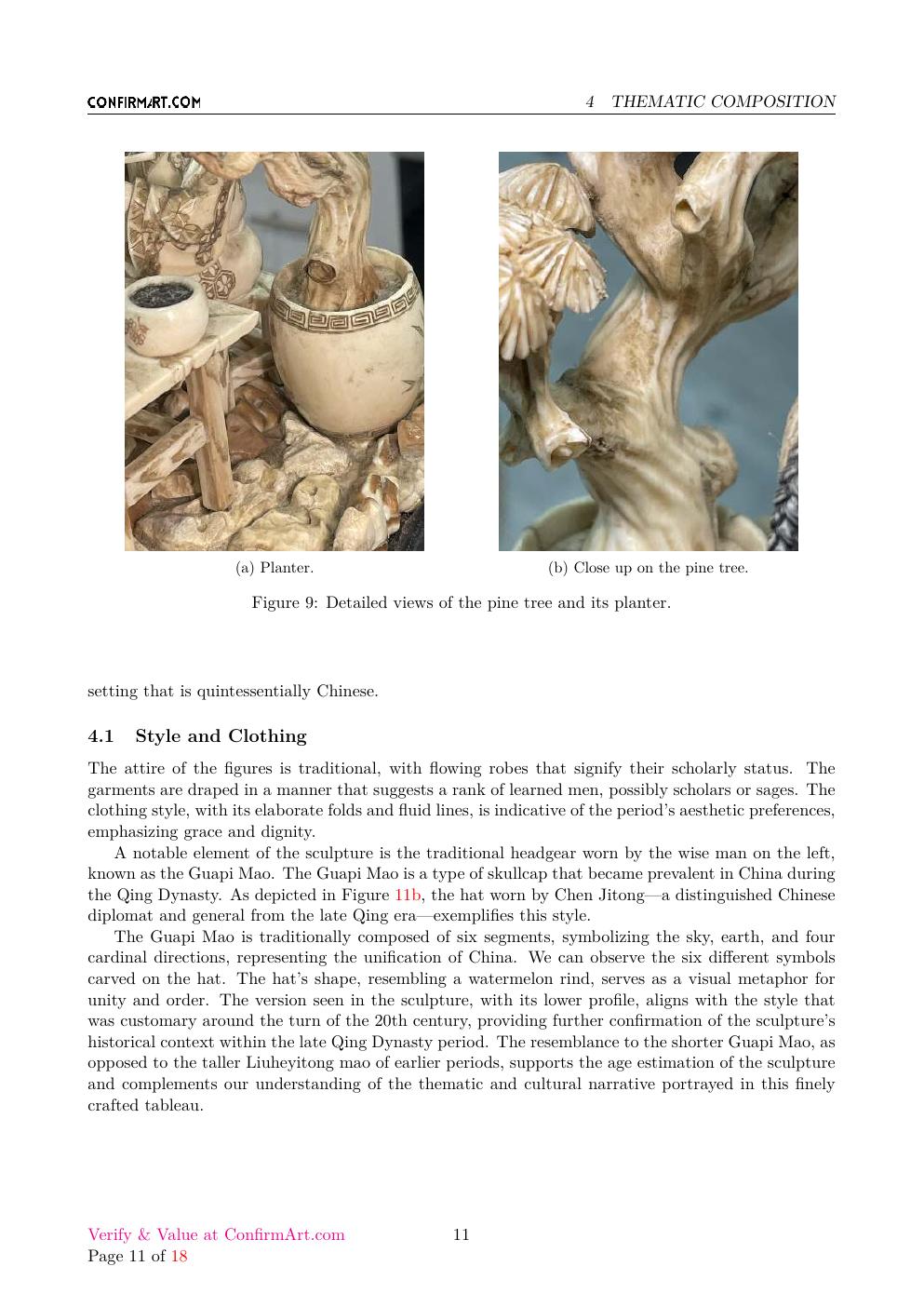
The upper half of the sculpture, masterfully carved from bone, depicts a scene rich in cultural symbolism and artistic merit. The dominant feature of this section is a robust and twisted tree that towers over the figures beneath it. The tree's sinuous trunk, fan-like foliage, and substantial presence suggest it may represent an ancient pine, known in Chinese art to symbolize longevity and steadfastness.
03
Display Case Description
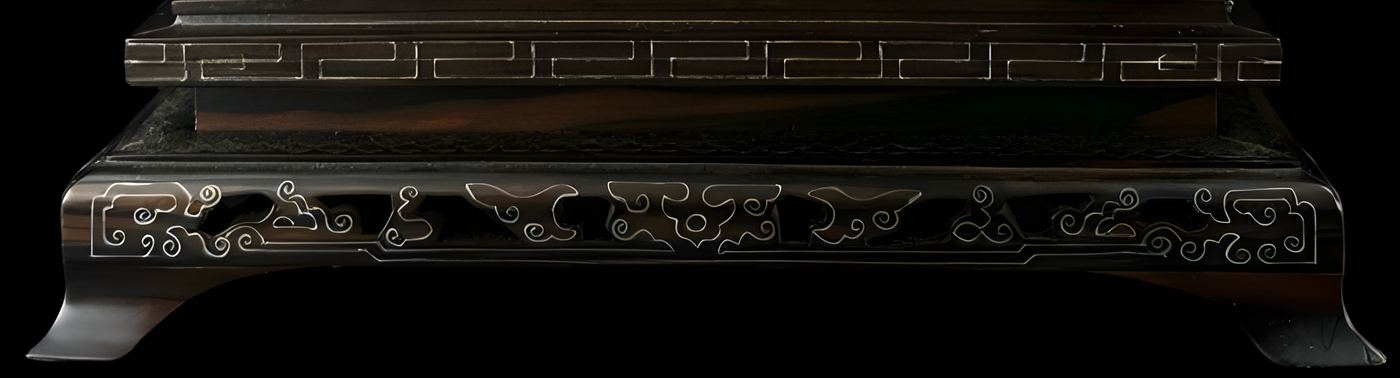
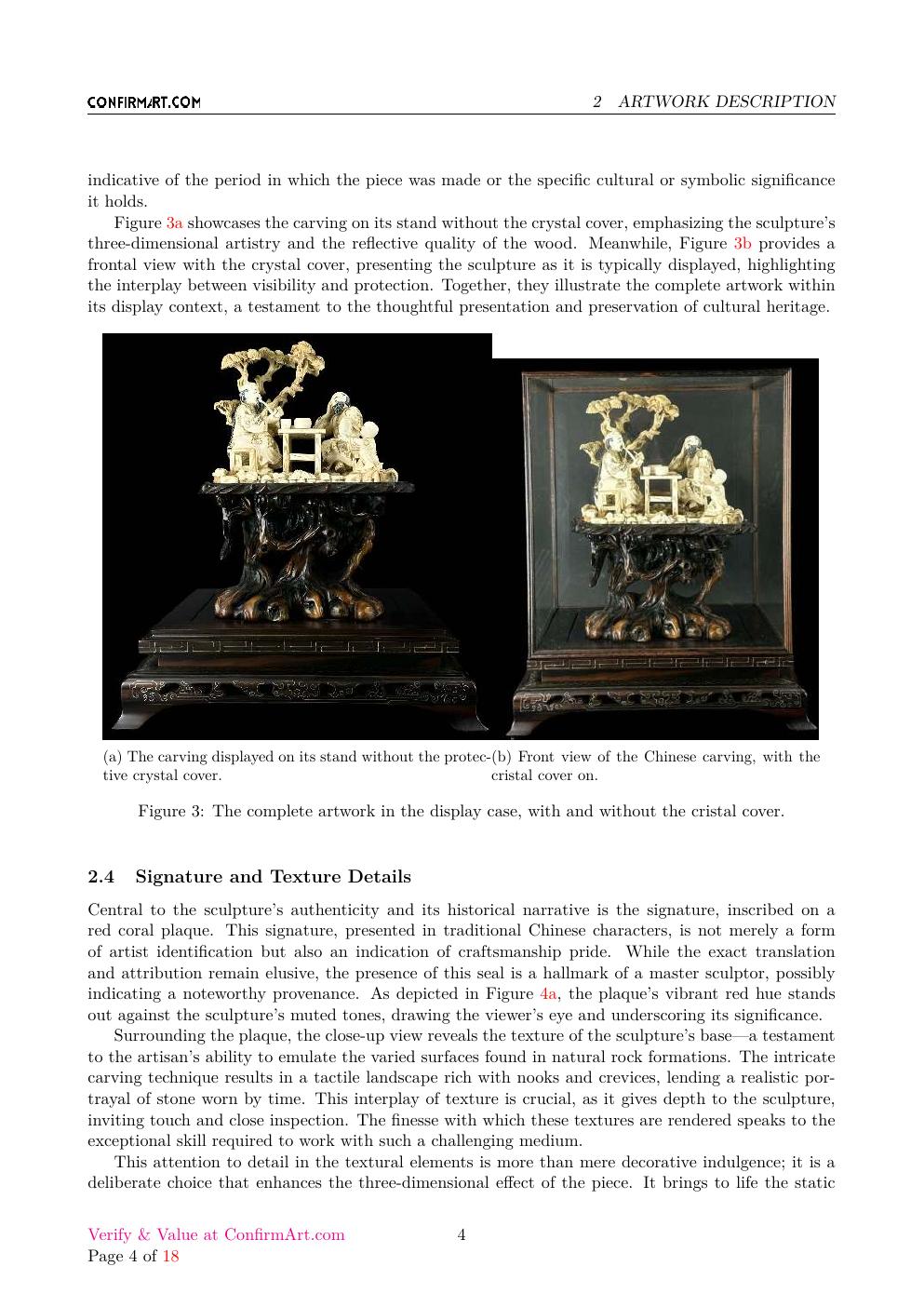
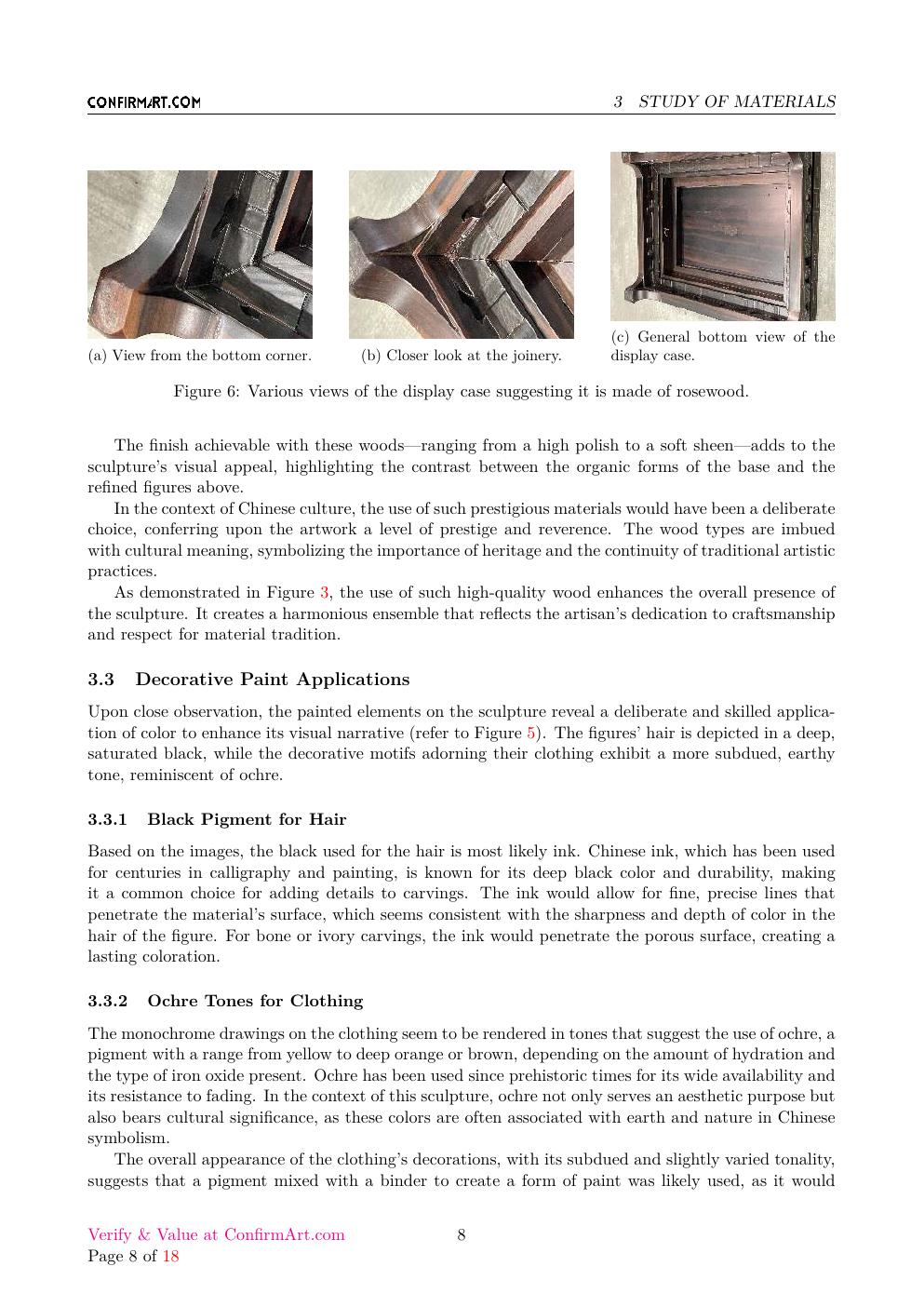
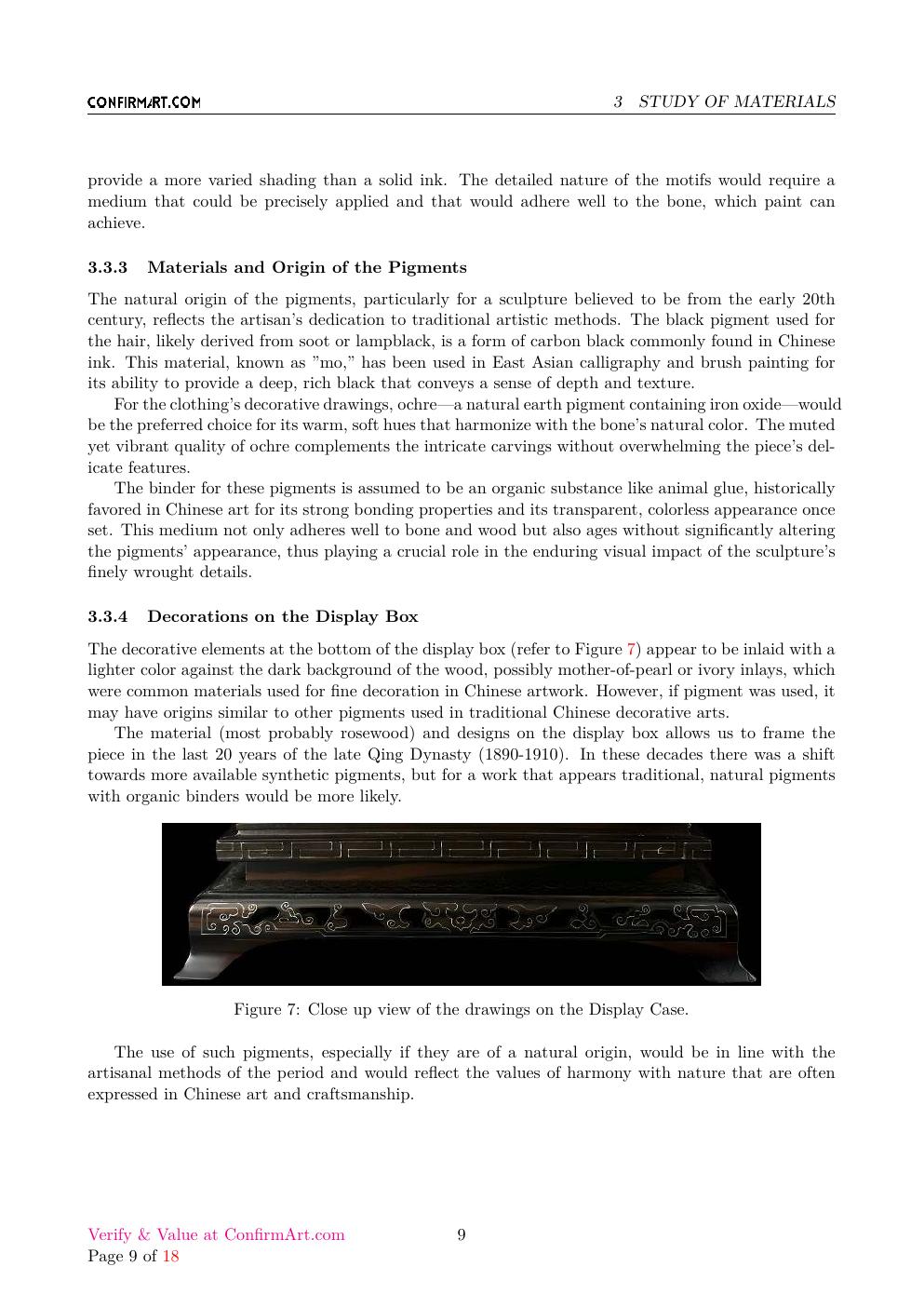
The wooden elements of this sculpture extend beyond a mere support structure; they are intrinsic to the piece's aesthetic and historical context. The base is not simply a platform but a deliberate continuation of the scene above. Its free-form, footed design evokes the roots and trunks of venerable trees, blurring the line between the crafted and the natural world.
04
Signature and Texture Details
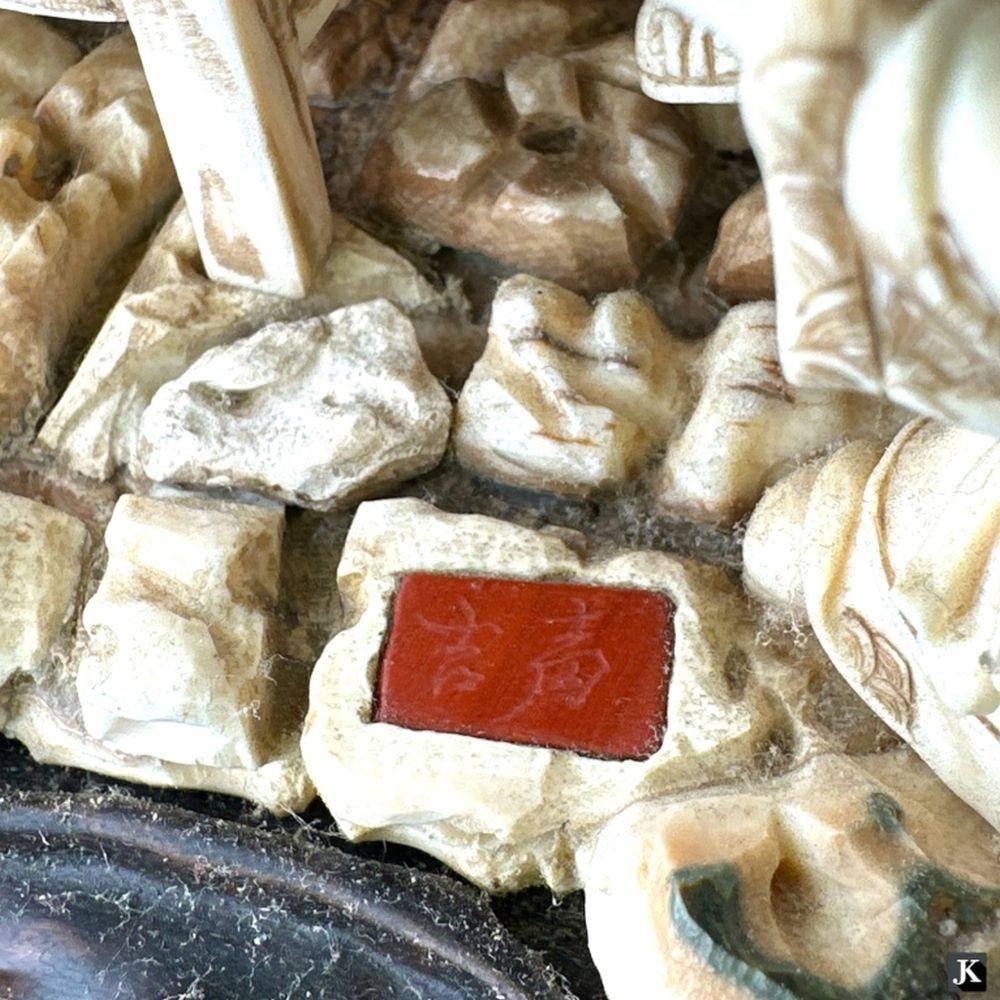
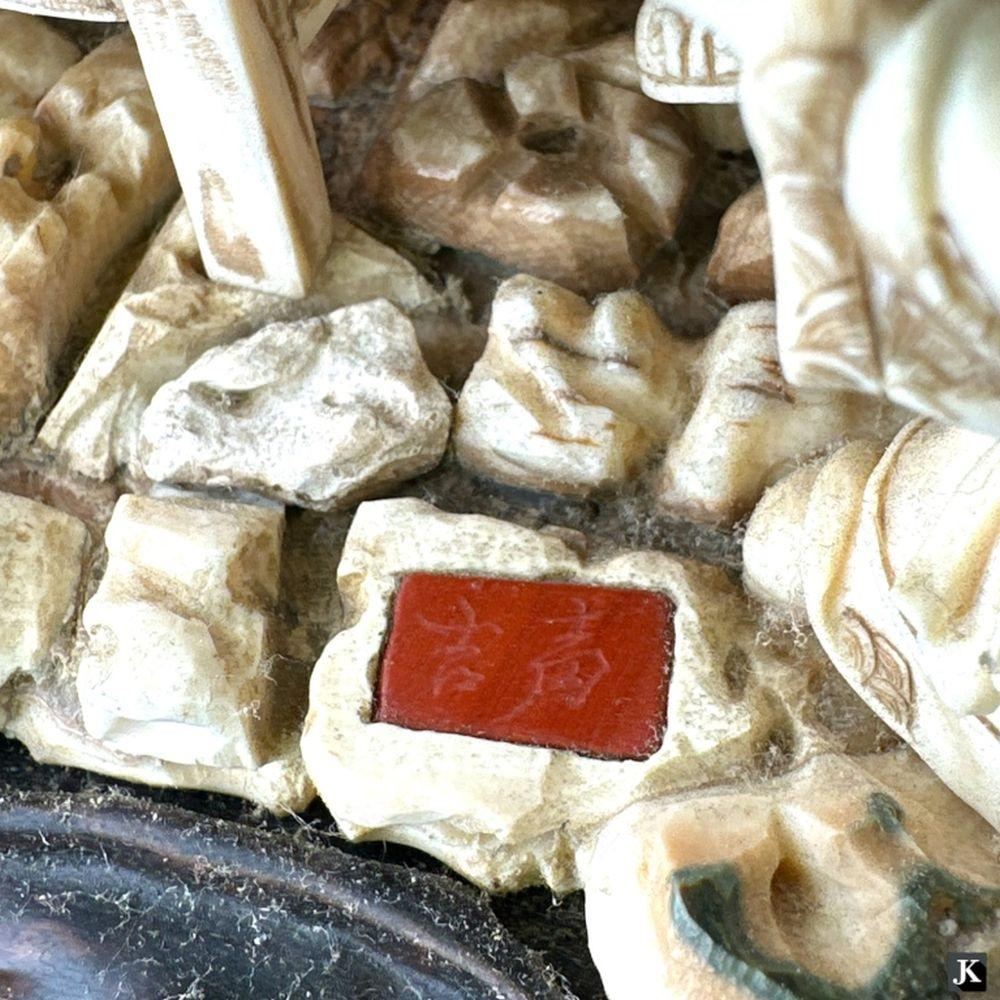
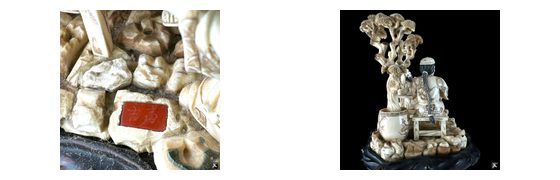
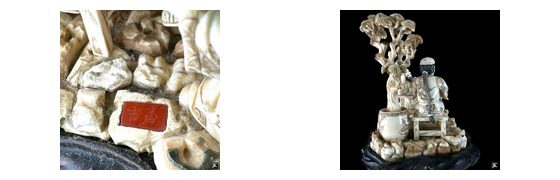
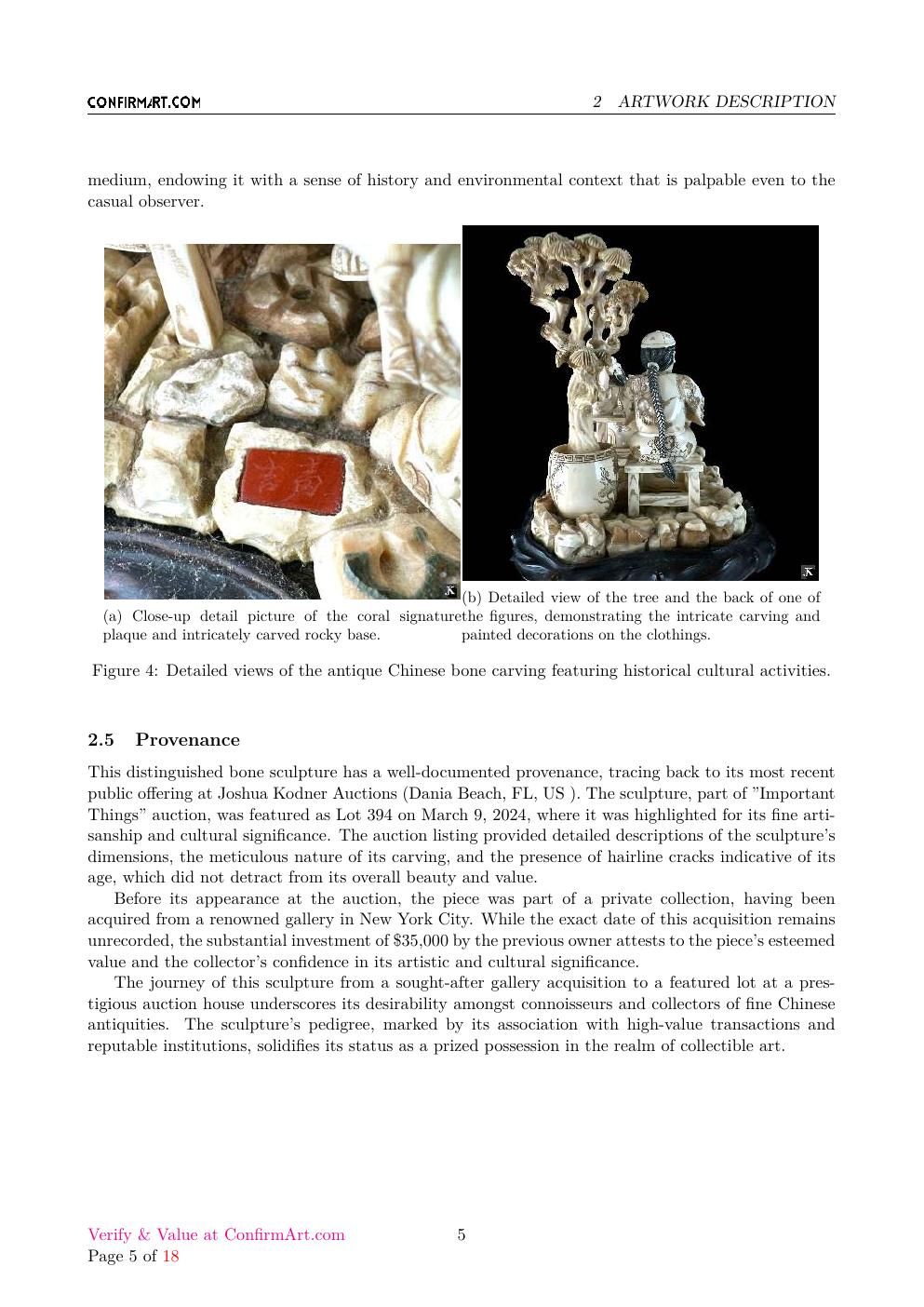
Central to the sculpture's authenticity and its historical narrative is the signature, inscribed on a red coral plaque. This signature, presented in traditional Chinese characters, is not merely a form of artist identification but also an indication of craftsmanship pride. While the exact translation and attribution remain elusive, the presence of this seal is a hallmark of a master sculptor, possibly indicating a noteworthy provenance.
05
Bone Material Analysis
The upper half of the sculpture, upon initial examination, suggests that it is composed of bone, likely ox bone. This assertion is based on the observable texture and porosity, especially evident in the non-polished regions. A closer look at the bottom right of Figure reveals a surface that is not uniformly smooth but exhibits the characteristic graininess and porous nature associated with bone, particularly in contrast to the smooth, dense texture typical of ivory.
06
Wooden Elements: Base and Display Case
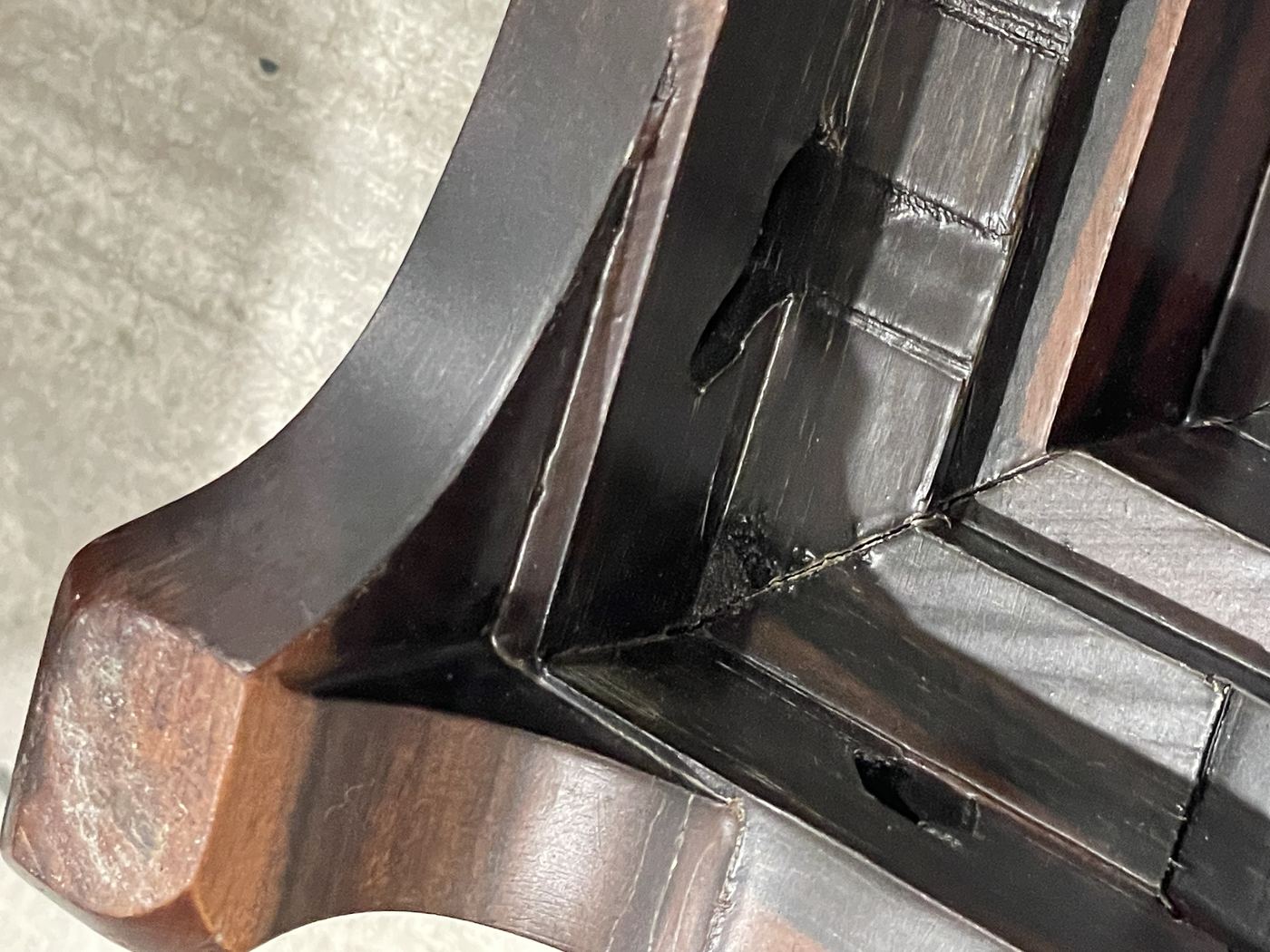
The sculpture's base and display case are as much a part of the artwork's aesthetic and narrative as the bone carving itself. In our opinion, the rich, dark coloration, prominent grain patterns, and high density of the wood suggest the use of Rosewood (Huanghuali). However with less probability it could be made of other luxurious hardwoods, such as Zitan, or Hongmu.
07
Decorative Paint Applications
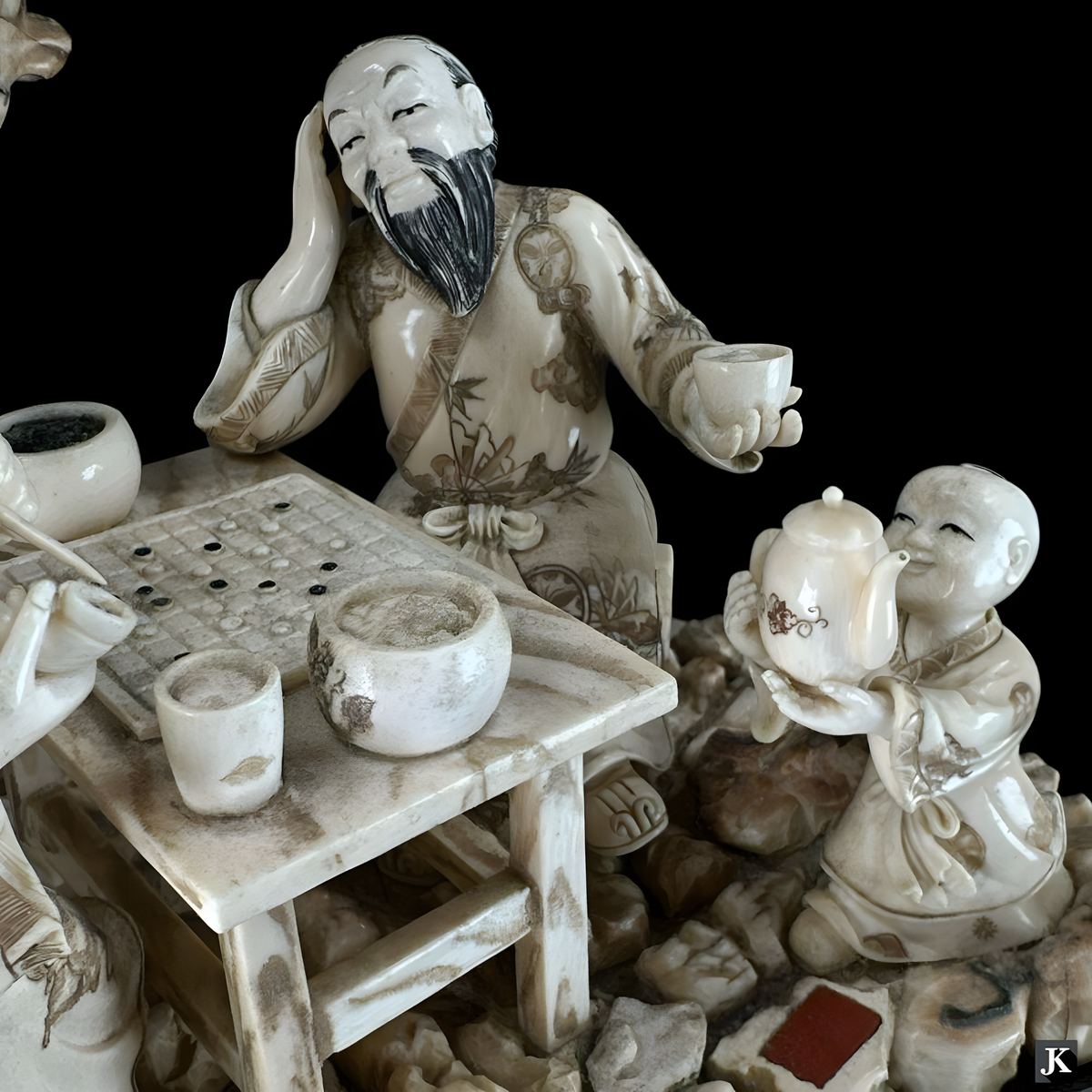
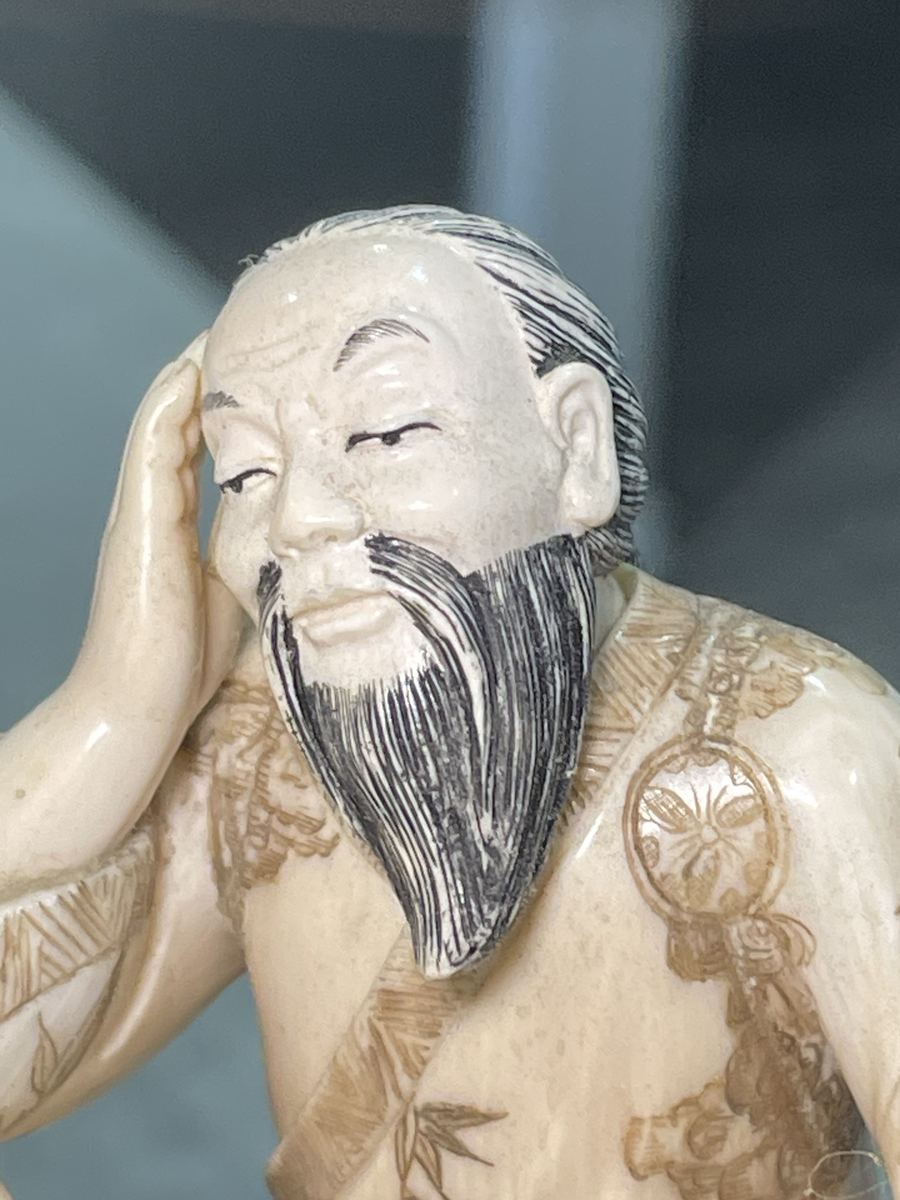
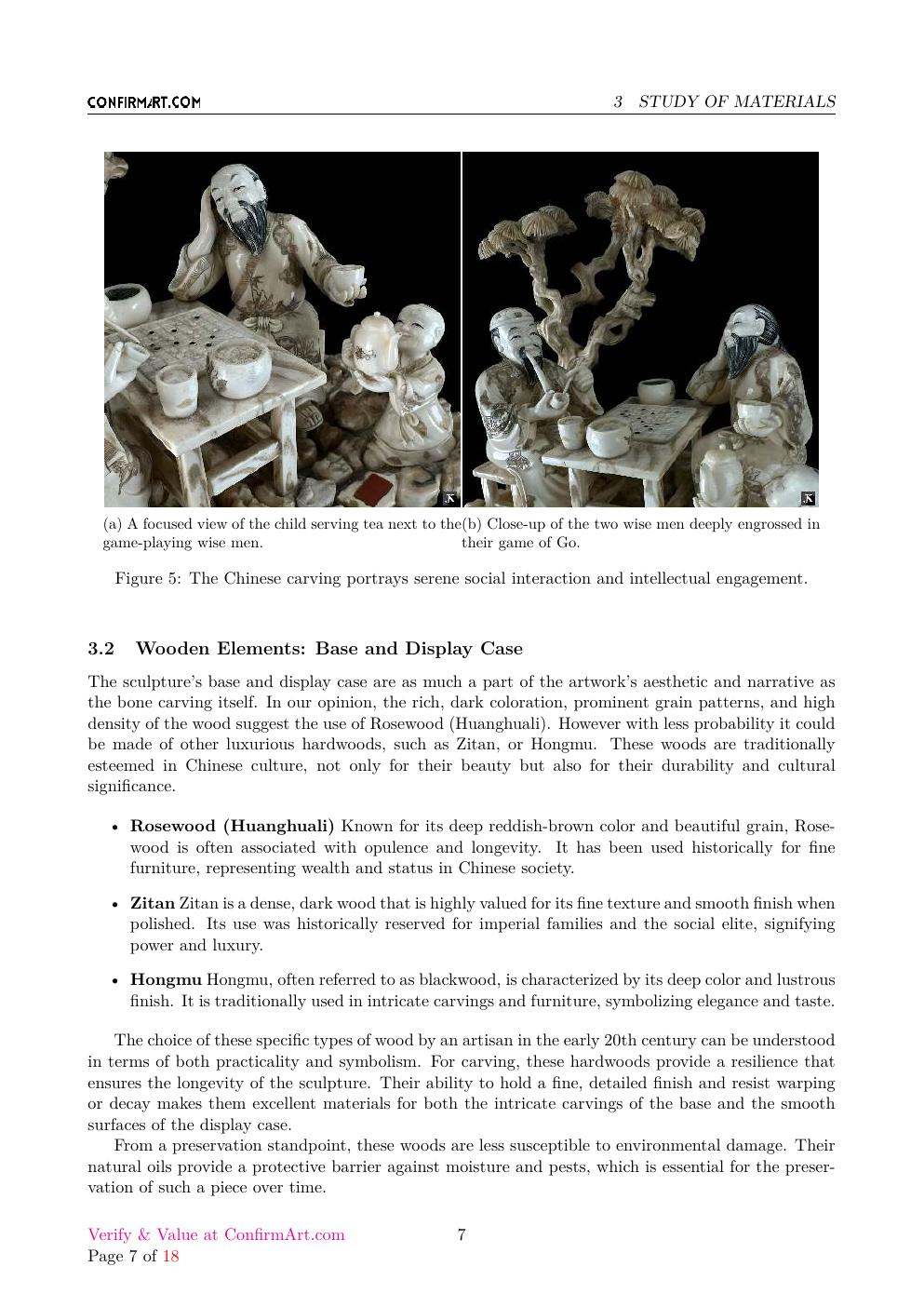
Upon close observation, the painted elements on the sculpture reveal a deliberate and skilled application of color to enhance its visual narrative (refer to Figure ). The figures' hair is depicted in a deep, saturated black, while the decorative motifs adorning their clothing exhibit a more subdued, earthy tone, reminiscent of ochre. Black Pigment for Hair Based on the images, the black used for the hair is most likely ink.
08
Thematic Composition
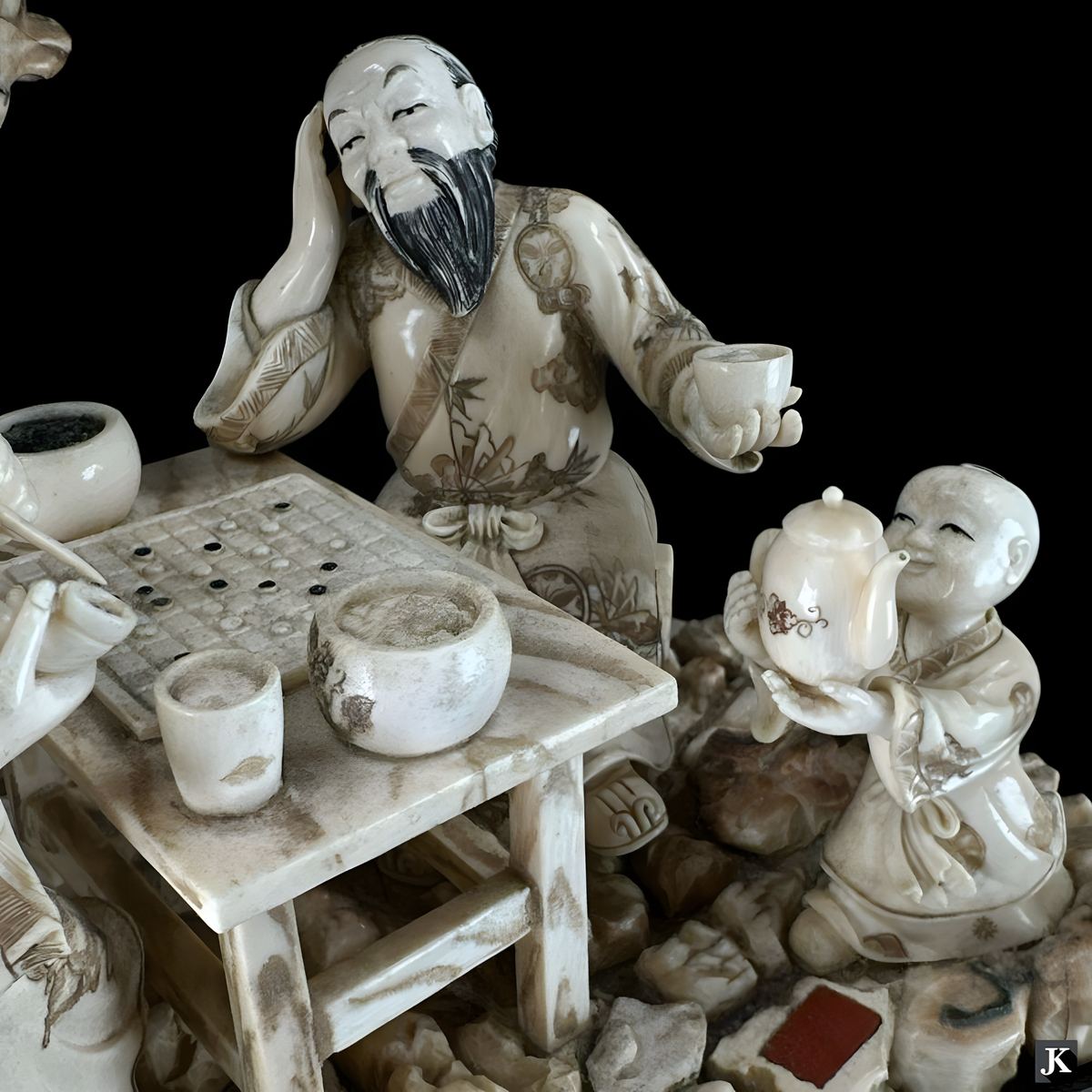
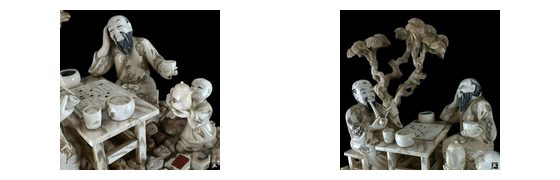
The sculpture portrays an intimate tableau rich in cultural and philosophical connotations. Two venerable figures, likely sages or scholars, are deeply engrossed in a game of Go, a pastime steeped in strategic depth and reflective of the intellectual pursuits esteemed during the Late Qing Dynasty. The presence of the child serving tea is indicative of the Confucian virtue of filial piety and respect for elders, highlighting the societal values of the time.
09
Style and Clothing
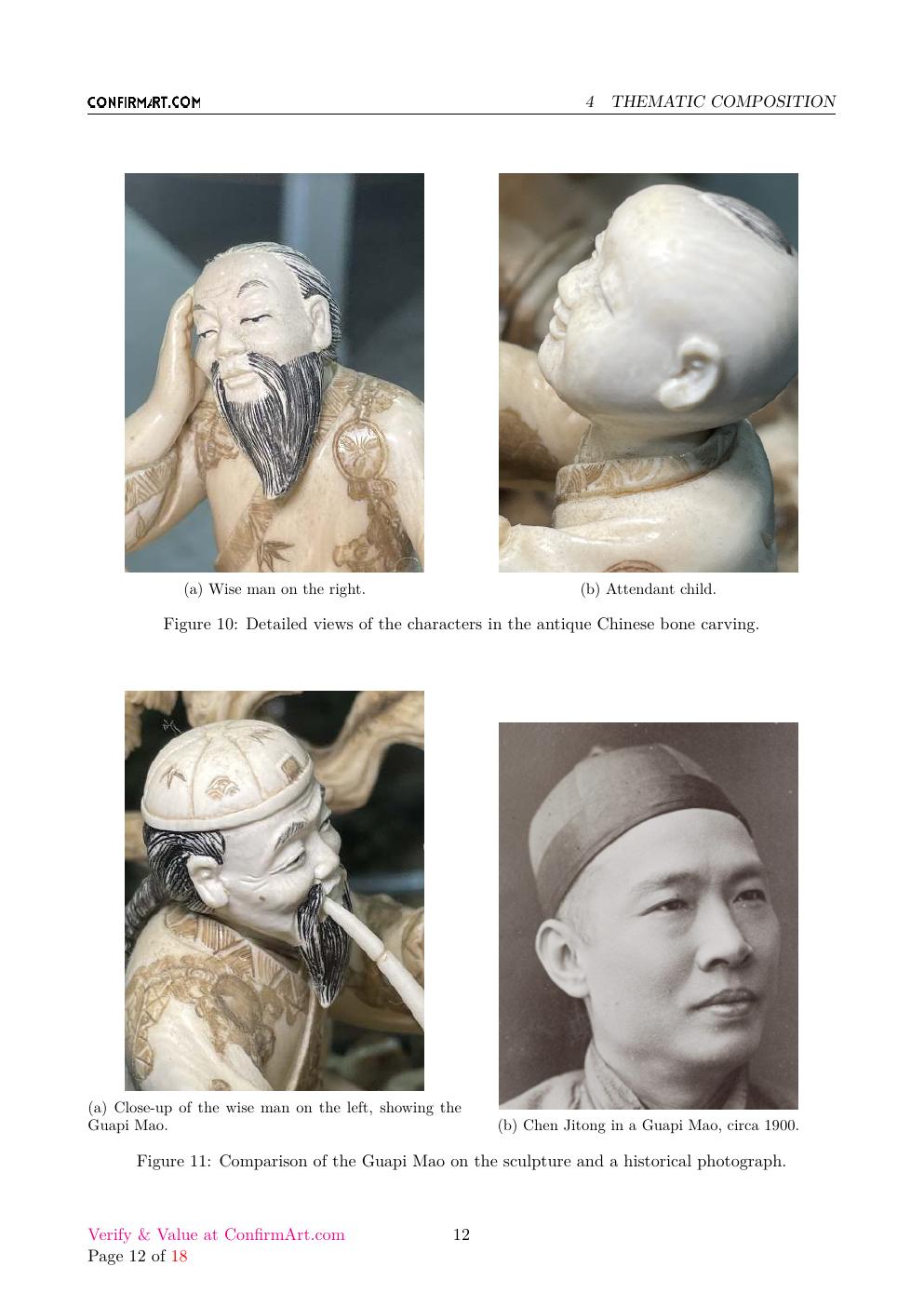
Detailed views of the characters in the antique Chinese bone carving. The attire of the figures is traditional, with flowing robes that signify their scholarly status. The garments are draped in a manner that suggests a rank of learned men, possibly scholars or sages.
10
Analysis of Decorative Motifs
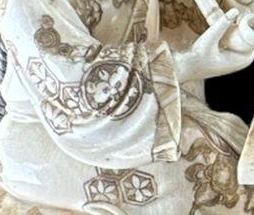
The sculpture is adorned with a series of delicate decorative drawings, each rich in symbolism and artistic tradition. These motifs vary in shades of ochre, suggesting the use of a limited yet nuanced palette to convey depth and texture. Upon closer examination of the decorative motifs on the sculpture, distinct parallels with late Qing Dynasty male clothing emerge.
Signature evidence
Signature analysis reference tables
Signature and Texture DetailsCentral to the sculpture's authenticity and its historical narrative is the signature, inscribed on a red coral plaque. This signature, presented in traditional Chinese characters, is not merely a form of artist identification but also an indication of craftsmanship pride.
Authentication evidence
Selected close details from the human review
Upper Half Scene DescriptionThe upper half of the sculpture, masterfully carved from bone, depicts a scene rich in cultural symbolism and artistic merit. The dominant feature of this section is a robust and twisted tree that towers over the figures beneath it.Signature and Texture DetailsCentral to the sculpture's authenticity and its historical narrative is the signature, inscribed on a red coral plaque. This signature, presented in traditional Chinese characters, is not merely a form of artist identification but also an indication of craftsmanship pride.Distinction from IvoryIn the pursuit of differentiating ivory from bone, several visual and physical characteristics are scrutinized: Schreger Lines: Unlike ivory, which displays distinctive cross-hatching patterns known as Schreger lines, the material in question lacks these markings and instead shows a more uniform texture indicative of the Haversian system typical of bone. Color and Patina: The sThematic CompositionThe sculpture portrays an intimate tableau rich in cultural and philosophical connotations. Two venerable figures, likely sages or scholars, are deeply engrossed in a game of Go, a pastime steeped in strategic depth and reflective of the intellectual pursuits esteemed during the Late Qing Dynasty.Style and ClothingDetailed views of the characters in the antique Chinese bone carving. The attire of the figures is traditional, with flowing robes that signify their scholarly status.
Private authentication
Submit your artwork for a ConfirmArt review
Use this real case as a reference for the kind of evidence that can be organized in a private authentication report.
The public browser receives rendered pages, not a native PDF viewer or direct PDF URL. Public pixels can still be screen-captured; private commissioned reports remain controlled client deliverables.
QR verification
Traceable real case
This real case has a stable verification URL and source fingerprints. The QR code resolves to the public verification record for this case.
Only your email and service selection are needed to submit the request. Optional images, dimensions and notes can be added now or later.
Payment is requested only for the Authentication report. Catalogue search, advisory, restoration and local inspection requests are reviewed first so the scope can be confirmed.
Authentication is a human expert review. ConfirmArt may use AI for bounded research support such as database, image, book or provenance searches, but not as a classifier verdict.
Complete front image
Reverse, support, frame and condition details
Signature, inscriptions, labels or seals
Invoices, certificates, provenance or catalogues
Comparative images, references or previous opinions, if available